Priyanca Lost Maungakiekie, But Not Necessarily Her Parliamentary Seat
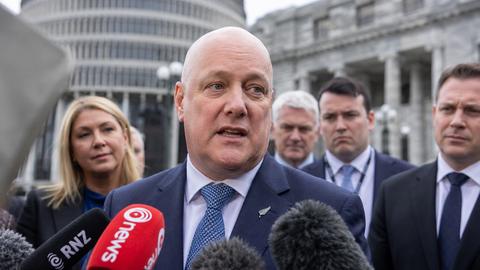
Priyanca Radhakrishnan, a former Labour minister who first entered Parliament in 2017, contested the Maungakiekie electorate against National’s Greg Fleming.
According to the preliminary results, Fleming leads Radhakrishnan by 2,952 votes.
That means Radhakrishnan has not won the electorate in the preliminary count.
However, losing an electorate contest does not automatically prevent a politician from becoming an MP.
Radhakrishnan is also a Labour Party list candidate, and the Electoral Commission’s preliminary successful-candidates information identifies her among those expected to enter Parliament through the party list.
If confirmed in the official results, she will begin her fourth consecutive parliamentary term.
Her situation is not an electoral loophole or a special arrangement. It is a normal feature of New Zealand’s voting system.
How Can Someone Lose and Still Become an MP?
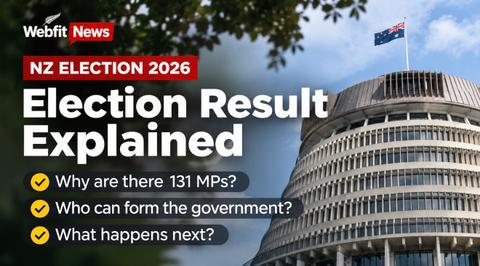
New Zealand uses MMP, a system designed to make the overall composition of Parliament broadly reflect the proportion of party votes received by political parties.
Under MMP, voters normally receive two votes.
The electorate vote helps decide who will represent their local electorate in Parliament.
The party vote helps determine how many seats each qualifying political party receives overall.
Political parties can therefore have two types of MPs: electorate MPs, who win individual constituencies, and list MPs, who enter Parliament through their party’s ranked candidate list.
Consider a simplified example.
Suppose a political party becomes entitled to 40 parliamentary seats based on its party vote.
If that party wins 25 electorate seats, it would ordinarily fill the remaining 15 seats using candidates from its party list.
A candidate who loses an electorate contest may therefore still enter Parliament if they are sufficiently high on their party’s list.
That is the principle behind Radhakrishnan’s expected return.
The key distinction is that voters in Maungakiekie choose their electorate MP, while voters across New Zealand help determine Labour’s overall parliamentary representation through their party votes.
These are two separate decisions within the same election.
Mahesh Muralidhar Took a Different Route
While Radhakrishnan’s expected return depends on Labour’s party-list allocation, National’s Mahesh Muralidhar has taken the more direct electorate route.
In Auckland’s Tāmaki electorate, the preliminary count gives Muralidhar 15,330 votes compared with Labour candidate Max Harris’s 9,974.
That represents a majority of 5,356 votes.
Unlike a list candidate, an electorate winner secures a parliamentary seat through the local contest, subject to confirmation of the final result.
Muralidhar’s result has also attracted attention within New Zealand’s Indian community because of its reported historic significance for Indian-origin representation within the National Party.
A technology entrepreneur and former venture capitalist, Muralidhar previously contested Auckland Central in 2023.
His political journey has included a career in the technology sector, including work at Canva and the founding of Phase One Ventures.
His preliminary Tāmaki victory represents a significant step from political candidate to prospective electorate MP.
Two Kerala-Origin Politicians, Two Different Electoral Outcomes
There is an interesting connection between Muralidhar and Radhakrishnan beyond their involvement in the same election.
Muralidhar’s family originates from Kozhikode in Kerala, while Radhakrishnan’s family has roots in North Paravoor, in Kerala’s Ernakulam district.
Both also spent their formative years in Singapore.
Muralidhar moved to New Zealand as a teenager, while Radhakrishnan arrived later to pursue higher education.
Today, they represent competing political parties.
Muralidhar belongs to National, while Radhakrishnan represents Labour.
Their respective results illustrate that parliamentary representation can emerge through different electoral pathways, even for politicians with similar cultural backgrounds.
But their shared heritage should not obscure their political differences. They represent different parties, policies and constituencies, and neither should be treated as speaking for every New Zealander of Indian or Malayali origin.
Does an Electorate MP Have More Power Than a List MP?
This is another common misunderstanding about MMP.
An electorate MP does not automatically have greater parliamentary voting power than a list MP.
Once elected, both types of MPs can participate in parliamentary debates, vote on legislation, serve on select committees and hold parliamentary responsibilities.
The main distinction concerns how they enter Parliament and the nature of their constituency responsibilities.
Electorate MPs represent a defined geographic electorate. List MPs do not hold an electorate seat, although they may maintain regional offices, undertake local advocacy and work closely with particular communities.
A list MP can also become a Cabinet minister if their party participates in government and they are appointed to that role.
Radhakrishnan’s previous ministerial service demonstrates that entering Parliament through a party list does not prevent a politician from holding significant government responsibilities.
In 2020, she became New Zealand’s first minister of Indian origin.
However, her expected return to Parliament in 2026 does not automatically mean she will return to a ministerial position. That depends on the formation of the government and subsequent appointments.
Why the Party Vote Matters More Than Many Voters Realise
The 2026 preliminary results provide a striking example of why electorate victories alone do not determine which party governs New Zealand.
Preliminary figures put Labour on 29.36 per cent of the party vote and National on 29.21 per cent.
Yet National won 42 electorate seats compared with Labour’s 21.
Those figures might appear contradictory to someone unfamiliar with MMP.
But electorate victories and overall parliamentary seat allocations are not the same thing.
The party vote is central to determining the proportional distribution of parliamentary seats among qualifying parties.
Consequently, a party can win more electorates than another party without necessarily receiving a larger share of the nationwide party vote.
The eventual formation of a government also depends on which parties can command the confidence of the House of Representatives, including through coalition or support arrangements.
What Happens When the Official Results Are Announced?
The Electoral Commission is scheduled to publish the official results on 27 November 2026.
Approximately 399,365 special votes remained to be counted following the preliminary count.
Those votes may change electorate margins, party-vote percentages and the final allocation of parliamentary seats.
For that reason, both Muralidhar’s electorate victory and Radhakrishnan’s expected list position should be treated as provisional until the official results are confirmed.
The Bigger Lesson From This Election
The stories of Priyanca Radhakrishnan and Mahesh Muralidhar demonstrate two different ways New Zealanders can enter Parliament.
One has secured a clear preliminary electorate victory and is preparing for his first parliamentary term.
The other has lost the preliminary electorate contest but is positioned to continue her parliamentary career through her party’s list.
Neither route makes an MP more legitimate than the other. Both are established parts of New Zealand’s electoral system.
For voters, the most important lesson is simple.
Your electorate vote decides who represents your local area. Your party vote helps decide the political balance of Parliament.
And that is why losing an electorate does not always mean losing a place in Parliament.
Webfit News will continue following the official election results and the final parliamentary composition ahead of the Electoral Commission’s scheduled announcement on 27 November 2026.