The $260 million collector will redirect wet-weather flows towards treatment at Māngere. Its launch marks progress on a longstanding pollution problem, while residents face further construction before the benefits arrive.
By Webfit News
The $260 million collector will redirect wet-weather flows towards treatment at Māngere.
The $260 million collector will redirect wet-weather flows towards treatment at Māngere. Its launch marks progress on a longstanding pollution problem, while residents face further construction before the benefits arrive.
By Webfit News
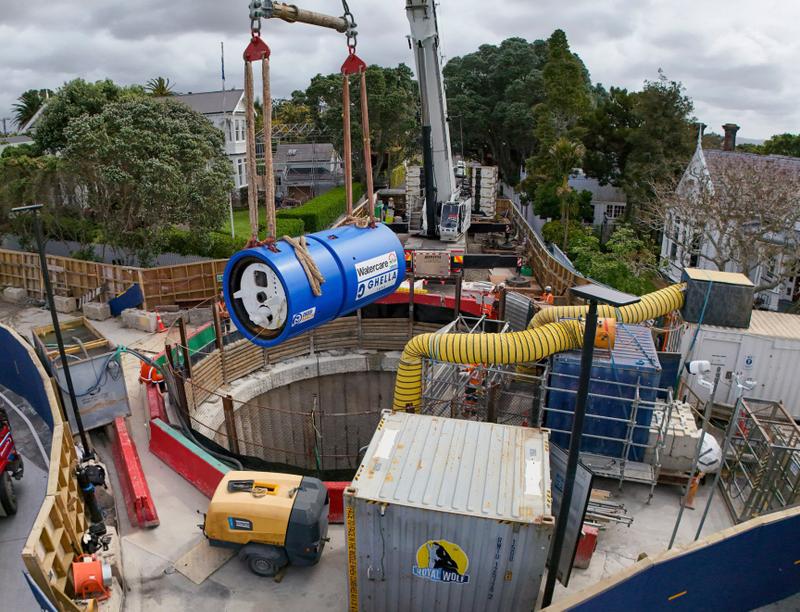
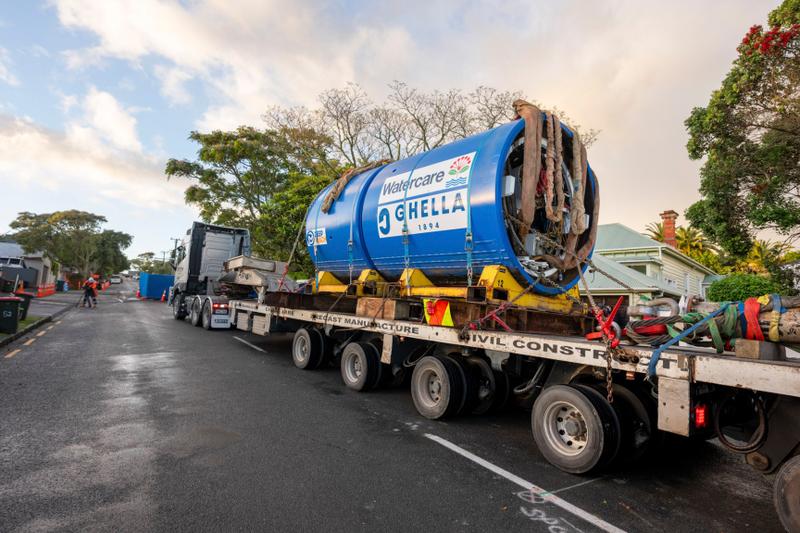
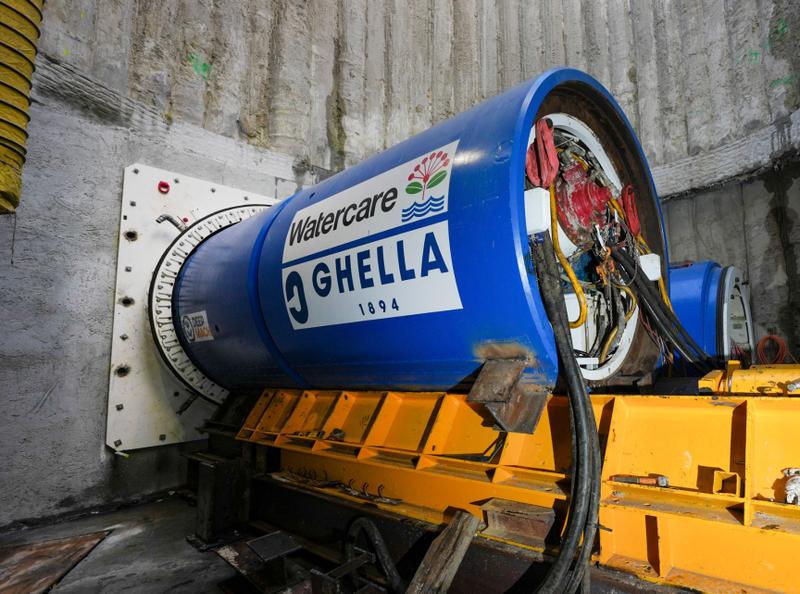
A tunnelling machine named Domenica has begun work beneath Herne Bay, marking a major construction milestone for a wastewater project designed to reduce overflows into the Waitematā Harbour.
The machine is starting the first of seven tunnel sections that will form Watercare’s $260 million Herne Bay Collector.
When complete, the 1.7-kilometre tunnel will capture flows from the suburb’s combined wastewater and stormwater network and send them through the Central Interceptor towards the Māngere Wastewater Treatment Plant.
The aim is to reduce the amount of untreated wastewater entering the harbour during heavy rain. The machine’s launch starts a significant phase of construction, rather than bringing those benefits into operation immediately.
Why heavy rain creates a wastewater problem
Herne Bay’s older combined network carries stormwater and wastewater in the same pipes.
During heavy rainfall, the additional water can exceed the network’s capacity, resulting in overflows into the harbour.
Watercare chief infrastructure officer Mark Crowle says the collector will help address that problem by directing wet-weather flows towards treatment.
“It’s about making the most of the major infrastructure we’ve already invested in and progressively improving how Auckland’s wastewater network performs,” he says.
The collector will connect to the Central Interceptor beneath Point Erin Park. Its planned diversion capacity is up to 6,000 litres per second.
That figure describes how much flow the infrastructure is designed to handle. It does not establish how frequently it will operate at that rate or how many overflow events it will prevent.
A connection that helps unlock a larger investment
The collector illustrates why a major wastewater tunnel needs supporting connections to deliver its intended benefits.
The Central Interceptor provides a route towards treatment. Projects such as the Herne Bay Collector connect existing neighbourhood networks to that route.
For residents, the important outcome will be how effectively the completed system performs during rainfall, rather than the tunnel’s size alone.
Watercare says the project will significantly reduce overflows. Its announcement does not provide a numerical target for the reduction in overflow frequency or volume, or a full commissioning date.
Those details will help the public assess the project’s performance once it is operating.
Less excavation, but disruption remains
Domenica is a micro tunnel boring machine, allowing the tunnel to be constructed underground between shaft sites.
The approach avoids excavating a continuous trench through Herne Bay’s streets. However, work at the surface sites will still affect nearby residents.
Crowle acknowledges that construction can be disruptive and says Watercare does not underestimate the impact on neighbours.
Ghella, Watercare’s delivery partner, describes a constrained residential environment, with some homes just metres from work sites.
The method therefore reduces the extent of surface excavation without removing the need for construction activity close to people’s homes.
The first breakthrough is only one stage
Ghella New Zealand country director Rosario Barresi says Domenica’s first drive will cover 626 metres, with breakthrough expected around the middle of next year.
That is the anticipated completion of the first tunnel section, not the entire collector.
Further tunnelling, connections and commissioning will be needed before the system can divert flows as intended.
For neighbours and harbour users, keeping those milestones distinct will provide a clearer picture of progress.
What the $260 million pays towards
The Herne Bay Collector forms part of Watercare’s $1.6 billion Waitematā Water Quality Improvement Programme.
That programme is one of nine within the utility’s $15.2 billion, 10-year capital investment plan, covering more than 1,000 projects.
These are overlapping investment figures, rather than separate amounts to be added together. The collector sits within the harbour programme, which itself sits within the wider capital plan.
The scale reflects the broader task of renewing infrastructure while improving network capacity and environmental performance.
Cleaner water will be the lasting test
Waitematā Local Board chair Alexandra Bonham says the collector represents an important investment in the harbour’s future, while acknowledging the disruption associated with construction.
Watercare expects fewer overflows and improved water quality once the project is complete.
Those are meaningful objectives. Reducing wastewater discharges would address an important source of pollution, but the announcement does not guarantee that every beach will be safe for swimming after every rainfall event.
The clearest measures of success will be fewer overflow events, lower discharge volumes and evidence of improved conditions in receiving waters.
Domenica’s launch is a tangible step towards those outcomes. The lasting achievement will be what the completed tunnel keeps out of the harbour.
Source: Watercare’s announcement on the launch of micro tunnel boring machine Domenica for the Herne Bay Collector.
Was this article useful?