Community connections extend beyond suburb boundaries
RNZ’s reporting on Facebook administrators explored the pressures of running neighbourhood groups, including harassment, disputed allegations and the demands placed on volunteers.
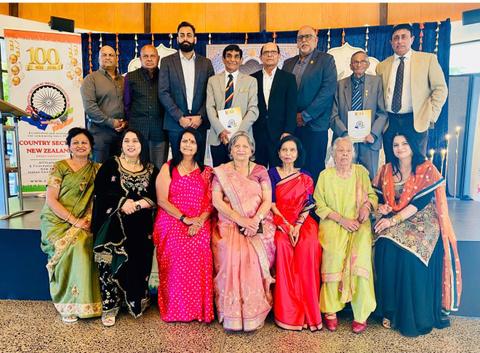
But community networks are also organised around language, cultural identity and shared experiences.
Indians Living in Auckland provides one documented example. Indian Newslink’s reporting records the Facebook group collaborating on discussions involving politicians and diplomats, including a January 2022 event with India’s then High Commissioner, Muktesh Pardeshi.
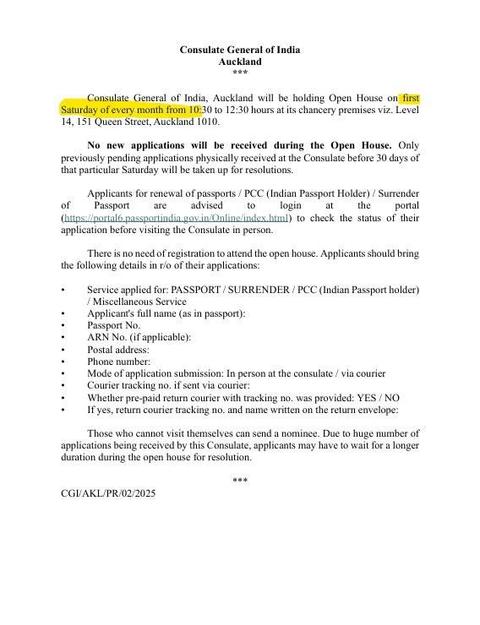
The proposed discussion covered practical concerns including travel, consular assistance and families separated by border restrictions.
That is a useful form of access: bringing questions from residents to people who may be able to answer them.
It also demonstrates why different roles should remain visible. Organising a discussion, asking questions and independently verifying the answers are related activities, but they are not interchangeable.
Similar platforms can serve very different purposes
The Auckland Chinese Community Centre links to its Facebook page from its own website, alongside information about its school, activities, membership and committee.
Here, Facebook is one communication channel for an established community organisation.
SriLankaNZ offers a different example. Its website identifies it as a community newspaper publishing in English, Sinhala and Tamil, and lists its official Facebook channel. It also states that the publication belongs to the New Zealand Media Council.
These examples should not be treated as identical.
A Facebook discussion group hosts member contributions. An association’s page communicates its activities and organisational position. A newspaper’s Facebook account distributes material from a publisher.
All can serve communities. Their responsibilities and claims to authority differ.
These organisations are included to illustrate that variety. Their inclusion does not suggest they have experienced the disputes described in RNZ’s reporting.
The missing question: What does approval mean?
When a post appears in a moderated group, readers may assume somebody has checked it.
An administrator may simply have decided that it follows the rules.
That gap is important.
A complaint about a business might be relevant, politely written and submitted by a genuine local resident. None of those things establishes that its allegations are accurate.
Checking the claim could require examining documents, asking follow-up questions and giving the business an opportunity to respond.
A group should explain whether approval means the content meets its posting rules or whether someone has independently examined the information.
A disclaimer cannot resolve every risk. It can make the process more honest.
Familiarity is valuable, but it is not verification
Community networks offer something that broader platforms sometimes lack: shared language, cultural context and familiarity.
Those strengths deserve recognition.
They can also make it easier for readers to trust a recommendation because it comes from someone who appears to understand their circumstances.
That is a reason to preserve good information practices, rather than abandon them.
A member’s experience can be useful without applying to everyone. A confident answer may be outdated. A widely shared claim may still lack evidence.
For consequential decisions, the strongest community response may be helping someone find an authoritative source, rather than treating the discussion itself as the final answer.
Reach does not establish representation
A group’s membership count measures the accounts that have joined. It does not measure agreement.
Some members contribute frequently. Others watch silently. People who disagree may leave, avoid sensitive discussions or never join.
The same caution applies to community identity.
Indian, Chinese and Sri Lankan communities contain differences of language, generation, religion, occupation and political opinion. No Facebook audience can be assumed to reflect all those perspectives.
A page can identify a concern worth investigating. Calling it “the community’s view” requires more evidence.
Journalism is defined by practice, not the size of the publisher
The useful boundary is not mainstream media versus independent media.
Independent publishers can practise rigorous journalism. Large newsrooms can publish flawed work. Community members can uncover important stories.
The questions remain the same: what was checked, whose response was sought, what remains uncertain and how can an error be challenged?
The Media Council’s principles provide benchmarks including accuracy, fairness, privacy, disclosure of relevant conflicts and correction of significant errors.
Community groups can adopt similar practices without presenting themselves as newsrooms.
Likewise, a publisher using Facebook should retain its editorial standards rather than treat the platform as an exception.
Accountability should include a way to repair harm
Removing a disputed post may stop further comments. It may not correct the impression left with people who already read or shared it.
Significant mistakes need a visible explanation, handled carefully to avoid repeating unnecessary personal details.
Relevant commercial relationships should also be disclosed. Readers should know whether a recommendation is an advertisement, and whether an administrator has a personal interest in a dispute.
Clear rules and a second administrator reviewing contested decisions can protect volunteers as well as residents.
Netsafe’s guidance recognises the limits of the role: moderators are not expected to be counsellors, mediators or legal experts. They need to recognise when an issue requires outside support.
The best community platforms make connection easier without making their authority larger than their evidence.
They tell readers whether they are hosting a conversation, speaking for an organisation or publishing a checked report. That clarity helps people value the service without mistaking it for something else.
Sources: Serena Solomon’s RNZ reporting; Indian Newslink’s documented community discussions; Auckland Chinese Community Centre and SriLankaNZ public information; Netsafe guidance; New Zealand Media Council principles.