The Electoral Commission corrected thousands of resident-voter records before polling day. But with turnout declining, questions remain about participation, eligibility and the impact of the errors.
By Webfit News Political Desk | 8 November 2026
The Electoral Commission corrected thousands of resident-voter records before polling day.
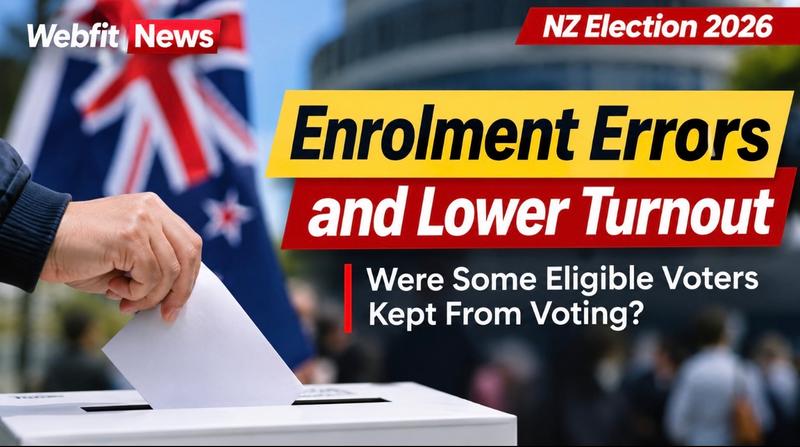
The Electoral Commission corrected thousands of resident-voter records before polling day. But with turnout declining, questions remain about participation, eligibility and the impact of the errors.
By Webfit News Political Desk | 8 November 2026
AUCKLAND: While political parties negotiate the future of New Zealand’s government, another election story deserves attention: who was able to vote, who faced unnecessary barriers, and how accurately the electoral roll reflected voter eligibility.
The Electoral Commission has confirmed that approximately 6,300 people holding residence class visas were added to the electoral roll after a processing problem incorrectly required additional immigration information from some applicants.
At the same time, the Commission identified approximately 1,200 people who had been enrolled despite not meeting the relevant residency requirements.
These corrections come as preliminary figures show voter turnout falling to an estimated 74.6%, compared with 78.2% at the 2023 election.
The numbers behind the issue
|
Measure |
Confirmed figure |
|
Residents added after enrolment error |
Approximately 6,300 |
|
Incorrect enrolments identified |
Approximately 1,200 |
|
Estimated 2026 turnout |
74.6% |
|
Turnout in 2023 |
78.2% |
|
Change in turnout |
−3.6 percentage points |
|
People enrolled by election day |
3,796,891 |
The Electoral Commission says the approximately 6,300 affected residents were contacted to confirm that they had been enrolled and could vote.
It also said people incorrectly enrolled because they held temporary visas or had expired visas would be removed from the roll before the official count. Any votes they cast would be disallowed.
Why this matters for migrant communities
New Zealand’s voting eligibility rules extend beyond citizenship.
Some non-citizens who meet the legal residency and residence-duration requirements are eligible to vote in general elections.
The processing error affected people holding residence class visas who had submitted valid enrolment applications but were asked to provide additional information unnecessarily.
The Commission apologised for the breakdown and said it had taken steps to correct the records.
The outstanding question is whether every affected eligible voter was able to participate after receiving the correction.
The published figures do not establish how many affected residents ultimately voted or whether anyone missed voting because of the error.
High enrolment, lower turnout
New Zealand entered election day with 93.7% of eligible electors enrolled, according to the Commission.
Yet estimated turnout was 74.6%, down from 78.2% in 2023.
The two measures tell different stories. Enrolment reflects the proportion of eligible people on the electoral roll. Turnout measures the proportion of enrolled voters who cast ballots.
The decline in turnout cannot be attributed to the enrolment error without further evidence.
Other possible explanations for lower participation would require separate research, including voter surveys and demographic breakdowns.
What remains unanswered?
There are four questions worth putting directly to the Electoral Commission:
These questions concern electoral administration and public confidence, not allegations that the election result was manipulated.
What happens now?
The official count began on 8 November. It includes roll checks, recounting ordinary votes, assessing special-vote eligibility and completing quality assurance.
Official election results are scheduled for 27 November.
The final results should provide a clearer picture of turnout and the number of votes accepted or disallowed.
But the wider question will remain: whether the electoral system provides eligible voters with a straightforward and reliable way to participate.
For Webfit News, that is a story worth following beyond election night.
Was this article useful?