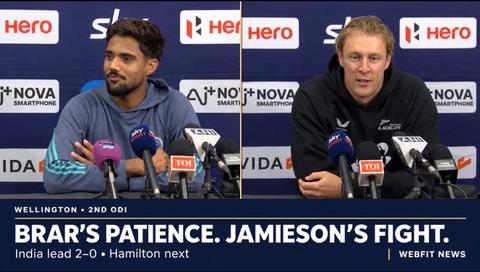
Gurnoor Brar’s 4–30 helped dismiss New Zealand for 134, but India were struggling at 113–7 when rain ended the second ODI. The visitors won by four runs under DLS to take a 2–0 series lead.
By Webfit News | 7 November 2026
Gurnoor Brar’s 4–30 helped dismiss New Zealand for 134, but India were struggling at 113–7 when rain ended the second ODI.
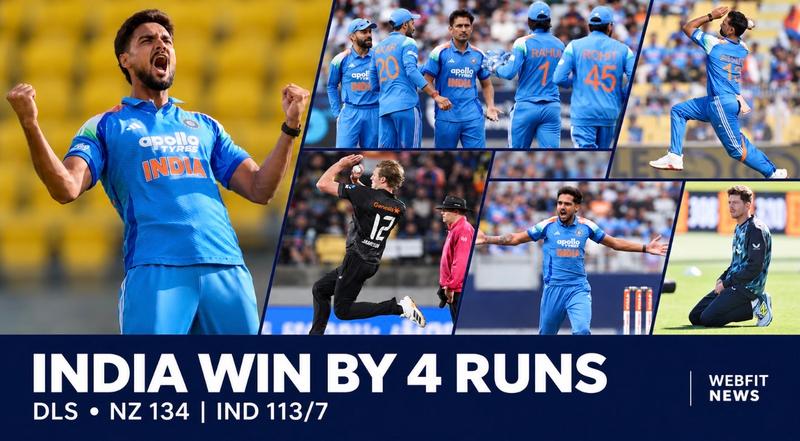
Gurnoor Brar’s 4–30 helped dismiss New Zealand for 134, but India were struggling at 113–7 when rain ended the second ODI. The visitors won by four runs under DLS to take a 2–0 series lead.
By Webfit News | 7 November 2026
New Zealand had just taken India’s seventh wicket. KL Rahul was still standing, the target remained within reach, and a match built around survival was heading towards its most anxious overs.
Then the rain became too heavy.
India finished Wellington’s second ODI on 113–7 after 26 overs, four runs ahead of the Duckworth–Lewis–Stern par score of 109. When play could not resume, that narrow advantage became the winning margin.
It gave India a 2–0 lead in the five-match series, but the scoreline conceals how fiercely New Zealand defended 134.
Gurnoor Brar’s four wickets had put India in command during the afternoon. By the time Kyle Jamieson completed his spell under the lights, the Black Caps had made the visitors fight for almost every run.
Why 135 became such a difficult chase
The match had already been reduced to 47 overs a side following rain.
Batting proved difficult throughout. Steep, uneven bounce and seam movement made defensive shots uncertain and attacking strokes dangerous. Even finding singles was awkward, with the thick outfield slowing balls that reached the grass.
Daryl Mitchell’s 55 from 104 deliveries was the only half-century of the match. His innings showed what the conditions demanded from an experienced batter. He needed patience, physical resolve and carefully chosen moments to attack.
India’s chase later confirmed that New Zealand’s modest total still carried a threat.
Brar breaks through, Mitchell holds on
New Zealand lost their first five wickets for 53.
Auqib Nabi removed Tim Seifert and Will Young, while Anshul Kamboj bowled Henry Nicholls. Brar then dismissed Tom Latham and Glenn Phillips, leaving Mitchell to rebuild with captain Mitchell Santner.
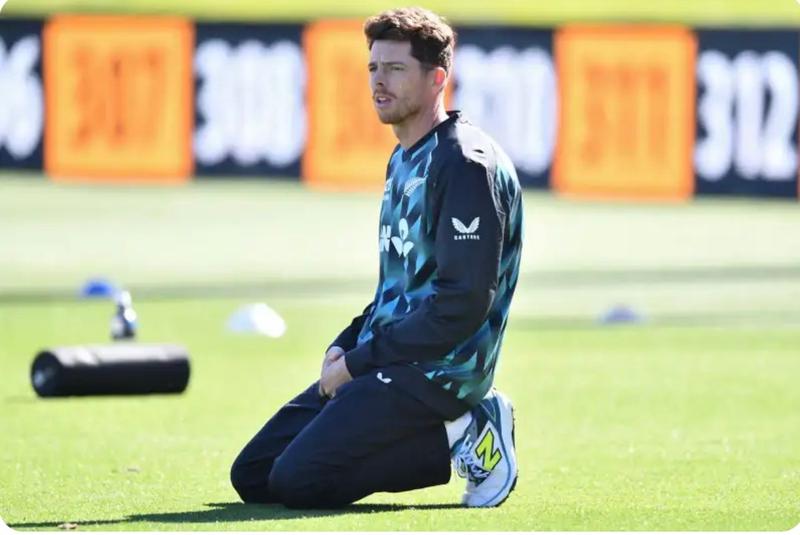
Their 59-run sixth-wicket partnership gave the innings some substance. Mitchell absorbed the pressure while Santner contributed 31 from 38 balls.
Axar Patel ended the stand by drawing Mitchell out of his crease and having him caught at long-off for 55. Brar then removed Santner, caught behind shortly after hitting the bowler for six.
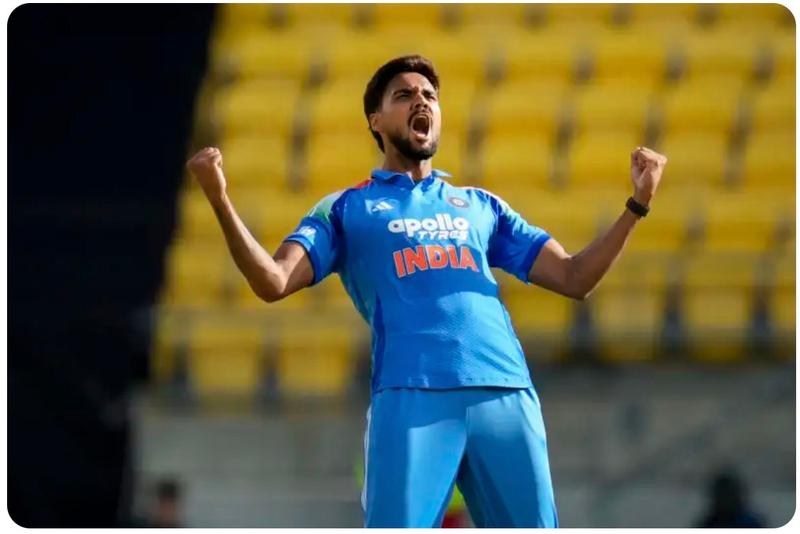
Brar finished with 4–30 from 10 overs, including two maidens, taking the wickets of Latham, Phillips, Santner and Nathan Smith.
Kamboj returned to dismiss Blair Tickner and finish with 2–25 as New Zealand were bowled out in 41 overs.
New Zealand make the small total feel much bigger
Jacob Duffy gave the Black Caps an immediate opening, dismissing Shubman Gill for a golden duck before removing Virat Kohli.
At 17–2, India were already confronting the same problems that had troubled New Zealand.
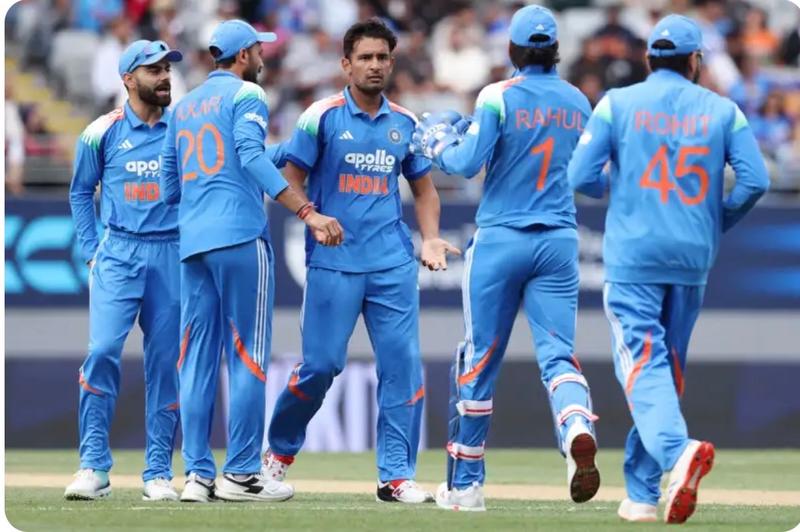
Rohit Sharma counterattacked, scoring 23 from 28 balls, but Jamieson found his edge and Henry Nicholls held the catch at second slip. India were 39–3.
Axar’s attempted ramp then went to deep third off Matt Fisher, leaving the visitors 47–4.
Fisher had entered the match as a concussion replacement for Tickner, who was struck on the helmet while batting against Kamboj.
India had enough overs available to approach the chase carefully. What they lacked was any assurance that a delivery would behave as expected.
Rahul keeps India close enough
Rahul and Shreyas Iyer rebuilt the innings, offering India a route through the middle overs.
But Jamieson returned to remove Iyer with a delivery that climbed sharply and forced a catch behind. The dismissal showed how quickly a batter who appeared settled could be undone.
Rahul remained unbeaten on 26 from 38 balls when play stopped. His contribution helped India recover from the early damage and stay narrowly ahead of the rain calculation.
Jamieson’s final over brought another wicket when Kamboj’s attempted attacking shot produced a catch for Duffy at deep third. He completed his allocation with 3–35.
India reached 113–7 at the end of that over. Rain then took the players off.
How India won with the chase unfinished
India’s original target was 135. At the interruption, they still needed 22 runs to reach it.
DLS measures a shortened chase against a par score that accounts for both overs used and wickets lost. With India seven down after 26 overs, that par score was 109.
Their 113 therefore placed them four runs ahead.
A proposed restart would have brought a revised target of 133 from 37 overs, but renewed drizzle prevented play from resuming.
New Zealand’s bowlers had created a genuine chance of levelling the series. Instead, India left with a second successive rain-affected victory and a stronger grip on the contest.
Match summary
New Zealand: 134 all out, 41 overs
Daryl Mitchell 55, Mitchell Santner 31
Gurnoor Brar 4–30, Anshul Kamboj 2–25
India: 113–7, 26 overs
Rohit Sharma 23, KL Rahul 26 not out
Kyle Jamieson 3–35
Result: India won by four runs, DLS method
Series: India lead 2–0
Based on Sidharth Monga’s ESPNcricinfo live coverage, with score details checked against the BCCI match centre and additional live reporting.


Was this article useful?