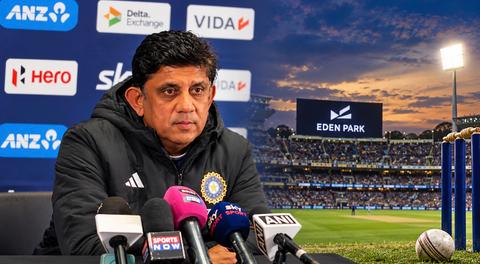
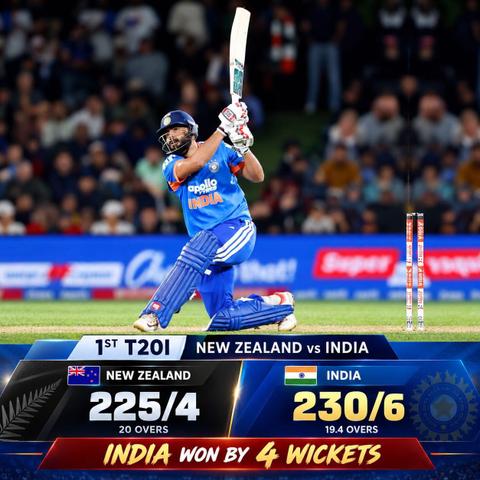
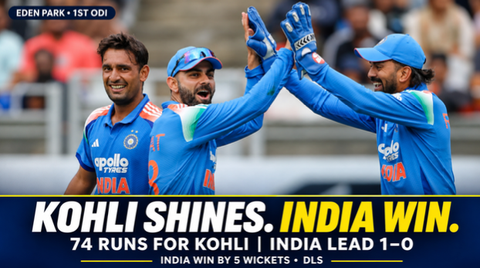
India lead 2–0 after a four-run DLS victory, but Gurnoor Brar and Kyle Jamieson’s post-match reflections revealed how little separated the teams on a difficult Wellington surface.
News
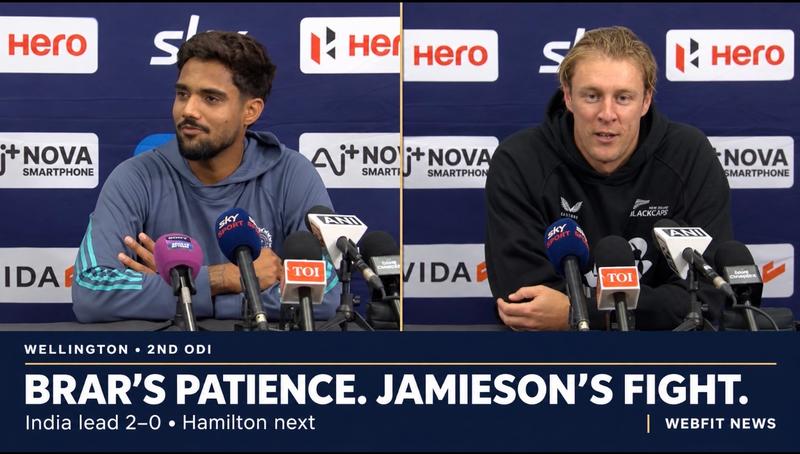
Brar’s patience, Jamieson’s fight: What Wellington revealed before India’s Hamilton test
India lead 2–0 after a four-run DLS victory, but Gurnoor Brar and Kyle Jamieson’s post-match reflections revealed how little separated the teams on a difficult Wellington surface.

Listen to this articleAudio accessibility
By Webfit News | 8 November 2026


Gurnoor Brar knew his bouncer could trouble New Zealand. The important decision was when to bowl it.
Kyle Jamieson knew 134 offered little protection. His challenge was to keep threatening India’s batters without giving them the loose deliveries that could settle the chase.
In Wellington on Saturday, both fast bowlers found rewards for their discipline. Only Brar left with a victory.
India won the second ODI by four runs under the Duckworth–Lewis–Stern method after rain stopped their chase at 113–7 from 26 overs. New Zealand had been dismissed for 134 in 41 overs, with Brar taking 4–30.
The result gave India a 2–0 lead in the five-match series. But the press conferences afterwards offered a more revealing account than the series score: India’s young quick was learning when to hold back, while New Zealand’s experienced seamer refused to mistake a narrow defeat for a reason to panic.
Brar’s lesson: The bouncer works better when it is earned
Brar’s explanation of his bowling added detail that his figures could not.
He described trying to draw batters forward before using the shorter delivery. He backed his bouncer, but recognised that bowling it too often could reduce its effectiveness.
On a surface offering uneven bounce and seam movement, that restraint mattered. The conditions provided opportunities, but the bowler still had to choose how to use them.
Brar’s approach centred on his natural length rather than a predetermined commitment to bowling full or short. He wanted to read the batter, sustain pressure and change his length at the right moment.
His wickets included Tom Latham, Glenn Phillips, Mitchell Santner and Nathan Smith. Latham and Phillips fell in the same over, leaving New Zealand 53–5.
Daryl Mitchell and Santner then added 59 for the sixth wicket. Mitchell’s 55 from 104 balls gave the innings some resistance, while Santner contributed 31 from 38.
Their partnership showed why India could not simply wait for the pitch to take wickets. The hosts were rebuilding, and the bowling unit needed to maintain pressure until another opening came.
Brar’s broader assessment was that helpful conditions demanded greater concentration. When runs were difficult to score, a careless over could carry an outsized cost.
India’s chase would underline that point.
Support matters, but the work still has to be done
Asked about the backing he had received, Brar described a positive team environment. He also made clear that support did not remove the responsibility to perform.
Encouragement could help a player settle. Improvement still required effort.
He spoke about bowling to Virat Kohli and Rohit Sharma in practice, including match-simulation sessions. Those opportunities were motivating, but his focus was on what he could learn from them.
Working with bowling coach Morne Morkel had also helped him consider how to adapt to different surfaces. Brar pointed to their height and broadly similar bowling styles as useful context for those conversations.
The World Cup remained a long-term ambition. His immediate concern was more practical: what could he improve before the next match in Hamilton?
For a bowler making his way in international cricket, Wellington supplied both encouragement and material to study.
Jamieson’s response: Keep making them play
Jamieson’s 3–35 helped turn a target of 135 into a serious examination.
Jacob Duffy removed Shubman Gill and Kohli early. Jamieson dismissed Rohit Sharma, then returned to take the wickets of Shreyas Iyer and Anshul Kamboj.
India were seven down when the rain arrived, with KL Rahul unbeaten on 26.
Jamieson explained that favourable conditions did not necessarily require elaborate plans. The starting point remained familiar: threaten the top of off stump, make batters play and see what movement the pitch offered.
The difficult part was sustaining that accuracy.
Defending a small total left little room for an expensive over. New Zealand needed wickets, but could not afford to make scoring easy while searching for them.
Their attack achieved enough to leave the match uncertain when play stopped. India still needed 22 runs to reach the original target.
No blame aimed at New Zealand’s batters
Jamieson resisted the suggestion that the bowlers should feel frustrated with the runs available to defend.
Some days, he explained, the attack wanted a bigger total. On others, the batters wanted more wickets from their bowlers.
It was a measured response after a result that could easily have encouraged finger-pointing.
New Zealand’s batting still requires attention. Mitchell and Santner’s recovery gave the bowlers something to work with, but too much depended on repairing the damage from 53–5.
Jamieson acknowledged the difficulty of judging a competitive score on surfaces that offered inconsistent pace and bounce. He also credited India’s bowlers for the pressure they had created.
The task now is to respond with a stronger innings, rather than assume another determined bowling performance will be enough.
Rahul kept India within reach
Jamieson’s assessment of Rahul reflected the familiarity of someone who had bowled to him repeatedly in practice at Delhi.
He praised Rahul’s quality and reliability in the middle order. Wellington offered another example of both.
Rahul did not complete the chase, but he helped India survive long enough to remain narrowly ahead of the rain calculation.
At the interruption, India’s 113 was four runs above the DLS par score of 109. When play could not resume, that advantage became the winning margin.
Jamieson would have welcomed more time to attack the remaining batters. Instead, New Zealand were left with a defeat after creating a genuine chance of victory.
A weakness exposed, or conditions doing their work?
India’s batting difficulties prompted a question about whether New Zealand had identified a vulnerability, particularly against short bowling.
Jamieson declined to make that leap.
He pointed instead to conditions that had challenged both teams, with inconsistent bounce troubling top-order and middle-order batters alike.
That distinction matters. India’s seven wickets deserve examination, but New Zealand had already lost all ten on the same surface.
Wellington demonstrated the threat of both attacks more clearly than it established a lasting weakness in either batting line-up.
Jamieson also welcomed a contest in which bowlers had a meaningful say. He hoped viewers appreciated the skill involved, including the work of the batters who found ways to stay in.
Hamilton puts the series on the line
The third ODI takes place at Seddon Park in Hamilton on Tuesday, 10 November, starting at 3pm NZDT.
India need one more victory to secure the five-match series. New Zealand must win to keep it alive.
For India, the challenge is to turn another strong bowling performance into a more controlled result. Wellington showed how quickly a modest chase could become precarious.
For New Zealand, the priority is to give their attack a larger margin for error. Their bowlers have demonstrated that they can create pressure. The batting must help them sustain it.
Neither side can assume Hamilton will offer the same assistance. Reading the surface and adjusting quickly will matter more than repeating a successful Wellington plan.
Brar left talking about improvement. Jamieson left talking about staying level.
India have the lead. New Zealand have evidence they can make the visitors uncomfortable. On Tuesday, the series will turn on who produces the more complete performance.
Source: Post-match press conferences with Gurnoor Brar and Kyle Jamieson following the second ODI in Wellington.
Was this article useful?