New Zealand’s electoral system allows voters to choose a local representative from one party while backing another party nationally.
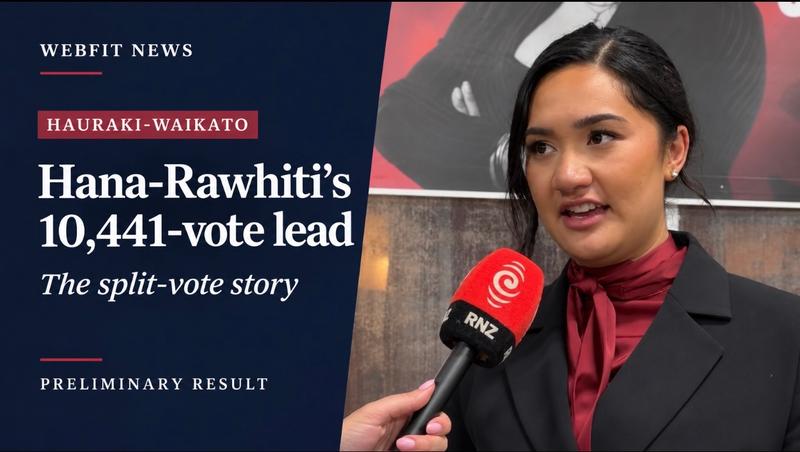
Hauraki-Waikato’s preliminary results show that distinction clearly:
- Maipi-Clarke’s candidate vote: 17,982.
- Labour’s party vote: 13,305.
- The Greens’ party vote: 9,091.
- Te Pāti Māori’s party vote: 1,469.
Maipi-Clarke received approximately 68.6 percent of valid candidate votes. Te Pāti Māori received about 5.6 percent of valid party votes locally.
Labour and the Greens together attracted approximately 84.7 percent of valid party votes.
The electorate was therefore capable of strongly backing a Te Pāti Māori representative while directing most of its party support elsewhere.
These totals cannot reveal how individual people combined their two votes. They also cannot establish whether voters were motivated by personal loyalty, tactical considerations, local work or national policy.
What they establish is a substantial distinction between support for the MP and support for her party.
A much larger cushion than in 2023
Maipi-Clarke entered Parliament in 2023 after defeating Labour veteran Nanaia Mahuta by 2,911 votes.
She received 12,939 votes to Mahuta’s 10,028 in that official result.
Her current preliminary lead of 10,441 is more than three times her final winning margin in 2023.
The comparison has limits. Special votes remain uncounted, Labour fielded a different challenger, and the election followed a boundary review. It should not be presented as a precise measure of a uniform swing.
Even with those qualifications, Maipi-Clarke is in a substantially stronger position than the narrow contest some voters may remember from her first election.
Why a local result matters nationally
The distinction between candidate and party support also helps explain Te Pāti Māori’s parliamentary position.
The preliminary national allocation projects five electorate seats for the party despite a nationwide party vote of 0.57 percent.
Under MMP, winning an electorate allows a party to qualify for representation without reaching the usual five-percent threshold. A party also keeps electorate seats it wins beyond its proportional entitlement, creating an overhang.
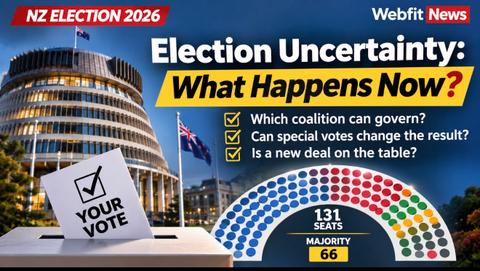
The preliminary allocation projects a 131-member Parliament.
Hauraki-Waikato’s result illustrates how that can happen: an electorate can strongly endorse an individual candidate without giving their party comparable support.
It does not automatically make that party a kingmaker. Its negotiating influence depends on the final seat totals and which combinations can command Parliament’s confidence.
What a stronger mandate should deliver
In her post-election RNZ interview, Maipi-Clarke emphasised the next generation and described serving her iwi as an obligation.
For young people, the practical questions extend beyond who occupies a parliamentary seat.
A pre-election Whakaata Māori–Curia survey of 500 Māori aged 18–29 found that 39 percent identified the cost of living as the issue most likely to influence their vote. Jobs followed on 16 percent, with housing and homelessness on 10 percent.
More than half, 54 percent, reported difficulty finding a job during the previous 12 months.
The survey covered young Māori nationally, rather than Hauraki-Waikato specifically. It provides context for the challenges facing rangatahi, rather than an explanation of Maipi-Clarke’s result.
Her youth engagement has included a September leadership hui at Te Kauwhata College involving more than 130 students from seven schools. Topics included mental health, dental care and vaping.
The test for a second term will be whether those conversations translate into effective advocacy, parliamentary scrutiny and practical responses to constituents’ needs.
Strongly positioned, with counting still to finish
All voting places reporting does not mean every vote has been counted. Special votes remain outstanding, and the official count includes checks and recounting of ordinary votes. Final results are scheduled for 27 November.
Maipi-Clarke’s advantage is substantial, but her result remains preliminary.
The clearest story is already visible: Hauraki-Waikato has given her a personal mandate far larger than her party’s local support. That gives her a powerful platform, alongside a responsibility to represent people whose political preferences extend well beyond Te Pāti Māori.
Sources: Electoral Commission results; RNZ’s post-election interview; Whakaata Māori–Curia polling; Te Ao Māori News; Te Tiratū Iwi Māori Partnership Board.