Yashasvi Jaiswal’s attacking 85 and KL Rahul’s unbeaten half-century help India respond to New Zealand’s 368, after Henry Nicholls and Glenn Phillips rescue the hosts from a difficult position.
By Webfit News Sports | 20 November 2026 | Wellington
Friday 25 December
Countdown to ChristmasYashasvi Jaiswal’s attacking 85 and KL Rahul’s unbeaten half-century help India respond to New Zealand’s 368, after Henry Nicholls and Glenn Phillips rescue the hosts from a...
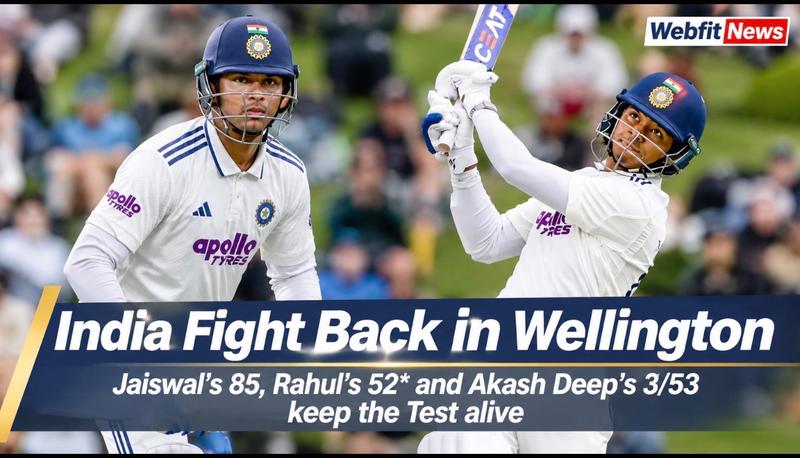
Yashasvi Jaiswal’s attacking 85 and KL Rahul’s unbeaten half-century help India respond to New Zealand’s 368, after Henry Nicholls and Glenn Phillips rescue the hosts from a difficult position.
By Webfit News Sports | 20 November 2026 | Wellington
There is something about Test cricket that makes it difficult to predict. Just when one team appears to be taking control, a partnership, a wicket or a remarkable individual performance can change the entire picture.
The second day of the Wellington Test between India and New Zealand was a perfect example.
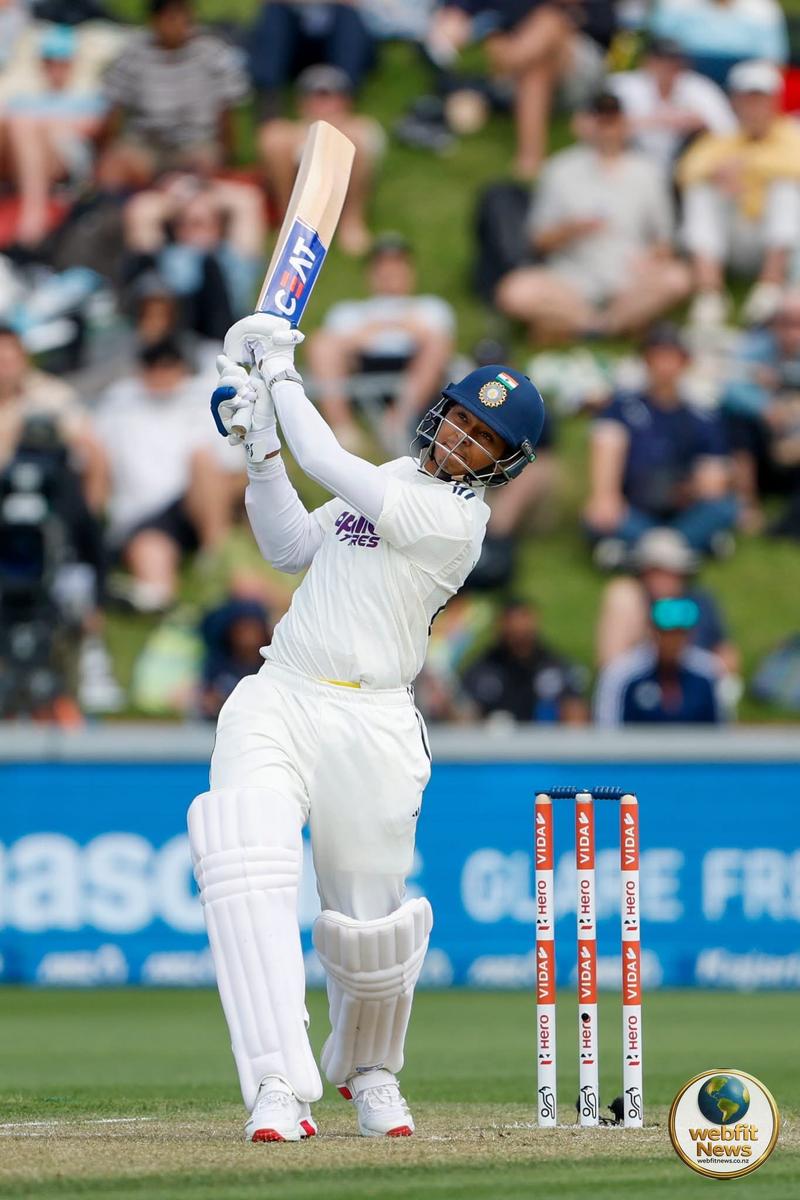
New Zealand had recovered from a difficult position to post a competitive 368 in their first innings. India then responded with confidence, reaching 159 for one at stumps, thanks largely to Yashasvi Jaiswal’s entertaining 85 and an unbeaten half-century from KL Rahul.
India still trail by 209 runs, but with nine wickets in hand, the visitors have given themselves an opportunity to shape the next phase of the contest.
Day 2: Match at a Glance
|
Match details |
Score |
|
Venue |
Basin Reserve, Wellington |
|
New Zealand, first innings |
368 all out |
|
India, first innings |
159/1 (39 overs) |
|
India’s deficit |
209 runs |
|
Yashasvi Jaiswal |
85 (89 balls) |
|
KL Rahul |
52 not out |
|
Devdutt Padikkal |
16 not out |
|
Henry Nicholls |
175 not out |
|
Glenn Phillips |
118 |
|
Akash Deep |
3/53 |
|
Jasprit Bumrah |
4/92 |
From 70/5 to 368: New Zealand Refuse to Give In
At one stage, New Zealand were struggling at 70 for five. India had every reason to believe they could dismiss the hosts cheaply and take early control of the match.
But Henry Nicholls and Glenn Phillips had other ideas.
The pair put together an outstanding 216-run partnership, gradually turning a difficult situation into a strong recovery.
Nicholls showed remarkable patience and determination. He was prepared to leave deliveries, defend when necessary and punish anything loose. His unbeaten 175 was an innings built on concentration and an understanding of what his team needed.
Phillips, meanwhile, brought a different kind of energy.
His 118 gave the innings momentum and forced India’s bowlers to reconsider their plans. Together, the two batters reminded everyone that a Test innings is rarely finished simply because five wickets have fallen.
For New Zealand, their partnership was the difference between a potentially disappointing first innings and a total that keeps them firmly in the contest.
Akash Deep Provides the Breakthrough India Needed
When a partnership grows beyond 200 runs, the pressure naturally shifts towards the bowling side.
India needed someone to break the stand, and Akash Deep delivered.
His dismissal of Glenn Phillips, with a delivery that struck the top of off stump, was one of the most important moments of the innings.
Akash Deep finished with figures of 3 for 53, including the wicket of Kyle Jamieson. His contribution was about more than the wickets themselves. He helped India regain some control after a frustrating period in the field.
Jasprit Bumrah finished as India’s leading wicket-taker with four for 92, while Anshul Kamboj picked up two wickets and Prasidh Krishna claimed one.
The Indian attack had its difficult moments, particularly against Nicholls and Phillips, but it eventually prevented New Zealand from pushing beyond 400.
That could become significant as the match progresses.
Jaiswal Brings His Own Style to New Zealand
For Yashasvi Jaiswal, this was an important opportunity.
Playing his first Test in New Zealand, the young Indian opener faced a bowling attack familiar with the conditions and capable of making the new ball move.
But Jaiswal did not allow the occasion to dictate his approach.
He played with confidence, finding boundaries and looking to score whenever the opportunity presented itself.
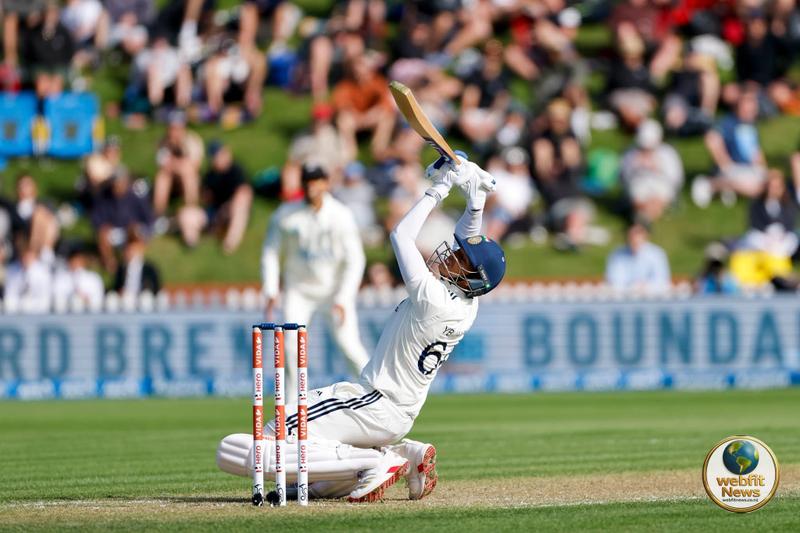
His 85 came from just 89 deliveries and included 16 fours.
What made the innings particularly impressive was his willingness to maintain his natural attacking game without completely abandoning the discipline required in Test cricket.
He was prepared to defend good deliveries, but he was equally ready to drive, cut and take advantage of anything offering width.
There was a century waiting for him, and he would understandably have been disappointed to miss it.
Matt Henry eventually dismissed Jaiswal following a successful review, bringing an end to an innings that had already changed the mood of India’s reply.
For a young batter experiencing New Zealand Test conditions for the first time, it was an encouraging performance.
KL Rahul Shows Why Experience Matters
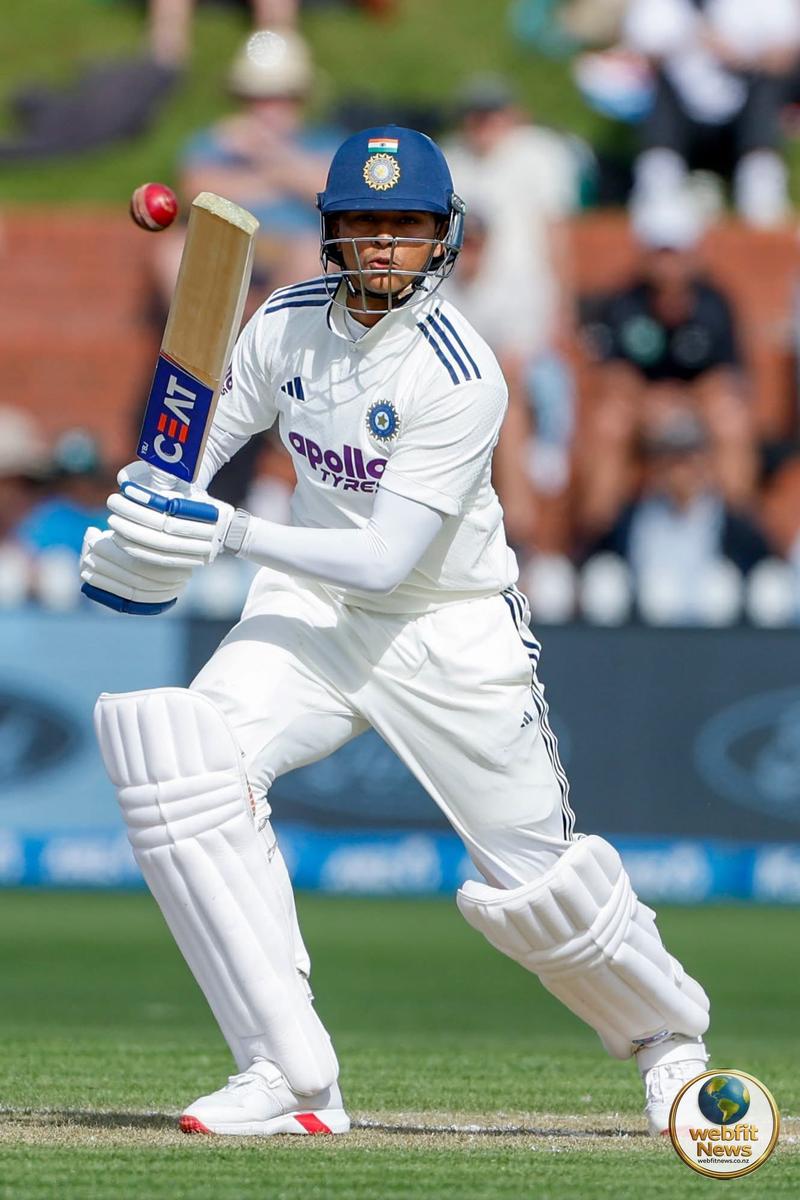
While Jaiswal attracted attention with his attacking stroke play, KL Rahul quietly went about building his innings.
And that contrast worked beautifully for India.
Rahul was patient outside off stump, careful with his shot selection and willing to let the ball pass when there was little to gain from playing at it.
He survived an early LBW scare but did not allow it to disrupt his concentration.
By stumps, Rahul had reached 52 not out and looked increasingly comfortable at the crease.
His contribution was especially valuable because India did not need both openers attacking at the same pace.
Jaiswal supplied the momentum. Rahul provided the stability.
Together, they added 130 runs for the first wicket, giving India the start they needed after spending considerable time in the field.
Rahul’s innings also demonstrated the value of adapting to conditions rather than trying to dominate every delivery.
He may not have produced the most eye-catching shots of the day, but his presence at the crease could prove crucial on Day 3.
A Promising Start for Devdutt Padikkal
After Jaiswal’s dismissal, Devdutt Padikkal joined Rahul and helped India negotiate the remaining overs without further damage.
Padikkal finished unbeaten on 16.
His immediate responsibility was not to produce a spectacular innings. It was to settle, understand the conditions and ensure India did not lose another wicket before stumps.
He managed that task.
The challenge now is to convert a promising start into a substantial contribution.
Why Day 3 Could Decide the Direction of This Test
India have done the hard work of establishing a strong opening partnership, but the match is far from decided.
A deficit of 209 runs remains substantial.
New Zealand will know that two or three early wickets on the third morning could quickly change the situation.
Matt Henry and Kyle Jamieson will be looking to exploit any movement available with the ball, while the hosts will hope to prevent India’s middle order from settling.
For India, the priorities are equally clear.
Rahul needs to continue building his innings, Padikkal has an opportunity to establish himself, and the middle order must be prepared to bat for long periods.
A first-innings lead would put India in a strong position, but getting there will require patience as much as attacking cricket.
The visitors cannot afford to assume that their impressive start has already won them the advantage.
Three Things to Watch on Day 3
1. Can KL Rahul turn his fifty into a big hundred?
Rahul is well set and has already shown an understanding of the conditions. A long innings from him could provide the foundation for India’s reply.
2. Can New Zealand strike early?
The hosts need wickets to prevent India from turning a promising start into a dominant position. The opening session could be particularly important.
3. Will India’s middle order make the difference?
India have nine wickets remaining. If the middle order builds on the work of the openers, the visitors could move beyond New Zealand’s total and begin putting pressure back on the hosts.
A Test Match That Has Already Given Us Plenty
There have been several outstanding individual performances in Wellington.
Henry Nicholls rescued New Zealand with an unbeaten 175. Glenn Phillips produced a superb attacking century. Akash Deep delivered important breakthroughs. Jaiswal entertained with his fearless batting, while Rahul demonstrated the value of patience.
Each performance has played a part in shaping the contest.
And that is what makes this Test so interesting.
New Zealand have 368 runs on the board. India have nine wickets in hand. Neither side can afford to relax.
The first two days have belonged to different moments and different players.
Day 3 will reveal whether India can turn their strong response into a commanding position or whether New Zealand’s bowlers have another twist waiting.
For now, the contest is beautifully balanced, and there is plenty of cricket still to come.
Follow Webfit News for cricket coverage, match reports and updates from across New Zealand.
Was this article useful?