What did Willie Jackson say?
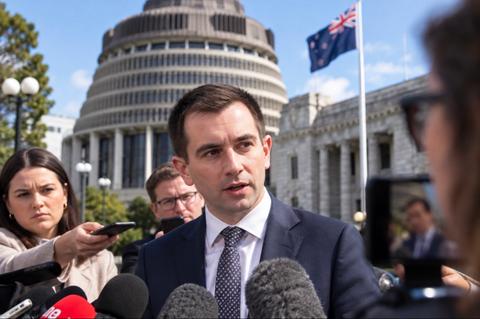
Jackson’s comments came during an appearance on the Ryan Bridge TODAY programme, where he was discussing the ambassador’s response to Wayne Brown.
He objected strongly to the way Novelly had spoken about Auckland’s elected mayor.
Jackson called the ambassador a “clown” and argued that he should apologise or be asked to leave New Zealand.
Importantly, Jackson was not endorsing Brown’s criticism of democracy.
His objection was directed at the ambassador’s conduct.
That distinction matters because disagreeing with a mayor’s political views does not automatically mean accepting personal attacks against him.
But Jackson’s demand went beyond criticism. Calling for a foreign ambassador’s removal is a serious diplomatic proposition.
Labour makes its position clear
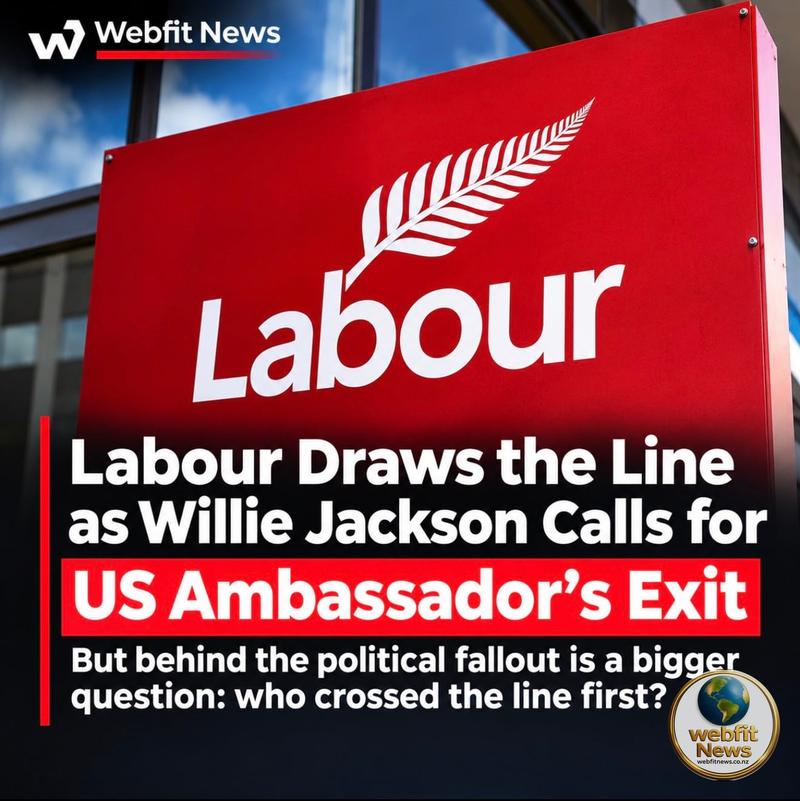
Labour moved quickly to separate the party from Jackson’s remarks.
A party spokesperson told RNZ:
“Willie Jackson’s comments are his personal views and do not represent the position of the Labour Party.”
Labour also rejected the suggestion that the ambassador should be expelled, emphasising that international relationships should be managed through respectful dialogue.
The response was clear.
Jackson had expressed his opinion, but Labour was not prepared to adopt it as party policy.
That is significant because Jackson is not a minor political figure. He is a senior Labour MP and a former Cabinet minister.
When someone in that position publicly calls for the removal of an ambassador, the statement naturally attracts attention beyond an ordinary political disagreement.
Labour’s intervention was therefore more than a routine clarification. It was an effort to establish where the party stood on a potentially sensitive diplomatic matter.
But what started this argument?
The controversy began after Wayne Brown returned from an official visit to China.
Brown praised aspects of China’s economic development and expressed frustration with the performance of New Zealand’s political system.
His suggestion that democracy had “had its day” attracted criticism.
The mayor subsequently clarified that he was not advocating the abolition of elections. His argument, he said, concerned New Zealand’s political and economic performance and what the country might learn from China.
The US ambassador was among those who challenged Brown’s remarks.
Novelly initially responded with “OK Boomer” on social media before making further comments about the mayor’s understanding of democracy and international security.
During an RNZ interview, he referred to American mayors who had been caught smoking crack and suggested that might explain Brown’s remarks.
There was no evidence presented that Brown had used drugs. The comment was a personal jibe rather than a substantiated allegation.
And that is where the argument took a different turn.
Instead of debating whether New Zealand could learn from China’s economic development, attention shifted to whether a foreign diplomat should speak about an elected New Zealand official in such terms.
Three people, three responsibilities
The controversy involves individuals whose public roles are fundamentally different.
|
Public figure
|
Position
|
The question raised
|
|
Wayne Brown
|
Auckland Mayor
|
Should an elected mayor make sweeping statements about democracy without clearly explaining what he means?
|
|
Jared Novelly
|
US Ambassador to New Zealand
|
Should a diplomat respond to political disagreement with personal remarks?
|
|
Willie Jackson
|
Labour MP
|
Is calling for an ambassador’s removal a proportionate response?
|
All three questions deserve scrutiny.
Brown’s comments can be challenged without defending the ambassador’s language.
The ambassador’s conduct can be questioned without supporting Jackson’s demand.
And Labour can reject Jackson’s proposal without suggesting that foreign diplomats should be immune from criticism.
These positions are not contradictory.
They are part of holding public officials to consistent standards.
The bigger issue Labour cannot ignore
There is a political difference between a backbench MP expressing frustration and a senior party figure suggesting that a foreign ambassador should leave the country.
Jackson’s comments were personal, according to Labour.
But senior politicians do not speak in a vacuum.
Their statements can influence public perceptions of their party, particularly on matters involving international relations.
Labour’s decision to distance itself from Jackson suggests the party recognised that distinction.
It also leaves an interesting question.
How much freedom should senior politicians have to express personal views on sensitive diplomatic matters before those views become a problem for their party?
There is no simple answer.
MPs should be free to express opinions, including criticism of foreign representatives. At the same time, parties have a legitimate interest in ensuring the public understands their official position.
In this case, Labour has chosen to draw that boundary publicly.
Was calling for expulsion going too far?
Jackson’s criticism of the ambassador and his demand for removal should be considered separately.
An apology can be requested when someone believes public comments have crossed a line.
Expelling an ambassador is an entirely different matter.
Under the Vienna Convention on Diplomatic Relations, a receiving country can declare a diplomat persona non grata.
That is a formal diplomatic mechanism with consequences for relations between governments.
It is not a decision an individual MP can make.
Nor is it normally treated as the equivalent of demanding an apology after an offensive remark.
Whether Novelly’s comments warranted a diplomatic response is a legitimate question.
But the seriousness of Jackson’s proposed response helps explain why Labour was unwilling to support it.
What everyone seems to have forgotten
There is another issue buried beneath the exchange of insults.
Wayne Brown’s China visit was an official trip intended to strengthen Auckland’s economic relationships.
The delegation’s programme included business engagement, transport discussions and opportunities involving technology and investment.
China remains New Zealand’s largest trading partner.
There are legitimate reasons for Auckland to maintain commercial relationships with Chinese cities and businesses.
There are also legitimate reasons to question Brown’s comments about democracy.
But neither issue is resolved by a dispute over who delivered the most offensive remark.
Auckland residents are entitled to know what the mayor’s trip achieved.
They are also entitled to expect their elected representatives to explain their positions clearly.
Those questions deserve more attention than the personal confrontation now dominating the headlines.
Webfit News analysis: Everyone can criticise, but everyone must also answer for their words
The central problem with this controversy is not that public figures disagree.
Disagreement is part of democracy.
Brown is entitled to criticise New Zealand’s political and economic performance. But when an elected mayor makes a sweeping statement about democracy, he should expect difficult questions.
Novelly is entitled to defend democratic institutions and the interests of the United States. But diplomatic criticism does not require personal insinuations.
Jackson is entitled to challenge the ambassador’s conduct. But demanding that a diplomat leave the country is a significant step requiring a stronger justification than frustration over offensive language.
Labour, meanwhile, has made its position clear by rejecting Jackson’s proposal.
None of these conclusions requires taking sides between Labour and National, New Zealand and the United States, or democracy and China’s economic model.
They require applying reasonable standards to people who hold public responsibility.
Where does this leave the controversy?
For now, Labour has drawn a clear line between Jackson’s personal views and the party’s official position.
But the wider argument remains unresolved.
Brown’s comments about democracy still deserve examination. The ambassador’s personal remarks remain open to criticism. And Jackson’s call for expulsion has raised questions about political judgement and diplomatic proportionality.
What began as a discussion about China’s economic development has become a dispute over language, respect and responsibility.
Perhaps the most revealing part is that all three men were, in different ways, claiming to defend something important.
Yet the public conversation has offered far more heat than clarity.
Democracy allows public figures to speak freely. It also allows the public to question whether they have spoken wisely.
That standard should apply equally to mayors, MPs and ambassadors.
Sources: RNZ, 1News, NZ Herald and Newstalk ZB reporting on the comments by Wayne Brown, Jared Novelly and Willie Jackson, and Labour’s subsequent response. Analysis and editorial interpretation by Webfit News.