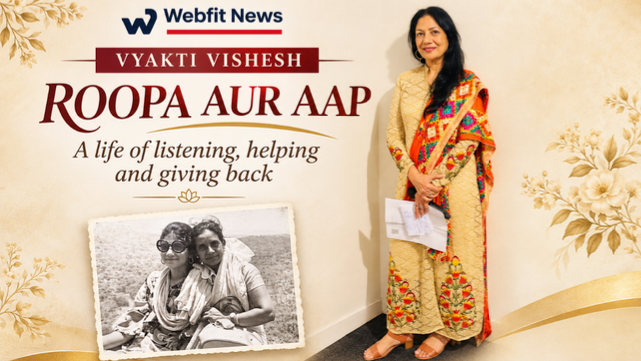
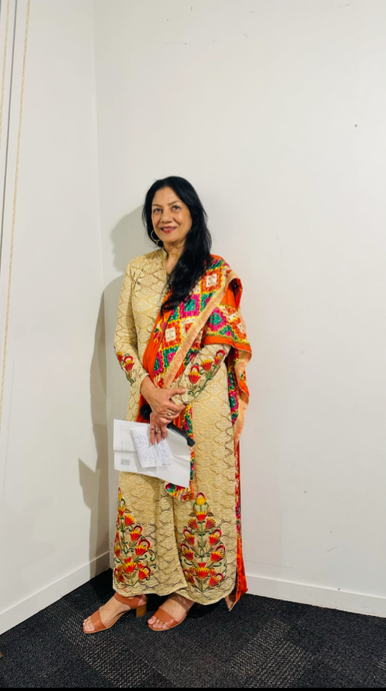
Vyakti Vishesh | Roopa Ji: The Woman Who Chose to Listen
From Radio Tarana to Roopa Aur Aap, a journey shaped by motherhood, personal sacrifice and more than three decades of community involvement in New Zealand.
From Radio Tarana to Roopa Aur Aap, a journey shaped by motherhood, personal sacrifice and more than three decades of community involvement in New Zealand.
By Sandy | Webfit News | Vyakti Vishesh (व्यक्ति विशेष)
Before there was an organisation, a network of volunteers or a recognised community initiative, there was simply a woman willing to listen.
Sometimes, that meant meeting someone in a restaurant because there was no office. Sometimes, it meant giving up personal time to hear another person's worries. And sometimes, it meant being there for someone who had nobody else to turn to.
For Roopa ji, these small acts of kindness gradually became something much bigger.
What began with conversations during her time at Radio Tarana eventually developed into Roopa Aur Aap, a community initiative supporting individuals and families facing personal difficulties, isolation and challenging circumstances.
But behind her years of community involvement lies another story. One of a daughter raised with strong family values, a mother determined to find the right support for her child, a Hindi lecturer who found a new purpose in New Zealand, and a woman who has made considerable personal sacrifices to help others.
In this edition of Webfit News' Vyakti Vishesh, Roopa ji shares her journey in her own words, reflecting on the experiences that shaped her life, the people she has supported and the legacy she hopes to leave behind.
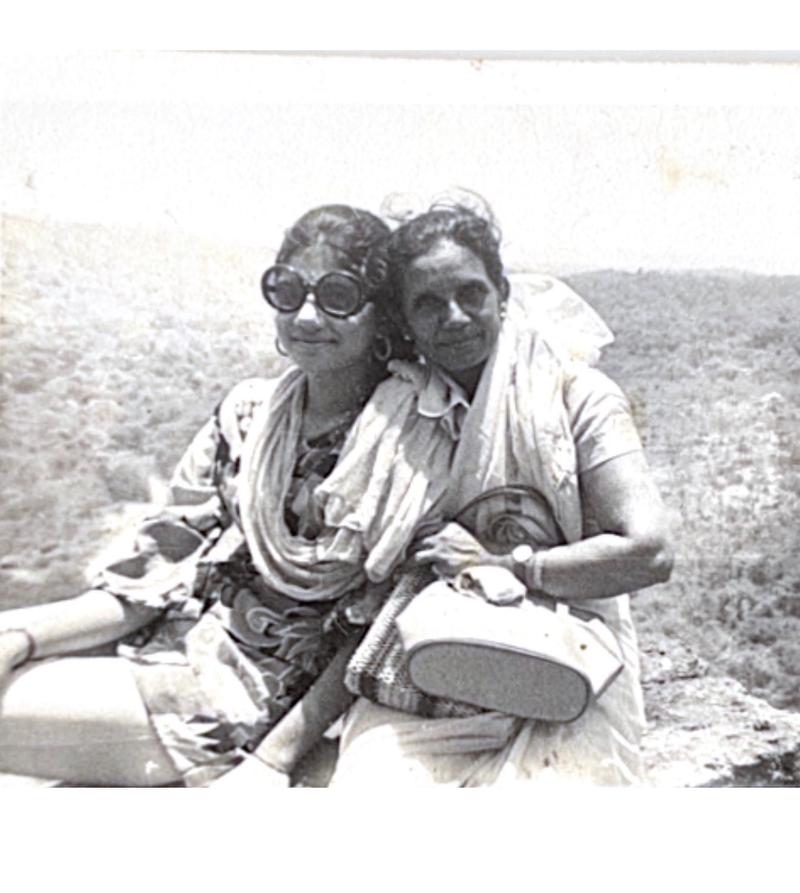
The First Girl Born in Seven Generations
Roopa ji's story begins with an unusual family distinction.
She was the first girl born into her family in seven generations.
Growing up alongside three older brothers, she remembers a childhood filled with affection, protection and care.
"I was particularly fortunate to be the first girl born into our family in seven generations, so I grew up very protected and surrounded by love," she recalls.
Her parents played an important role in shaping her outlook on life.
She describes them as philosophical and philanthropic people who believed that helping others was a responsibility rather than an achievement to be celebrated.
Those values stayed with her.
Before coming to New Zealand, Roopa ji completed a master's degree in Hindi literature and worked as a Hindi lecturer.
Teaching gave her an opportunity to share her knowledge and strengthen her connection with language and culture, something that would remain important throughout her life.
At that stage, she had little reason to imagine that her future would involve supporting migrant families thousands of kilometres away.
A Journey to New Zealand That Began With Family
Roopa ji did not initially travel to New Zealand with a plan to establish a community organisation.
Her journey began as a visit to spend time with her brothers and extended family.
However, her daughter Sheena's needs became an important turning point.
Sheena has special needs, and Roopa ji says New Zealand provided an opportunity for her daughter to receive an appropriate diagnosis, care and support.
For Roopa ji, the experience was deeply personal.
Like any parent seeking the best possible future for their child, she wanted to understand her daughter's needs and ensure she received the assistance necessary for her wellbeing.
That experience also influenced how she came to understand the difficulties faced by other families.
Navigating unfamiliar systems, finding appropriate support and adjusting to a different society can be challenging, particularly for people who are new to a country.
Her experiences as a mother helped shape the patience and understanding she would later bring to her community work.
Radio Tarana: Where Listening Became a Calling
Roopa ji's formal involvement with New Zealand's Indian community began through Bhartiya Mandir in 1994.
In 1995, she became involved with Radio Tarana, a platform that allowed her to connect with people across the South Asian community.
But something happened that went beyond broadcasting.
Listeners began contacting her about their personal lives.
Some were facing family difficulties. Others needed advice, reassurance or simply someone who would listen without passing judgement.
Gradually, Roopa ji became a trusted voice.
"While working at Radio Tarana, people would regularly call in to discuss their personal problems and seek advice. I naturally became someone they could turn to as a saheli, a friend and confidante," she explains.
Those conversations revealed something important.
There were people within the community who needed support but did not always know where to find it.
Some were uncomfortable discussing sensitive issues openly. Others lacked family networks or trusted contacts.
For many, speaking to someone who understood their language and cultural background made it easier to share their concerns.
Roopa ji realised that listening could be the beginning of meaningful support.
Roopa Aur Aap: An Initiative Born From Trust
Roopa Aur Aap did not begin with a large budget, a dedicated office or a team of professionals.
It grew naturally from the relationships Roopa ji had built through her community involvement.
As more people approached her for help, the need for a more organised support initiative became increasingly clear.
The early years came with practical challenges.
One of the biggest was finding somewhere suitable to meet people.
Without a dedicated space, Roopa ji would often meet individuals in restaurants or other public places.
Financial limitations created additional difficulties.
She could not always offer monetary assistance, even when someone was facing genuine hardship.
But she could offer her time, experience and attention.
"I realised that sometimes, simply having someone who genuinely listens can make an enormous difference," she says.
That simple belief became central to Roopa Aur Aap.
Over time, others began recognising the value of the initiative.
People volunteered their time, shared professional knowledge and offered assistance because they believed in its purpose.
What began as one woman's effort gradually became a collective community initiative.
For Roopa ji, that willingness of others to contribute remains one of the most meaningful achievements of her journey.
The Difficult Reality Faced by Some Migrant Women
Among the most challenging experiences Roopa ji has encountered are those involving women who arrive in New Zealand after marriage and subsequently face abuse, isolation or abandonment.
Many have left behind their families, familiar surroundings and established support networks.
When a marriage becomes unsafe or breaks down, the consequences can be particularly difficult for someone unfamiliar with local services and support systems.
"One of the most heartbreaking things I have witnessed is women who have been brought to New Zealand following marriage, only to experience abuse, isolation or abandonment," she shares.
These situations have strengthened her belief that communities must create safe environments where people can discuss difficult circumstances without fear of judgement.
She has also witnessed how differences in cultural expectations and the challenges of adjusting to life in New Zealand can create tensions within families.
Such difficulties can affect women, children and older generations.
Roopa ji believes education, communication and understanding are essential.
People experiencing abuse or family difficulties should be able to seek appropriate assistance without feeling ashamed or isolated.
Her experiences have also shown her that community support is most effective when compassion is accompanied by an understanding of people's individual circumstances and needs.
The Sacrifice People Rarely See
Community work is often recognised through public events, appreciation messages and photographs.
What people do not always see is the personal time involved.
For Roopa ji, one of the most difficult sacrifices has been time away from her daughter, Sheena.
Her commitment to helping others has frequently required her to make herself available when someone needed support.
That has sometimes meant giving up time she could otherwise have spent with her family.
She speaks openly about that sacrifice.
"One of my biggest sacrifices has been the time spent away from my daughter, Sheena, because of my commitment to helping others."
It is a deeply personal part of her journey.
Her motivation, she says, continues to come from the values her parents taught her.
They believed that if someone had the ability to help another person, they should make the effort.
Roopa ji has carried that belief into her own life.
She acknowledges that the journey has not always been easy, but knowing she may have made a difference in someone's life has made those sacrifices worthwhile.
Mental Health: Breaking the Silence Within Our Communities
When asked what changes she would like to see within New Zealand's migrant communities, Roopa ji speaks particularly strongly about mental health and emotional wellbeing.
Despite greater public awareness, she believes these subjects remain difficult to discuss in some families.
People may hesitate to seek help because they fear being judged, misunderstood or viewed as weak.
This silence can prevent individuals from receiving support when they need it most.
"We all need support at different stages of our lives, and it takes courage to acknowledge when we need help," she says.
Roopa ji wants families and communities to become more comfortable discussing emotional wellbeing, relationship difficulties and personal challenges.
She believes people should feel safe enough to speak openly and seek appropriate assistance.
Her message is particularly relevant to migrant families who may be balancing cultural expectations, generational differences and the pressures of establishing a life in a new country.
Asking for help, she believes, should be recognised as an act of courage.
Keeping Language, Culture and Identity Alive
Community wellbeing is not the only subject close to Roopa ji's heart.
Her background as a Hindi lecturer has given her a lasting appreciation for language, literature and cultural traditions.
She believes younger generations growing up in New Zealand should have opportunities to understand their heritage and maintain connections with their cultural roots.
Through broadcasting, education and community engagement, she has worked to encourage conversations about language and identity.
For her, preserving culture does not mean resisting change.
It means ensuring that children understand where their families come from and appreciate the traditions and values that have shaped previous generations.
She sees cultural education and community service as connected responsibilities.
Both help build a sense of belonging and encourage people to understand one another.
What Does Success Mean to Roopa Ji?
Ask Roopa ji about the achievements of Roopa Aur Aap, and her answer is not centred on numbers, awards or public recognition.
Instead, she talks about trust.
She values the confidence people have placed in her and the willingness of volunteers to contribute their time and professional skills.
"For me, this has been one of our greatest achievements. What started as an individual effort gradually became a collective community initiative."
That development matters to her because it shows that helping others does not have to depend entirely on one person.
When people share responsibility, knowledge and resources, community support can become stronger.
Her hope is that Roopa Aur Aap will continue growing and reach more individuals and families who need guidance and assistance.
She wants the initiative to remain grounded in the same values that shaped its beginnings: kindness, understanding and a genuine willingness to help.
A Message for the Next Generation
After more than three decades of involvement in New Zealand's Indian community, Roopa ji has a straightforward message for younger people who want to make a difference.
Do not wait until you have substantial resources or an important position.
Begin with what you can offer.
That could be your time, your knowledge, your professional experience or your willingness to support someone through a difficult moment.
"You don't need enormous resources to make a difference; sometimes simply giving someone your time and listening can change their life," she says.
She also encourages parents to teach their children the importance of community service, compassion and giving back.
For Roopa ji, these values should not end with one generation.
She hopes younger community leaders will continue the work of supporting others while finding their own ways to respond to changing community needs.
Above all, she wants humanity to remain at the centre of that work.
Beyond the Name, the Woman Behind Roopa Aur Aap
There is something particularly meaningful about how Roopa ji's journey developed.
She did not begin by trying to build an organisation.
She began by responding to people.
A listener who needed advice. A woman facing an uncertain future. A family struggling to understand a difficult situation. Someone who simply wanted to be heard.
Over time, those individual conversations became part of a much larger commitment.
Her story is also one of contrasts.
A girl who grew up surrounded by the protection and affection of her family later encountered people who lacked those very things.
A mother who came to New Zealand seeking support for her daughter found herself helping others navigate their own difficulties.
A Hindi lecturer became a broadcaster, confidante and community supporter.
And a woman who once met people in restaurants because she had no office helped build an initiative that others now contribute to.
Not every problem can be solved through a conversation. Some situations require professional, legal or specialist assistance.
But a compassionate conversation can help someone feel heard, understand their options and find the confidence to seek further support.
That is perhaps the most enduring message from Roopa ji's journey.
You do not always need to change someone's entire life. Sometimes, helping them take the next step is enough.
Webfit News Thanks Roopa Ji
Webfit News extends its sincere appreciation to Roopa ji for generously sharing her personal journey, experiences and reflections for our Vyakti Vishesh (व्यक्ति विशेष) series.
We are particularly grateful for her openness in discussing her family, her daughter Sheena, the personal sacrifices involved in community service and the sensitive challenges faced by individuals and families within our communities.
Her story offers a valuable perspective on what it means to serve others, not through grand gestures, but through patience, compassion and consistent personal commitment.
We also acknowledge the contribution of the volunteers and supporters who have joined the work of Roopa Aur Aap over the years.
Thank you, Roopa ji, for trusting Webfit News with your story and allowing our readers to know the person behind Roopa Aur Aap.
We wish you, Sheena and everyone associated with the initiative continued strength, happiness and success.
Vyakti Vishesh (व्यक्ति विशेष) is a special Webfit News interview series featuring the personal journeys, experiences, achievements and contributions of individuals making a difference in New Zealand's communities.
Interview and feature: Sandy
Webfit News Interview format: Written interview Photographs: Supplied by Roopa ji