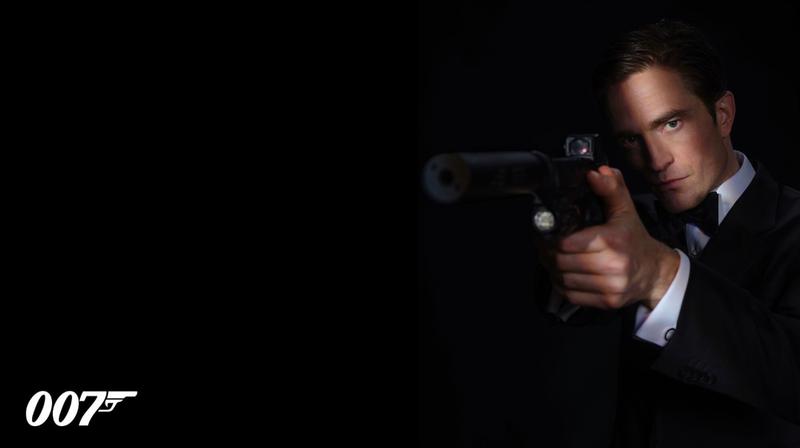
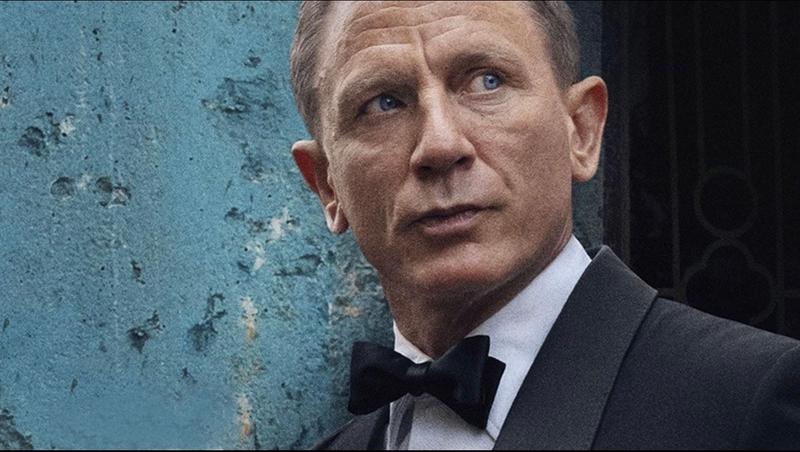
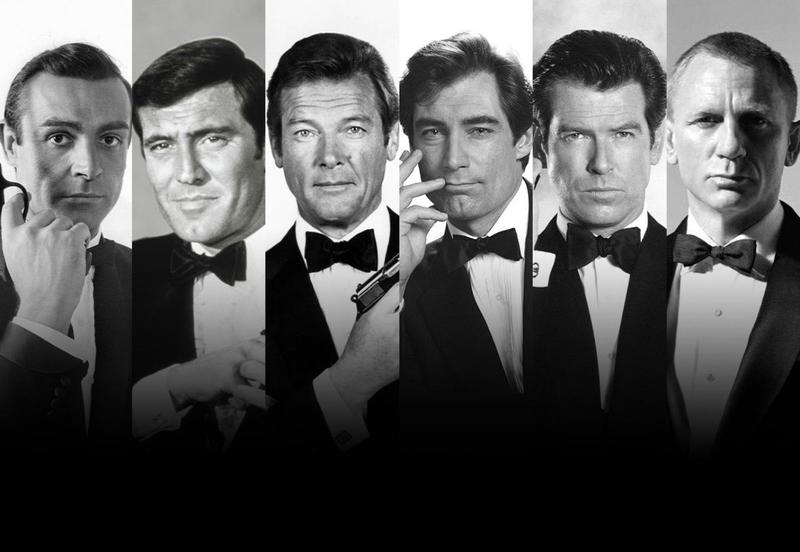
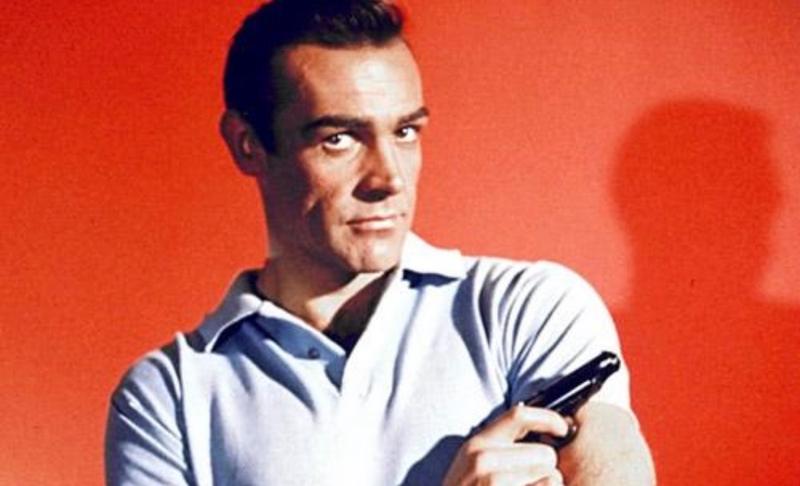
Six actors have played 007 across six decades, each reshaping the world’s most recognisable secret agent. As Robert Pattinson takes over, the real question is not whether he can fill Daniel Craig’s shoes, but whether James Bond can survive another reinvention without losing his identity.
By Webfit News Entertainment Desk | 22 November 2026
James Bond has survived bullets, betrayal, nuclear threats and villains with elaborate plans for world domination. What he has never quite escaped is the burden of his own history.
Every actor who inherits the role is measured against someone who came before him. Every reinvention is greeted with suspicion. And every new Bond film must answer a question that has followed the franchise since Sean Connery first walked into a casino in 1962: how much can James Bond change before he stops being James Bond?
That question has returned with the announcement that British actor Robert Pattinson, 40, will become cinema’s seventh official James Bond.
Amazon MGM Studios confirmed his casting on 16 November, ending years of speculation over Daniel Craig’s successor.
Denis Villeneuve, the filmmaker behind Arrival, Blade Runner 2049 and the Dune films, will direct the next instalment from a screenplay by Peaky Blinders creator Steven Knight.
Pattinson called the appointment the honour of a lifetime.
But beneath the excitement lies a more consequential development.
For the first time in the franchise’s history, a new Bond has been selected without the Broccoli family exercising the creative authority that shaped the series for more than six decades.
Pattinson is not merely inheriting a famous character.
He is arriving at a moment when the people deciding Bond’s future have changed too.
Six actors, six interpretations, one remarkably durable character
The official Bond series has produced 25 films since Dr. No opened in 1962.
Its six previous leading men approached the character differently, sometimes reflecting the prevailing tastes of their era and sometimes challenging them.
Actor
First Bond film
Official films
Defining characteristic
Sean Connery
Dr. No (1962)
6
Dangerous charm and authority
George Lazenby
On Her Majesty’s Secret Service (1969)
1
Romantic vulnerability
Roger Moore
Live and Let Die (1973)
7
Humour and elegant escapism
Timothy Dalton
The Living Daylights (1987)
2
Severity and moral tension
Pierce Brosnan
GoldenEye (1995)
4
Polished confidence and modern spectacle
Daniel Craig
Casino Royale (2006)
5
Physical realism and emotional consequences
Robert Pattinson
Upcoming
0
Yet to be established
Connery’s independently produced 1983 film Never Say Never Again is excluded from the official series count.
The numbers are useful. The performances are more revealing.
Bond has never been one fixed personality. He has been a succession of interpretations built around a few enduring characteristics: intelligence, composure, appetite for risk and an ability to remain fascinating even when his behaviour is difficult to admire.
The franchise’s longevity owes much to its willingness to alter the balance between those qualities.
Connery did not simply play Bond. He established the grammar.
When Sean Connery appeared in Dr. No, audiences had no cinematic Bond against which to judge him.
That freedom proved invaluable.
Connery’s performance established the character’s essential contradiction. He was impeccably dressed but capable of sudden brutality; amused by danger yet rarely careless about it.
The famous introduction, “Bond. James Bond,” worked because Connery delivered it without appearing impressed by himself.
His achievement was not merely looking convincing with a gun or a martini.
He made the character’s confidence seem instinctive.
From Russia with Love gave Bond a credible espionage thriller. Goldfinger established much of the franchise’s popular mythology, from extravagant villains to ingenious gadgets and spectacular set pieces.
Yet the early films also contained elements that have aged poorly, particularly in their treatment of women and their assumptions about power and masculinity.
That tension is part of Bond’s history. It cannot be removed simply because the films became classics.
Connery created the screen identity against which subsequent Bonds would be judged, but he also left future filmmakers with a problem.
Imitation would invite comparison. Reinvention would invite resistance.
George Lazenby proved that Bond could be vulnerable
George Lazenby’s single appearance in On Her Majesty’s Secret Service in 1969 is one of the franchise’s more revealing experiments.
An Australian former model with limited acting experience, Lazenby was an unconventional replacement for Connery.
His performance lacked some of Connery’s effortless authority. Yet the film gave Bond something the earlier adventures had largely avoided: the possibility of genuine emotional attachment.
His relationship with Tracy, played by Diana Rigg, culminated in one of the series’ most devastating endings.
For a franchise associated with disposable romances and invincible heroics, the story introduced consequences that could not be resolved with another clever escape.
Lazenby’s tenure ended after one film, but the picture’s reputation has grown considerably over the decades.
Its legacy illustrates an important distinction.
The length of an actor’s Bond career does not necessarily determine the lasting artistic value of the films.
Roger Moore understood that Bond could also be entertainment
Roger Moore inherited the role in 1973 and played Bond across seven official films, more than any other actor.
His interpretation was lighter, more self-aware and often openly amused by the absurdity surrounding him.
Where Connery could make a threat sound casual, Moore could make a ridiculous situation seem entirely intentional.
His Bond belonged to an era of increasingly extravagant popular entertainment.
The Spy Who Loved Me offered enormous spectacle and one of the franchise’s most memorable opening stunts. Moonraker sent Bond into space, reflecting the commercial influence of science-fiction blockbusters.
The approach was commercially successful, though it sometimes stretched the character’s credibility.
Moore’s contribution is frequently reduced to humour, but that overlooks his most important achievement.
He demonstrated that Bond could remain commercially viable without reproducing Connery’s performance.
The character could accommodate a different temperament.
That adaptability would become essential to the franchise’s survival.
Timothy Dalton anticipated the Bond that Daniel Craig would later popularise
Timothy Dalton arrived with The Living Daylights in 1987, bringing a seriousness that contrasted sharply with Moore’s final films.
His Bond was less interested in entertaining the audience with a raised eyebrow.
He appeared irritated by bureaucracy, suspicious of authority and capable of considerable violence.
Licence to Kill pushed the character into a more personal revenge story, moving away from the familiar structure of a government-sanctioned mission against an international supervillain.
Dalton’s approach was closer in several respects to Ian Fleming’s literary creation.
Yet his tenure ended after only two films, followed by a six-year gap in the series amid legal and production difficulties.
His interpretation now looks strikingly forward-thinking.
Nearly two decades later, audiences would embrace many of the same qualities in Craig’s Bond: emotional intensity, physical danger and a willingness to question the character’s loyalty to the institutions he serves.
Dalton’s experience demonstrates that timing can be as important as performance.
An interpretation that appears uncomfortable within one era can become influential in another.
Pierce Brosnan rescued Bond from the question of relevance
By the time GoldenEye arrived in 1995, the Cold War had ended and the franchise had been absent from cinemas for six years.
Bond faced a challenge more serious than replacing an actor.
He risked becoming a relic of the geopolitical world that had created him.
Pierce Brosnan’s solution was to retain the familiar elegance while placing Bond inside a rapidly changing international order.
He looked comfortable in a tuxedo, convincing in action sequences and capable of delivering humour without allowing it to overwhelm the drama.
GoldenEye successfully reintroduced Bond to a generation growing up with video games, digital technology and a different understanding of global threats.
But Brosnan’s four-film tenure also exposed the limitations of the established formula.
By Die Another Day in 2002, the increasingly elaborate gadgets and exaggerated spectacle suggested a franchise struggling to distinguish excitement from excess.
The film made money, but its creative direction left the series vulnerable to the changing tastes of cinema audiences.
Bond needed another transformation.
Daniel Craig changed the question from how Bond wins to what winning costs him
Daniel Craig’s casting in 2005 provoked a backlash.
He was blond. He did not resemble the traditional public image of Bond. Some critics questioned whether he possessed the necessary sophistication.
Then came Casino Royale.
Craig’s Bond was muscular, impulsive and frequently injured.
His violence carried consequences. His mistakes mattered. His relationships could alter the course of his life.
The film stripped away much of the franchise’s accumulated excess and rebuilt the character around risk, emotional damage and moral uncertainty.
Craig did not simply make Bond more physically convincing.
He made failure central to the character.
Across five films, from Casino Royale to No Time to Die, Bond developed a sustained personal history rather than returning largely unchanged after each mission.
The commercial results were substantial.
Skyfall earned approximately US$1.11 billion worldwide in 2012, becoming the highest-grossing Bond film in nominal box-office terms.
But Craig’s more significant legacy may be the change in audience expectations.
After his tenure, it became harder to imagine Bond existing entirely without emotional consequences.
His final film went further than any previous official instalment by killing the character.
That ending makes Pattinson’s arrival more than a conventional recasting.
The franchise must now persuade audiences to accept another version of a character whose previous incarnation received a definitive conclusion.
The box office explains the franchise’s scale, not the quality of each Bond
The James Bond films have collectively earned more than US$7 billion in worldwide theatrical receipts.
That figure establishes the franchise’s commercial importance, but comparing its actors through raw box-office totals is problematic.
A cinema ticket in 1964 did not cost what it does today. International markets have expanded. Distribution has changed. Marketing budgets and production costs have increased dramatically.
The following figures illustrate the franchise’s evolution rather than provide a ranking of its leading men.
Film
Release year
Worldwide gross, approximately
Goldfinger
1964
US$125 million
Moonraker
1979
US$210 million
The Living Daylights
1987
US$191 million
GoldenEye
1995
US$356 million
Casino Royale
2006
US$606 million
Skyfall
2012
US$1.11 billion
No Time to Die
2021
US$774 million
Figures are nominal worldwide theatrical grosses, not adjusted for inflation. Historical box-office estimates may vary between databases.
There is a more meaningful way to assess the different Bond eras.
Connery established the cinematic identity.
Moore demonstrated its flexibility.
Dalton explored its darker possibilities.
Brosnan restored its commercial relevance after a lengthy absence.
Craig reworked its emotional foundations.
Each successful transition involved understanding what audiences still valued about Bond and identifying what needed to change.
That is the challenge Pattinson now inherits.
Pattinson is not an obvious Bond. That may be the point.
Robert Pattinson’s career has been unusually resistant to easy classification.
He became internationally famous through Twilight, a franchise that could have confined him to conventional romantic leading-man roles.
Instead, he pursued filmmakers and projects that often challenged his public image.
In the Safdie brothers’ Good Time, he played a desperate small-time criminal.
Robert Eggers’ The Lighthouse placed him inside an unsettling psychological drama.
Christopher Nolan’s Tenet demonstrated his comfort with large-scale, technically demanding filmmaking.
Bong Joon Ho’s Mickey 17 gave him another opportunity to explore an unconventional protagonist.
Then came The Batman, in which Pattinson approached Bruce Wayne as an isolated, troubled figure rather than an effortlessly charming billionaire.
That performance matters to the Bond discussion, but not because Batman and Bond are interchangeable.
Both are iconic characters with established expectations. Both have been interpreted by multiple actors. Both can become trapped by their own mythology.
Pattinson has already shown a willingness to approach familiar material from an unexpected angle.
Whether that instinct will serve Bond remains to be seen.
The danger is that the new film might mistake darkness for complexity.
Craig has already explored Bond’s damaged psychology extensively.
Simply making Pattinson’s version more troubled, more violent or more emotionally withdrawn would not automatically constitute a fresh interpretation.
A new Bond requires a new dramatic perspective, not merely a different degree of seriousness.
The most important casting decision may have been made behind the camera
Pattinson’s appointment has attracted the headlines, but the franchise’s structural transformation may prove more consequential.
For decades, Bond was closely controlled by the Broccoli family, whose stewardship began with producer Albert R. Broccoli and continued through Barbara Broccoli and Michael G. Wilson.
That arrangement shaped the series’ continuity, casting decisions and resistance to certain forms of commercial expansion.
In 2025, Amazon MGM Studios secured creative control through a new joint venture involving the longtime rights holders.
The next film will be the first in the official series produced under this changed leadership structure.
This matters because Bond is more than a film character.
He is a valuable international entertainment property with theatrical, streaming, licensing and merchandising potential.
For Amazon, the commercial opportunities extend well beyond the box office.
But the very qualities that make Bond valuable also create risks.
A franchise built on carefully managed cinematic events can lose some of its appeal if audiences begin to experience it as an endlessly expandable content property.
There is no evidence that Amazon intends to abandon the traditional theatrical Bond film.
Nevertheless, the new ownership structure raises legitimate questions about how the character will be developed, marketed and sustained.
Will Bond remain primarily a major cinema event?
Will the studio pursue additional stories or formats?
And how much creative independence will filmmakers retain when working with one of Hollywood’s most valuable properties?
Those questions will not be answered by a casting announcement.
They will be answered by the decisions that follow.
Denis Villeneuve faces a challenge different from his previous films
Villeneuve is an intriguing choice because his films often explore the relationship between individuals and systems larger than themselves.
Arrival examined communication and human perception.
Blade Runner 2049 considered identity, memory and the meaning of humanity.
The Dune films explored power, prophecy and the dangerous appeal of heroic mythology.
Bond offers him a different kind of material.
The character is built around control: control of information, control of danger and the appearance of control over himself.
Villeneuve’s cinema frequently becomes most interesting when that certainty begins to collapse.
There is considerable potential in that tension.
But Bond is not simply another opportunity for monumental visuals and solemn atmosphere.
The franchise also depends on pace, wit, seduction, unpredictability and the pleasure of watching an exceptionally capable individual improvise under pressure.
Villeneuve will need to balance his own filmmaking instincts with those distinctive pleasures.
Steven Knight’s screenplay will be central to that task.
An impressive director and an accomplished actor can elevate a Bond film, but neither can compensate for a story that fails to give the character a compelling reason to exist.
Does the world still need James Bond?
The question is less provocative than it might first appear.
Bond emerged from Ian Fleming’s post-war imagination, shaped by British intelligence culture, Cold War anxieties and assumptions about national power.
The character’s original world has largely disappeared.
Contemporary espionage involves digital surveillance, cyber operations, economic coercion, misinformation and complex networks of state and non-state actors.
The idea of one exceptionally resourceful agent repeatedly saving the world can seem increasingly detached from how modern power operates.
Yet realism has never been Bond’s only attraction.
Audiences do not watch these films solely for an accurate account of intelligence work.
They watch for suspense, danger, glamour, spectacle and the fantasy of a character who can act decisively in situations where institutions appear powerless.
The challenge is to preserve that cinematic appeal without treating the character’s outdated assumptions as untouchable traditions.
A modern Bond need not be morally perfect.
Indeed, a flawless Bond would probably be less interesting.
But the films must understand the difference between portraying a complicated character and asking audiences to admire everything he does.
That distinction has become increasingly important as expectations around gender, authority and violence have evolved.
A familiar name, an unfamiliar future
Pattinson will be 007 in the franchise’s 26th official film.
The project has no confirmed title or theatrical release date.
Industry reporting suggests production could begin in 2027, although Amazon MGM has not announced a definitive schedule.
Reports of a possible multi-film agreement have also circulated, but the studio has not confirmed the contractual details.
For now, audiences know the actor, director, screenwriter and principal producing team.
They do not know the story, the villain, the setting or the tone.
And those unknowns matter more than whether Pattinson looks convincing holding a pistol.
Bond’s history repeatedly demonstrates the limitations of judging an actor before the film exists.
Lazenby’s brief tenure produced a film that gained recognition over time.
Dalton’s interpretation anticipated a later shift in the franchise.
Craig overcame considerable scepticism to lead one of its most commercially successful periods.
The casting debate is part of the Bond tradition.
It is rarely the final word.
The verdict will not come from a tuxedo
Robert Pattinson has already demonstrated that he can move between blockbuster filmmaking and demanding character work.
Denis Villeneuve has shown that he can bring visual ambition and thematic weight to major studio productions.
Steven Knight understands how to construct stories around dangerous men operating inside morally compromised systems.
On paper, the combination is promising.
But James Bond has never survived on impressive credentials alone.
He has survived because successive filmmakers found ways to preserve the character’s appeal while responding to the audiences of their time.
That is a more difficult achievement than choosing a handsome actor, commissioning an expensive action sequence or restoring a familiar theme tune.
The next Bond film must also answer a question that no previous instalment faced in quite the same way.
What happens when a character whose identity was carefully protected for generations enters a new era of corporate creative control?
Pattinson may become an excellent Bond.
He may deliver an interpretation audiences have never seen before.
But his performance will be only one part of the outcome.
The question is no longer simply whether Robert Pattinson can become James Bond. It is whether the people now controlling James Bond understand what made him worth reinventing in the first place.
Webfit News | Entertainment & Film Analysis | 22 November 2026
Reporting and reference sources: Amazon MGM Studios’ official announcement dated 16 November 2026; Associated Press reporting by Jake Coyle; Reuters coverage of the casting; James Bond official film history; historical worldwide box-office records.
Picture courtesy:- internet and we do not claim for any of these pictures and happy to remove if any objection.
This article combines verified reporting with independent film criticism and historical analysis. Assessments of performances and the franchise’s creative direction are editorial interpretations.