Daler Mehndi Row Takes New Turn as Uttarakhand Minister Denies Apology: What Really Happened?
What began as a confrontation during a cultural performance in India has developed into a public dispute involving a cabinet minister, two prominent Punjabi singers and...
What began as a confrontation during a cultural performance in India has developed into a public dispute involving a cabinet minister, two prominent Punjabi singers and Uttarakhand’s Chief Minister. Conflicting accounts of an alleged apology have now raised fresh questions about accountability and the treatment of artists.
Webfit News | India & World | 27 October 2026
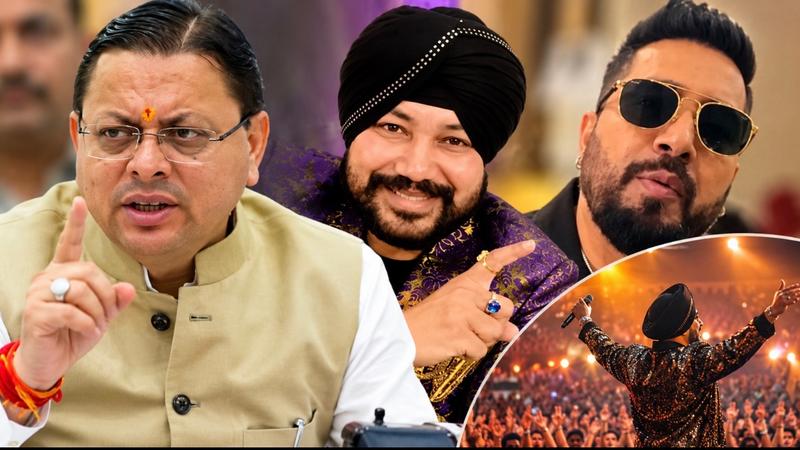
AUCKLAND / DEHRADUN: A controversy involving Punjabi singer Daler Mehndi and Uttarakhand Cabinet Minister Subodh Uniyal has taken another unexpected turn, with the minister denying that he apologised to the singer, despite an earlier statement from Mika Singh’s team suggesting the matter had been resolved.
The latest disagreement has brought renewed attention to an incident on 18 October, when Uniyal interrupted Mehndi’s performance at a cultural festival in Uttarakhand and publicly questioned his ability to perform.
The minister alleged that Mehndi was under the influence of alcohol and was not singing live. Those allegations have not been independently substantiated.
Mika Singh, Mehndi’s younger brother and a prominent singer himself, strongly rejected the allegations and said his brother had been unwell following surgery.
Uttarakhand Chief Minister Pushkar Singh Dhami subsequently intervened, speaking with the singers in an attempt to defuse the dispute.
For several days, it appeared that the controversy might be approaching a resolution.
However, Uniyal’s latest remarks have reopened the disagreement and raised questions about what was actually said during a reported telephone conversation.
18 October: A Cultural Performance Turns Into a Public Confrontation
The controversy began during the annual Siddhpeeth Maa Kunjapuri Tourism and Development Fair in Narendra Nagar, in Uttarakhand’s Tehri Garhwal district.
Daler Mehndi, known internationally for Punjabi hits including Tunak Tunak Tun and Bolo Ta Ra Ra, had been invited to perform as part of the event’s cultural programme.
During the performance, Cabinet Minister Subodh Uniyal walked onto the stage and confronted the singer in front of the audience.
Videos subsequently circulated on social media showing the minister questioning Mehndi’s performance and accusing him of failing to meet expectations.
Uniyal alleged that the singer appeared intoxicated and was lip-syncing rather than performing live.
He also referred to the money spent on the performance, later claiming that Mehndi had been offered approximately ₹35 lakh.
The figure was presented as the minister’s claim, and the full contractual terms have not been independently established.
In footage of the confrontation, Mehndi can be heard asking the minister to leave the stage.
The incident quickly became a subject of debate, with questions raised about the appropriateness of confronting an invited performer publicly rather than addressing concerns through event organisers.
19–20 October: Minister Defends His Actions
As videos of the incident spread, Uniyal defended his intervention.
He maintained that the singer had failed to deliver the performance expected by the organisers and audience.
The minister argued that an artist engaged for a major public event had a responsibility to perform professionally.
He also suggested that if Mehndi was unwell, he should not have accepted the engagement or should have informed organisers and the audience about his condition.
These remarks introduced a second issue into the controversy.
Beyond the allegations about alcohol, there was now a dispute about professional obligations, performance quality and the responsibilities of an artist who may be experiencing health difficulties.
However, no independently verified evidence has been presented establishing that Mehndi was intoxicated during the event.
The minister’s claims therefore remain allegations rather than confirmed findings.
20–22 October: Mika Singh and Entertainment Industry Figures Respond
Mika Singh publicly defended his elder brother and rejected the allegation that he had consumed alcohol.
He said Mehndi had recently undergone surgery and was not in good health.
Mika also questioned why a senior artist should be publicly confronted and embarrassed during a performance.
Several entertainment personalities, including Anupam Kher, Kapil Sharma, Shaan, Badshah and Harshdeep Kaur, were reported to have expressed support for Mehndi.
Their reactions focused on the dignity of performers and the importance of addressing disputes respectfully.
However, singer Sona Mohapatra raised a different concern.
She questioned whether an artist’s reputation should prevent legitimate discussion about the quality of a paid performance.
Her intervention highlighted an important distinction between defending a performer’s dignity and examining whether contractual or professional expectations were met.
Both issues can be considered without assuming that either party’s allegations have been proven.
22–23 October: Chief Minister Pushkar Singh Dhami Intervenes
As the controversy continued, Uttarakhand Chief Minister Pushkar Singh Dhami became involved.
Dhami initially indicated that he would speak with both Mika Singh and Daler Mehndi.
He subsequently contacted the singers, including a telephone conversation with Mehndi on 23 October.
Following the conversation, Dhami publicly emphasised dialogue, harmony and moving beyond the incident.
Mika Singh welcomed the Chief Minister’s intervention and expressed appreciation for his approach.
Reports also stated that Dhami had conveyed regret over the episode and invited the brothers to visit Uttarakhand.
The Chief Minister’s involvement was significant because the original confrontation involved a member of his own cabinet.
It represented an attempt to address the dispute at a senior political level.
However, Dhami’s intervention should not be confused with a personal apology from Subodh Uniyal.
That distinction has become central to the latest developments.
25 October: Mika Singh’s Team Says the Minister Apologised
On 25 October, Mika Singh’s team issued a statement indicating that the dispute had moved towards reconciliation.
According to the statement, Uniyal had apologised to Daler Mehndi during a telephone conversation.
The team welcomed what it described as the minister’s gesture and stressed the importance of respecting artists and their dignity.
The development was reported by several Indian news organisations, with some headlines presenting the apology as an established fact.
At that stage, the account was based on the statement attributed to Mika Singh’s team.
The reported apology appeared to offer a possible conclusion to a controversy that had attracted considerable attention across entertainment media.
But that understanding did not last.
26–27 October: Uniyal Denies Apologising
In remarks reported on 26 and 27 October, Subodh Uniyal rejected claims that he had apologised to Mehndi.
Speaking in an interview with the YouTube channel Satya Vani, the minister questioned why he should apologise when he believed he had done nothing wrong.
He said there was no question of him offering an apology.
Uniyal also repeated his criticism of the singer’s performance.
He argued that if Mehndi had been unwell, he should either have withdrawn from the event or informed the audience of his condition.
The minister’s remarks directly contradicted the statement issued by Mika Singh’s team.
The central question is now straightforward: did Uniyal express an apology during the reported telephone conversation, or was the interaction interpreted differently by the two sides?
The contents of that conversation have not been independently verified.
As of 27 October, the available reporting does not establish that the minister personally apologised.
It establishes that Mika Singh’s team said he did, and that Uniyal subsequently denied doing so.
That difference is essential to understanding the story.
What Has Been Established, and What Remains Disputed?
Several important elements of the controversy are supported by public footage and reporting.
Daler Mehndi was performing at the Kunjapuri festival on 18 October when Uniyal interrupted him.
The minister publicly questioned the performance and subsequently defended his actions.
Mika Singh rejected the alcohol allegation and said his brother had been recovering from surgery.
Chief Minister Pushkar Singh Dhami contacted the singers in an effort to resolve the matter.
Mika Singh’s team later announced that Uniyal had apologised, but the minister denied that account.
Other questions remain unresolved.
There is no independently verified evidence establishing that Mehndi consumed alcohol before or during the performance.
The precise contractual obligations, payment arrangements and performance requirements have not been made publicly available in the reporting reviewed.
Nor has the reported telephone conversation between Uniyal and Mehndi been independently documented in sufficient detail to settle the apology dispute.
These distinctions matter because the controversy involves potentially damaging allegations about an identifiable individual.
Public accusations should not be treated as proven simply because they were made by an elected official or circulated widely on social media.
A Separate Misinformation Problem
The controversy has also attracted misleading social media content.
On 24 October, CyberPeace published a fact-check concerning a video that appeared to show Uniyal involved in another confrontation.
Some social media posts presented the footage as a consequence of his treatment of Daler Mehndi.
CyberPeace found that the video was from an earlier incident connected with municipal elections in Uttarakhand and was unrelated to the singer’s performance.
The finding illustrates how quickly unrelated footage can be attached to a developing controversy.
For audiences following the dispute from outside India, including New Zealand, the distinction between verified footage and misleading social media posts is particularly important.
Why This Story Matters Beyond India
Although the confrontation occurred in Uttarakhand, the issues it raises are relevant to cultural events internationally.
New Zealand hosts numerous Indian and South Asian concerts, community festivals, religious celebrations and touring performances.
These events often involve artists travelling from overseas, commercial agreements, local sponsors, volunteers and audiences who have paid to attend.
Disagreements can arise over performance duration, technical arrangements, sound quality, artist health, scheduling or whether contractual expectations have been met.
Event organisers have a legitimate responsibility to protect audiences and ensure that agreed services are delivered.
Performers also have a responsibility to meet their professional commitments or communicate difficulties that may affect a show.
But disputes involving those obligations should ordinarily be addressed through agreed procedures, event management and appropriate professional channels.
A public confrontation can create reputational consequences long before the underlying facts are established.
The Uttarakhand incident demonstrates how a disagreement that might otherwise have remained between an artist and organisers can become an international controversy when it unfolds on stage and is circulated online.
A New Zealand Connection: Daler Mehndi’s Younger Brother to Perform in Hamilton
The controversy also has a timely connection to New Zealand’s Indian music community.
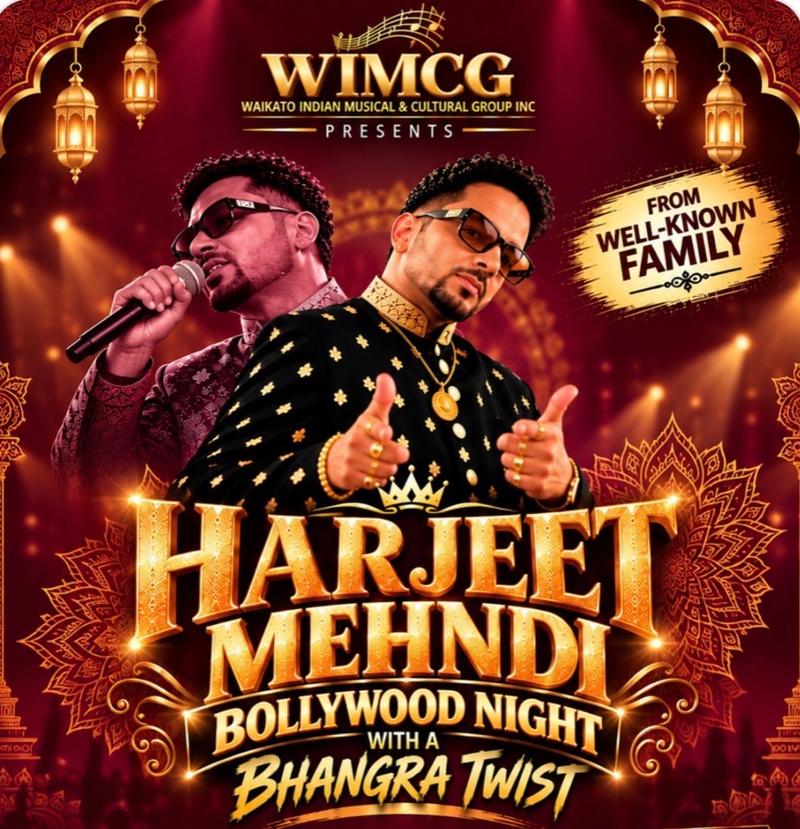
Harjeet Mehndi, the younger brother of Daler Mehndi and Mika Singh, is scheduled to perform in Hamilton on Saturday, 21 November 2026.
The event, Harjeet Mehndi – Bollywood Night with a Bhangra Twist, is scheduled to take place at the Distinction Hamilton Hotel & Conference Centre, 100 Garnett Avenue, Te Rapa, Hamilton, from 6.30 pm.
Harjeet comes from a family that has played a prominent role in Punjabi popular music for decades.
While Daler Mehndi became internationally recognised for his energetic Punjabi hits and Mika Singh established himself in Bollywood playback music, Harjeet has developed his own musical career.
His forthcoming Hamilton appearance reflects the continuing popularity of Punjabi and Bollywood music among New Zealand’s South Asian communities.
It also provides a local perspective on a family currently attracting considerable attention in India’s entertainment headlines.
There is no verified indication that Harjeet Mehndi is involved in the Uttarakhand dispute or that the controversy has affected his scheduled New Zealand appearance.
For audiences in New Zealand, the upcoming concert is an opportunity to experience another member of the Mehndi musical family performing live.
Hamilton concert details
Event: Harjeet Mehndi – Bollywood Night with a Bhangra Twist
Date: Saturday, 21 November 2026
Time: 6.30 pm onwards
Venue: Distinction Hamilton Hotel & Conference Centre
Address: 100 Garnett Avenue, Te Rapa, Hamilton 3241
The debate surrounding Mehndi has often been presented as a choice between supporting the singer and supporting the minister.
That framing overlooks the possibility that two separate questions require examination.
The first is whether the artist fulfilled the obligations associated with the performance.
If an organiser believes an artist has failed to deliver an agreed service, there may be grounds to seek an explanation, negotiate a remedy or pursue a contractual dispute.
The second question is whether the minister’s public intervention was an appropriate way to raise those concerns.
Even when a performance falls short of expectations, public allegations about intoxication can cause substantial reputational harm if they are not supported by evidence.
Equally, defending an artist against an unverified accusation does not automatically resolve questions about the quality or delivery of the performance.
Both concerns deserve fair examination.
For cultural organisations, the lesson is practical: clear contracts, agreed performance standards, health-related contingency arrangements and professional dispute-resolution procedures can help prevent disagreements from escalating.
The Apology Dispute Has Become the Main Story
What began as a disagreement over a live performance has now developed into a dispute about accountability and the public record.
The Chief Minister attempted to calm the situation.
Mika Singh’s team subsequently indicated that a personal apology had been received.
Uniyal then publicly denied apologising.
These conflicting accounts have left the controversy unresolved.
The next meaningful development would be a clarification from the parties involved, supported by an agreed account of the reported conversation.
Until then, describing the matter as settled would be premature.
A Dispute That Could Have Ended Differently
The Daler Mehndi controversy began with a few minutes of confrontation during a cultural performance.
It has since involved political leaders, prominent entertainers, social media audiences and conflicting public statements.
For observers in New Zealand, the central issue is not simply whether a singer delivered a satisfactory performance or whether a minister should apologise.
It is how concerns about professional conduct are handled when public reputation, political authority and cultural expectations intersect.
The facts establish that a confrontation occurred and that attempts were made to resolve the dispute.
They do not establish that Mehndi was intoxicated, nor do they confirm that Uniyal personally apologised.
As the two sides continue to offer different accounts, the most important requirement remains the same: allegations should be supported by evidence, and public disagreements should be reported without turning disputed claims into established facts.
For now, the controversy remains open.
Webfit News | Independent reporting for New Zealand and the global Indian community