The Greens want controversial election billboards taken down. But with voting already underway, is removing an advertisement enough to undo its impact?
By Webfit News | Election 2026 | 27 October 2026
The Greens want controversial election billboards taken down.
Part of our coverageNZ Election 2026Polls, policies, candidates and how to vote, all in one place. →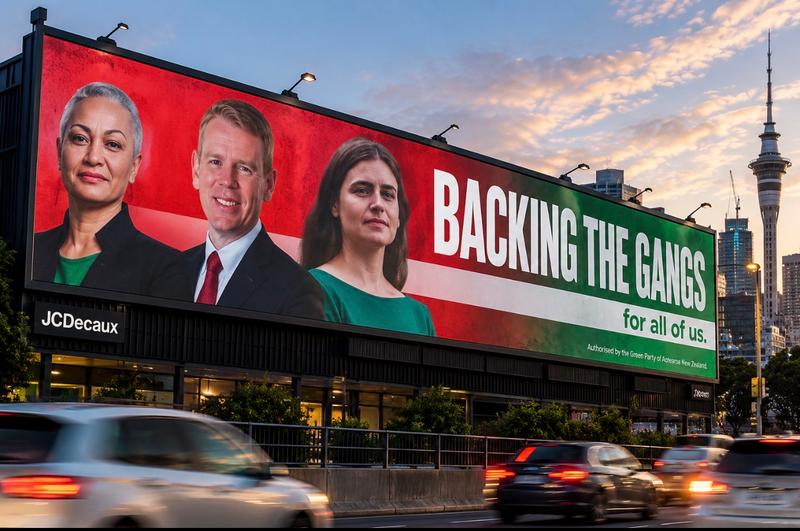
The Greens want controversial election billboards taken down. But with voting already underway, is removing an advertisement enough to undo its impact?
By Webfit News | Election 2026 | 27 October 2026
A billboard goes up. Thousands may see it. Someone takes a photograph, shares it online, and the message spreads.
Then comes a complaint. The billboard is paused.
But voters cannot unsee what they have already seen.
That is the bigger issue behind the latest election advertising controversy involving the Greens, Labour and the Sensible Sentencing Trust.
What Happened?
The Green Party has complained to the Advertising Standards Authority (ASA) over billboards showing Chlöe Swarbrick, Marama Davidson and Chris Hipkins alongside the words “BACKING THE GANGS”.
The advertisements also use the Greens’ campaign slogan, “for all of us”.
The Greens say the advertisements impersonate their party. The Sensible Sentencing Trust, which commissioned them, says it wants voters to consider the parties’ positions on crime.
Billboard company JCDecaux has paused the advertisements while reviewing the concerns.
But there is a detail that makes this controversy particularly interesting.
This Has Happened Before
In 2025, the Sensible Sentencing Trust faced complaints over another billboard campaign resembling Green Party advertising.
The ASA partially upheld those complaints, finding that the advertiser’s identity needed to be clearer.
Now, a similar argument has returned during another election campaign.
The latest complaint has not been decided, and the earlier ruling does not automatically mean these advertisements breach the rules.
Still, it raises an obvious question.
If an advertiser has previously been told to make its identity clearer, why are voters facing another dispute about who is behind the message?
The Problem With Political Advertising
Election advertisements must identify their promoters. But identification and immediate recognition are not always the same thing.
A billboard can carry a promoter statement while its photographs, colours and slogans create a much stronger first impression.
Most drivers will not stop to read the small print.
They see the faces. They see the accusation. They move on.
That matters when an advertisement resembles the branding of the very party it attacks.
Political criticism is legitimate. So is campaigning against a party’s policies.
But voters should not have to investigate a billboard to discover who is actually speaking.
The Bigger Problem: The Internet Has No Off Switch
Here is what makes the timing important.
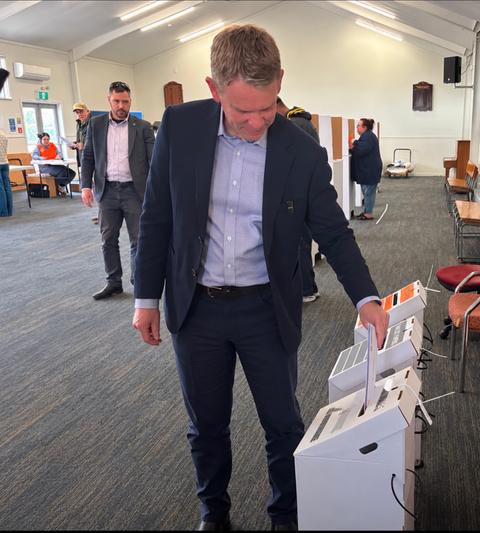
Advance voting has already begun.
Even if an advertisement is removed tomorrow, photographs of it can remain on Facebook, WhatsApp and other platforms.
The original billboard may disappear, but its message can continue circulating without the complaint, explanation or context.
There is no verified evidence yet of how widely these particular advertisements have spread online.
Nevertheless, the problem is real.
An advertisement can be withdrawn. Its influence is much harder to measure, let alone reverse.
And election campaigns move faster than most complaints processes.
By the time a ruling arrives, some voters may already have made their decision.
What About the Gang Issue Itself?
The Sensible Sentencing Trust says it is concerned about crime and protecting victims.
Those concerns deserve scrutiny, just as the Greens’ and Labour’s policies do.
But accusing politicians of “backing the gangs” is not the same as demonstrating that they support criminal offending.
Voters deserve to know what each party actually proposes on policing, sentencing, rehabilitation and gang-related crime.
A slogan may win attention. It does not replace evidence.
The Real Test of a Fair Election
Today it is the Greens and Labour. Tomorrow, another organisation could produce similar advertising targeting National, ACT or New Zealand First.
The standard should be the same for everyone.
Political parties must be open to tough criticism. Advocacy groups must be free to challenge them.
But the public deserves clarity about who paid for a message and who stands behind it.
The real danger is not an offensive billboard. It is a political message that travels further than its accountability.
And with New Zealanders already voting, that is a question worth asking before election day, not afterwards.
Source: RNZ, Lauren Crimp, “Greens blast ‘backing the gangs’ election billboard ads”, 27 October 2026.