And in the case of Myers Park, that question has a history.
Auckland Council Identified Safety Problems Years Ago
Myers Park has been the subject of public safety concerns long before Sunday's incident.
In a 2012 development plan, Auckland Council identified several problems affecting the park.
These included poor visibility, inadequate lighting, blind corners, narrow entrances and areas with limited natural surveillance.
The plan was intended to improve accessibility, encourage greater use of the park and address concerns about personal safety.
It was not simply a proposal to make the park more attractive.
Safety was already part of the conversation.
By 2015, the first stage of improvements had delivered a new play area, upgraded lighting and better footpaths.
Further work was proposed for the park's entrances and connections to surrounding streets.
In 2020, Auckland Council again described efforts to create a safer and more accessible entrance around Mayoral Drive.
These improvements demonstrate that the council had recognised and acted on some longstanding concerns.
But Sunday's incident raises a new question.
How does Auckland measure whether its investment in public spaces is actually making people safer?
The historical safety issues do not establish that the alleged assault could have been prevented. There is currently no evidence connecting any particular design feature or council decision to what happened.
Nevertheless, the park's documented history makes the effectiveness of its safety measures a legitimate subject for further scrutiny.
A Playground Designed for Families
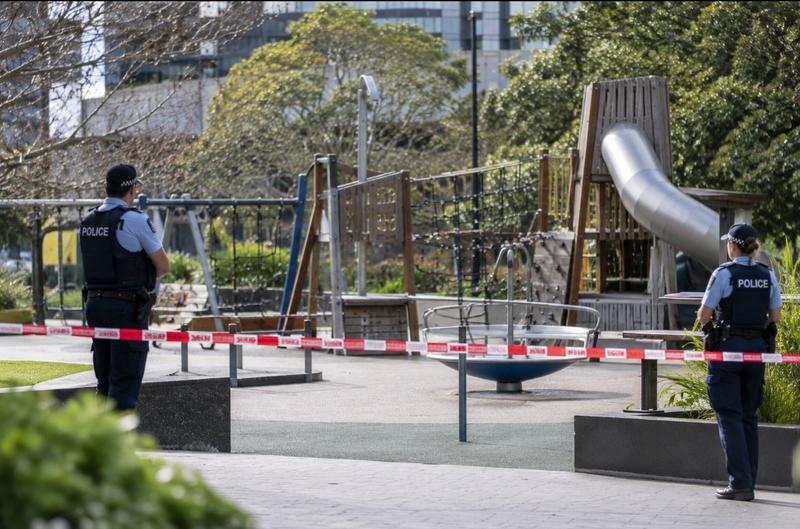
Auckland Council's own website promotes Myers Park as a family destination.
It describes climbing equipment, slides, a splash pad, seating, drinking fountains and accessible toilets.
The playground is intended for children of different ages, from preschoolers to older children.
The park also provides a pedestrian connection between Queen Street, Karangahape Road, Greys Avenue and Mayoral Drive.
This is not an isolated recreational area on the outskirts of Auckland.
It is a public space in the heart of the country's largest city.
Families, residents and visitors have every reason to expect it to be maintained and managed with public safety in mind.
That does not mean authorities can prevent every unpredictable act of violence.
But it does mean that a serious incident deserves more than a temporary cordon and a return to normal operations.
Police Say the Threat Has Passed. Will Parents Feel the Same?
On Monday, Auckland City District Commander Superintendent Sunny Patel confirmed the attempted murder charge.
Police said the child remained in hospital and the accused was also receiving treatment for self-inflicted injuries.
Investigators have completed their scene examination, and police are not looking for anyone else in connection with the incident.
They do not believe there is an ongoing risk to the public.
That is important reassurance.
But an absence of an identified continuing threat does not automatically restore public confidence.
Parents may still want to know what happened, how quickly help arrived and whether any practical lessons can be learned.
Those are reasonable questions.
They should not be confused with claims that police or Auckland Council failed in their responsibilities.
No such failure has been established.
The Questions Auckland Council Should Answer
The incident creates an opportunity for a factual review of safety arrangements at Myers Park.
Several questions deserve answers.
First, what safety measures currently operate around the playground? This includes the role of lighting, visibility, any security patrols and arrangements for reporting concerning behaviour.
Second, how frequently does the council review safety concerns raised by park users? Public confidence depends partly on whether complaints and incidents lead to meaningful action.
Third, how is the success of past improvements assessed? Auckland has invested in the park over many years. Residents should be able to understand what those improvements were intended to achieve and whether the objectives have been met.
Fourth, will the council review its arrangements following Sunday's incident? Such a review would not imply that the attack was foreseeable. It would establish whether any reasonable improvements could be made.
These are questions Webfit News believes deserve public answers, not findings against the council.
Avoid Turning Fear Into Blame
Serious incidents can quickly generate rumours, particularly on social media.
It is important not to turn an investigation involving one accused person into accusations against entire communities.
Police have not publicly established a motive.
There is no verified basis to connect the alleged assault to homelessness, mental illness, ethnicity or any other demographic characteristic.
Public safety concerns deserve serious discussion, but that discussion must be grounded in evidence.
Otherwise, the people affected by a tragedy can become secondary to speculation.
What Happens Next?
The accused man faces an attempted murder charge and is presumed innocent unless proven guilty.
The child's family is receiving support.
Police are appealing for witnesses and anyone with relevant photographs or video.
Information can be provided by calling 105 or visiting https://105.police.govt.nz/ and quoting reference 261025/2283.
For now, the priority is the child's recovery and the investigation.
But the wider conversation should not end when the police cordon comes down.
Auckland has spent years improving Myers Park and making it more welcoming to families.
Sunday's incident does not, by itself, prove those efforts failed.
It does, however, make one question especially important.
What more can Auckland do to ensure families feel safe using the public spaces built for them?
That is a question worth putting directly to the people responsible.
Sources and Acknowledgements
New Zealand Police: Official statement, 26 October 2026.
Webfit News has not established any causal connection between the park's historical safety concerns and Sunday's alleged assault. The questions raised are matters for further reporting, not allegations of negligence.