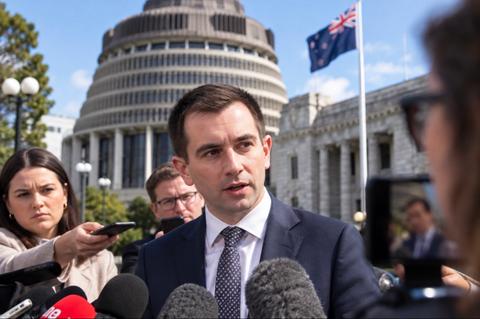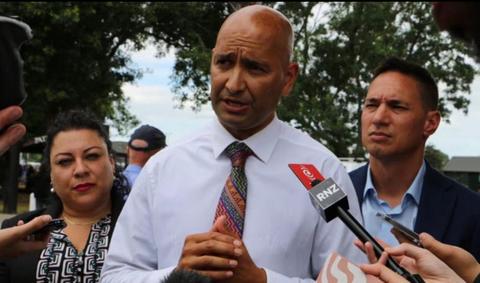
Shane Jones says New Zealand needs to stop managing economic decline and start creating wealth. But how would New Zealand First's ambitious economic proposals work, who would pay for them, and what would ordinary Kiwis gain?
By Webfit News | Election 2026 | 25 October 2026
New Zealand First wants to double the size of New Zealand's economy by 2050, promising major changes to electricity, infrastructure, business taxation and natural-resource development.
The party's economic agenda includes a proposed $100 billion infrastructure fund, breaking up major electricity companies, reducing company tax for smaller businesses and spending $1 billion investigating New Zealand's underground resources.
In a campaign fundraising email received by Webfit News, senior New Zealand First MP Shane Jones argues that successive governments have focused too heavily on distributing wealth rather than creating it.
He says New Zealand has enormous productive potential but has been held back by regulation, inadequate infrastructure and a failure to develop its natural resources.
The message, sent ahead of the 7 November general election, calls on supporters to donate to the party's campaign.
Beyond its political language, however, the email sets out significant economic commitments that could affect businesses, households, taxpayers and regional communities.
The central question is whether these proposals would deliver stronger economic growth without creating greater costs or risks elsewhere.
Breaking Up the Electricity Giants
One of NZ First's most significant proposals is to separate electricity generation from retailing at the country's major integrated power companies, known as gentailers.
Genesis, Mercury, Meridian and Contact dominate much of New Zealand's electricity market.
Jones argues that the current structure limits competition and contributes to high electricity costs for households and businesses.
He says expensive power is particularly damaging for manufacturers, food processors and other regional industries competing in international markets.
NZ First wants generation and retail operations separated, alongside changes to the wholesale electricity market and greater investment in new generation.
Concerns about competition in the electricity market have also been raised internationally.
The OECD's 2026 Economic Survey of New Zealand identified market concentration and barriers facing independent electricity retailers.
However, the OECD recommended improving competition and market arrangements before reconsidering more substantial structural intervention.
That leaves an important question for voters.
Would splitting the gentailers deliver cheaper electricity, or could the restructuring create additional costs and uncertainty?
NZ First has not provided a specific estimate in the campaign email of how much an average household's power bill would fall or when those savings might occur.
A $100 Billion Fund for Infrastructure
NZ First also proposes establishing a Future Fund of up to $100 billion to support infrastructure investment over 30 years.
Jones argues that New Zealand has become trapped in a cycle of infrastructure announcements, reviews, cancellations and rising project costs.
The party wants a professionally governed investment fund capable of attracting capital and supporting long-term development.
It points to Singapore as an example of disciplined infrastructure and investment planning.
The proposal could potentially support transport, energy and other major projects.
But the headline figure requires explanation.
A $100 billion investment fund would not necessarily mean the Government immediately spending $100 billion of taxpayer money.
Its financial implications would depend on how the fund was established, including the balance between public contributions, borrowing, investment returns and private capital.
If the Government borrowed money, taxpayers could face financing costs.
If private investors contributed, they would generally expect financial returns.
The party has not detailed the complete financing structure in the fundraising communication.
For voters, the critical issue is how much public money would be committed, who would control investment decisions and how the fund would remain accountable.
Lower Company Tax for Smaller Businesses
New Zealand First wants to reduce company tax from 28% to 20% for businesses with annual turnover below $30 million.
The party says the change would allow businesses to retain more earnings for investment, expansion and employment.
Its published policy announcement estimates the initial cost to government revenue at approximately $1 billion annually.
For a qualifying company earning $200,000 in taxable profit, the difference between a 28% and 20% tax rate would be $16,000 a year, assuming the proposed rate applied to all that profit.
That money could potentially be used to purchase equipment, employ additional workers or strengthen the business's finances.
However, the benefit would vary according to profitability.
Businesses operating at a loss would not receive the same immediate advantage as profitable companies.
There is also no guarantee that every dollar saved in company tax would translate into additional jobs or higher wages.
The policy raises a wider fiscal question: how would the Government replace the revenue it would initially forgo?
NZ First argues that stronger economic activity would eventually help offset the cost, but the size and timing of any such return remain uncertain.
Bigger Tax Incentives for Manufacturing and Exporters
The party is also proposing a targeted 50% first-year depreciation rate for new machinery, plant and equipment in manufacturing and selected export industries.
The sectors identified include farming, forestry, fishing, aquaculture and mining.
New Zealand's existing Investment Boost scheme provides an immediate 20% deduction for eligible new assets, alongside depreciation rules for the remaining value.
NZ First wants to offer a larger upfront tax deduction to encourage productive businesses to invest in modern equipment.
The approach could improve cash flow for eligible companies considering expensive machinery purchases.
But it is important to distinguish a tax deduction from a government subsidy covering the purchase price.
Businesses would still need the capital, finance and commercial demand to justify their investment.
The policy's effectiveness would depend on whether it encouraged additional investment rather than simply bringing forward purchases businesses already intended to make.
A Billion Dollars to Explore What Lies Beneath New Zealand
Another major proposal is an initial $1 billion National Subsurface Development Survey.
Jones argues that New Zealand should make greater use of its mineral and energy resources rather than relying on imports and leaving potential wealth undeveloped.
The proposed survey would improve geological information and help attract investors interested in resource development.
NZ First also wants proceeds from future resource discoveries directed into a sovereign wealth fund.
The party argues that this could create regional employment, strengthen the economy and provide long-term financial benefits.
However, geological information does not guarantee commercially viable discoveries.
Even when resources are identified, development depends on extraction costs, international commodity prices, infrastructure, regulatory approvals and environmental considerations.
The proposal also raises questions about the use of public funds.
Would the economic benefits justify the initial $1 billion investment? What happens if the survey identifies resources that cannot be developed profitably?
And how would the Government balance resource development with environmental protection and obligations to affected communities?
These questions would need detailed answers before the potential returns could be assessed.
More Mining Royalties for the Regions
NZ First proposes returning 50% of mining royalties to the regions where the resources are extracted.
Jones argues that communities in Northland, the West Coast and Southland should receive a greater share of the wealth generated from their natural resources.
The proposal could provide additional funding for regional infrastructure and development where commercially viable mining occurs.
However, the amount available would depend on actual royalty revenue.
It would also require decisions about how funding was distributed, what projects qualified and how environmental rehabilitation costs were addressed.
For regional communities, the long-term benefit would depend on whether the revenue supported lasting employment, infrastructure and economic opportunities.
What Does Doubling the Economy Really Mean?
NZ First's overarching ambition is to double New Zealand's economy by 2050.
But the target needs a clearer definition.
Doubling total economic output is different from doubling economic output per person.
Similarly, growth measured in current dollars can be influenced by inflation, while inflation-adjusted growth provides a clearer picture of increases in real production.
As an illustration, doubling an economic measure over approximately 24 years would require average compounded growth of about 2.9% annually in that measure.
That does not establish whether the party's target is achievable.
It does show why the precise definition and starting point matter.
For ordinary New Zealanders, economic success would also need to be reflected in household incomes, employment opportunities, housing affordability and the quality of public services.
A larger national economy does not automatically mean every household becomes better off.
A Campaign Built Around Economic Nationalism
Jones' email presents NZ First as a party focused on domestic production, resource development and keeping more economic benefits within New Zealand.
His criticism of political opponents and government bureaucracy is forceful, at times using personal insults and dismissive descriptions.
Those remarks form part of the party's campaign rhetoric and should be distinguished from independently established economic findings.
The policy programme itself raises substantial issues worthy of debate.
New Zealand faces real challenges involving productivity, electricity affordability, infrastructure investment and regional economic opportunities.
But the solutions involve trade-offs.
Reducing company tax could encourage investment while reducing government revenue.
Restructuring electricity companies could alter competition while creating implementation costs.
Expanding resource development could generate employment and export income while carrying environmental and commercial risks.
Infrastructure investment could improve productivity, but its benefits depend on choosing worthwhile projects and financing them responsibly.
Five Questions Voters Deserve Answers To
Before election day, several questions remain central to assessing NZ First's programme.
First, how would the $100 billion Future Fund be financed? The balance between public money, borrowing and private investment would determine its cost and risk.
Second, how much would electricity prices actually fall? Households and businesses need measurable expectations rather than a general promise of greater competition.
Third, how would the estimated $1 billion annual cost of the company-tax reduction be managed? The Government would need to account for the initial revenue loss.
Fourth, what safeguards would apply to the proposed $1 billion resource survey? Public investment should be assessed against realistic returns, commercial uncertainty and environmental obligations.
Finally, how would NZ First measure its ambition to double the economy? The party needs to clarify whether it means real economic growth, nominal GDP or improvements in output per person.
The Real Test Is Delivery
New Zealand First is offering voters an economic programme centred on production, investment, infrastructure and natural resources.
Its proposals address genuine concerns about New Zealand's economic performance and the pressures facing businesses and households.
But ambition and implementation are different things.
A large infrastructure fund requires a credible financing model. Lower taxes require a fiscal plan. Electricity reform needs evidence that consumers will benefit. Resource development requires realistic assessments of costs and returns.
For voters heading to the polls on 7 November, the most useful measure of the programme is not the size of its promises.
It is whether those promises could deliver affordable electricity, sustainable employment, stronger regional economies and better living standards — without leaving New Zealanders with costs they were never told to expect.
---
Sources
New Zealand First: Campaign fundraising communication attributed to Shane Jones, received by Webfit News, October 2026.
New Zealand First — $100 Billion Future Fund
https://www.nzfirst.nz/the_100bn_new_zealand_future_fund
New Zealand First — Breaking Up the Gentailers
https://www.nzfirst.nz/breaking_up_the_gentailers
New Zealand First — Company Tax Proposal
https://www.nzfirst.nz/nzfirst_to_campaign_on_20_tax_rate_for_smes
New Zealand First — Accelerated Depreciation Policy
https://www.nzfirst.nz/nzfirst_policy_announcement_50_targeted_accelerated_depreciation_for_manufacturing_and_export_sector
New Zealand First — Mining Royalties Policy
https://www.nzfirst.nz/50_mining_royalties_to_be_returned_to_regions
OECD — Economic Surveys: New Zealand 2026
https://www.oecd.org/en/publications/oecd-economic-surveys-new-zealand-2026_3ec5de98-en.html
Inland Revenue — Investment Boost
https://www.ird.govt.nz/investment-boost
Editorial note: This article combines reporting on New Zealand First's stated policies with independent policy analysis. The campaign email is a political fundraising communication, not an independent assessment of economic outcomes. Webfit News has not conducted a separate interview with Shane Jones for this article.