Retailers Want Safety, Not Simply Displacement
In a media release issued to Webfit News on Sunday, Young said retailers had experienced ongoing frustration with threatening and disorderly behaviour around their businesses.
"Retailers have long been frustrated by threatening, abusive and disorderly behaviour outside their stores, which can affect the safety and wellbeing of staff, customers and local communities," she said.
Retail NZ supports Police having appropriate tools to respond to unsafe situations, but has maintained concerns about the move-on legislation since it was first proposed.
Young warned that the orders could relocate disruptive behaviour without addressing its causes.
The distinction matters for town centres where retailers, hospitality operators, residents and vulnerable people share the same public spaces.
Removing an immediate threat may make one location safer. Whether it delivers a lasting improvement across the wider neighbourhood is a different question.
What Can Police Actually Do?
The Summary Offences (Move-on Orders) Amendment Act 2026 took effect on Sunday, 25 October.
According to New Zealand Police, an officer may issue an order where the legal grounds are met, including for disorderly or threatening conduct, disruptive behaviour, breaches of the peace and unreasonable obstruction of access to businesses.
The legislation also includes provisions relating to rough sleeping and begging that unreasonably interferes with others' use or enjoyment of a public place.
| Key question | What the new rules mean |
|---|
| Who can receive an order? | Adults aged 18 or over |
| How long can an order last? | Up to 24 hours |
| What does an order require? | Leaving a specified location for a specified period |
| Is ordinary begging automatically prohibited? | No. The relevant statutory test must be met |
| Are lawful protests and busking covered? | No. These activities are excluded |
| What happens if an order is breached? | A breach can result in criminal penalties |
Police say they will generally take a graduated approach, beginning with engagement and encouragement to change behaviour before considering enforcement.
Officers can also refer people to social services where appropriate.
A breach of an order can carry a maximum penalty of three months' imprisonment or a $1,000 fine.
Retail NZ Welcomes Changes Made Before the Law Passed
Retail NZ says amendments made during the legislative process improved the original proposal.
Among the changes were restricting the powers to adults and introducing a requirement that begging must meet an unreasonable-interference threshold before it can be grounds for an order.
Young welcomed those safeguards.
The organisation has also been working with Police and social agencies on approaches that combine responses to unsafe behaviour with support services where needed.
That reflects a significant point in Retail NZ's position: protecting retail workers and customers does not necessarily require treating every person experiencing homelessness or hardship as a public safety threat.
The organisation's emphasis is on harmful behaviour and whether the response actually improves conditions.
What Happens to the Person Who Is Moved On?
The legislation has also prompted questions about its impact on people experiencing homelessness and other forms of hardship.
A person directed to leave one location may still need somewhere to sleep, access food, seek assistance or use essential services.
Police guidance provides specific exceptions for people issued orders relating to begging or rough sleeping. They may return to an area for lawful purposes, such as accessing medical or social services or buying food, provided they do not engage in behaviour that would justify another order.
These protections are important, but their practical effectiveness will depend on how the law is applied.
Community organisations have raised concerns about whether affected people will understand their rights and obligations, particularly when an order is issued in stressful circumstances.
For Police, the challenge will be balancing immediate public safety with proportionate enforcement and appropriate referrals.
The Real Test for Auckland and Other Urban Centres
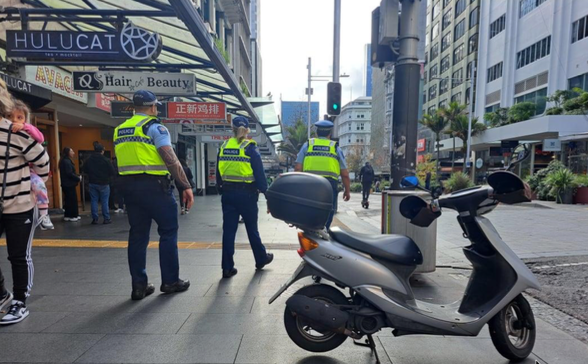
For businesses in Auckland's city centre and other busy shopping areas, disruptive behaviour can affect more than an individual store.
Staff may feel unsafe arriving at or leaving work. Customers may avoid certain locations. Small businesses can find it difficult to manage repeated incidents while continuing normal operations.
Move-on orders may help Police intervene before a situation escalates.
However, if a person simply relocates to a neighbouring street, the wider problem may remain unresolved.
That is why the impact of the new powers cannot be measured solely by how many orders Police issue.
More meaningful questions include whether repeat incidents decline, whether nearby businesses experience fewer problems and whether people requiring assistance are connected with effective support.
Retail NZ Plans to Monitor the Results
Young says Retail NZ will remain in contact with retailers, Police and support agencies as the new powers are implemented.
The organisation wants to understand whether orders are reducing harmful behaviour or simply transferring it elsewhere.
Her position is not an outright rejection of the new policing tool. It is a call to assess whether the law achieves its intended purpose.
For New Zealand retailers, the immediate priority is a safer environment for staff and customers.
For Police, the responsibility is to apply the new powers lawfully and proportionately.
And for communities, the broader question is whether public spaces can become safer without losing sight of the circumstances that contribute to disorder and hardship.
The success of move-on orders will ultimately be judged not by how many people are told to leave, but by whether New Zealand's streets and shopping areas become safer over time.
Sources and References
Retail NZ: Media release, Retail NZ to monitor move-on orders closely, 25 October 2026. Supplied directly to Webfit News.
New Zealand Police: Move-on orders – official operational guidance.
https://www.police.govt.nz/about-us/programmes-and-initiatives/move-orders
New Zealand Legislation: Summary Offences (Move-on Orders) Amendment Act 2026.
https://www.legislation.govt.nz/act/public/2026/66/en/2026-09-25/
Retail NZ media enquiries: Carolyn Young, Chief Executive, 021 449 452.
Webfit News has based this report on Retail NZ's statement, official Police guidance and the enacted legislation. No separate interview with Carolyn Young has been conducted for this article.