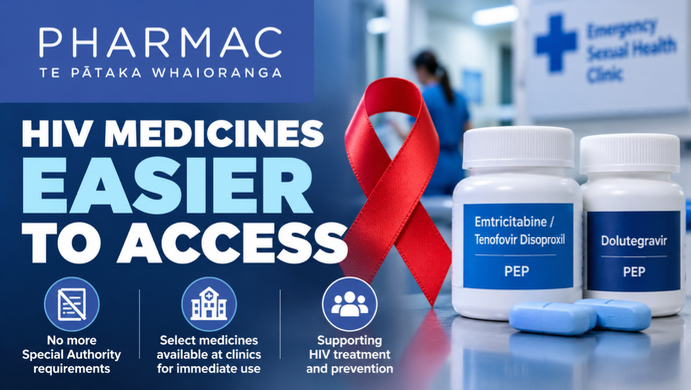
The medicines are also used for prevention, including post-exposure prophylaxis (PEP), which may be prescribed following a possible exposure to HIV.
Under the existing funding arrangements, Special Authority requirements can create additional administrative steps for clinicians and pharmacists.
Pharmac says healthcare professionals have raised concerns that the criteria can be complex and confusing, particularly when medicines are needed urgently.
Removing these requirements is intended to make access more straightforward without changing the clinical standards governing treatment.
Faster Access After Possible HIV Exposure
One of the most significant changes involves PEP, a course of antiretroviral medicines used after a potential exposure to HIV.
PEP needs to be started within 72 hours of possible exposure, and earlier treatment is more effective.
Under the new arrangements, two medicines will be available through a Practitioner's Supply Order (PSO):
A PSO allows authorised prescribers to order and hold a supply of certain funded medicines for appropriate clinical use.
This means emergency and sexual health clinics can keep these HIV medicines on site and provide them directly to patients when clinically appropriate.
Previously, a patient could need to obtain a prescription and then visit a pharmacy to collect the medicines.
That process could create delays, particularly during weekends, after hours or in rural communities where pharmacies may not routinely stock the required treatment.
The change is designed to reduce those delays.
What Is the Difference Between PEP and PrEP?
Although both involve antiretroviral medicines, PEP and PrEP serve different purposes.
PEP — Post-Exposure Prophylaxis
PEP is used after a possible exposure to HIV. It is time-sensitive and should be assessed urgently, with treatment started within 72 hours when appropriate.
PrEP — Pre-Exposure Prophylaxis
PrEP is used by people who do not have HIV but may be at risk of acquiring it. The medicines are taken to reduce the risk of infection before potential exposure.
The funding changes simplify access to antiretroviral medicines used for both treatment and prevention, while the new PSO arrangements specifically support urgent PEP provision.
Clinical Oversight Will Remain
Pharmac has emphasised that removing funding restrictions does not mean HIV treatment should be initiated without specialist guidance.
The agency received feedback from infectious disease and sexual health clinicians who were concerned that removing Special Authority requirements could weaken safeguards around prescribing.
In response, Pharmac has introduced additional guidance in the Pharmaceutical Schedule.
The guidance states that HIV treatment with antiretroviral medicines should be initiated under the direction of a clinician experienced in HIV management.
Prescribers are also expected to follow relevant clinical pathways and ensure patients are connected with appropriate specialist services.
Pharmac says the changes are not intended to shift HIV treatment management into general practice or alter existing prescribing responsibilities.
Why Implementation Was Delayed
The changes were originally scheduled to take effect on 1 March 2026.
However, feedback from clinicians and health services prompted Pharmac to delay their implementation while it considered concerns about prescribing safeguards and clinical responsibilities.
Following further engagement, the agency confirmed the revised start date of 1 November 2026.
Additional measures include prescribing guidance, restrictions ensuring PSO funding is used for PEP only, and educational resources for healthcare professionals.
Pharmac has also worked with the Royal New Zealand College of General Practitioners to clarify expectations around HIV prescribing in primary care.
What Patients Need to Know
For people already receiving funded HIV treatment, the changes are intended to simplify the funding process rather than require a change in treatment.
Patients should continue following advice from their treating clinicians.
For someone who may have been exposed to HIV, the key message remains that urgent medical assessment is important.
PEP is most effective when started as soon as possible and must be initiated within the recommended 72-hour window.
From November, the ability of eligible clinics to hold PEP medicines on site should make it easier for clinicians to provide treatment promptly.
The decision does not mean these medicines will be available without clinical assessment or appropriate prescribing.
Reducing Delays Without Compromising Care
Pharmac's decision addresses a practical issue in healthcare: a medicine can be funded, yet administrative requirements and supply arrangements may still delay access.
By removing Special Authority restrictions and allowing certain PEP medicines to be held at clinics, the agency aims to make treatment and prevention more accessible when needed.
At the same time, its response to clinician feedback reflects the importance of maintaining specialist involvement in HIV care.
The changes take effect on 1 November 2026.
For patients and healthcare providers, the intended outcome is straightforward: fewer administrative barriers, faster access to time-sensitive medicines and continued clinical oversight.
Source: Pharmac – Te Pātaka Whaioranga, decision published 23 October 2026.
For further information: Pharmac, 0800 660 050 or enquiry@pharmac.govt.nz.