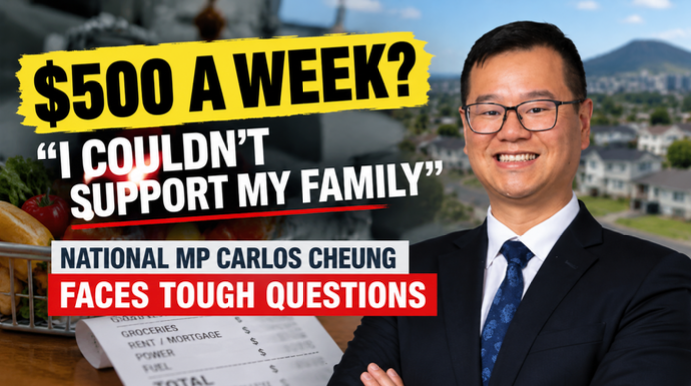
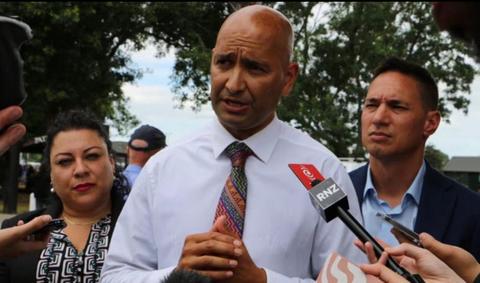
The exchange became one of the standout moments in a wide-ranging Webfit News interview ahead of New Zealand's 7 November general election.
Cheung, who won the Mount Roskill electorate in 2023, faced questions about the cost of living, unemployment, empty housing sites, healthcare waiting times, crime and his record in Parliament.
Several questions came directly from local residents.
His responses offered an insight into how National is defending its performance — and the issues voters still want addressed.
Cost of Living: When Working Hard Is No Longer Enough
One of the central questions put to Cheung was why so many New Zealanders continue to struggle financially despite working hard.
He acknowledged the pressure of housing costs, groceries and electricity bills.
Cheung argued that the Government had focused on controlling inflation and that lower interest rates could ease mortgage costs for some households.
He also said National wanted wages to grow faster than inflation so families could retain more of their income after paying essential expenses.
But the interview exposed a distinction that matters to households.
Slower inflation does not mean prices return to where they were. It means prices are generally rising more slowly.
For families facing high rent, mortgage repayments, groceries and power bills, the real test is how much money remains at the end of the week.
Cheung's own admission about $500 a week made that challenge difficult to ignore.
GST on Groceries: No Immediate Relief Promised
A Mount Roskill resident asked whether Cheung would support reducing GST on essential groceries.
Cheung said National did not currently plan to change the GST system.
He argued that GST revenue helps fund essential public services, including healthcare, education and policing.
Removing GST from selected products, he suggested, would require the Government to consider how to replace the lost revenue.
His answer made National's position clear: the party was not offering a GST exemption on essential groceries.
For families looking for immediate relief at the supermarket checkout, that may be a disappointing answer.
The broader policy question is whether other measures would improve household purchasing power more effectively than changing GST.
Qualified but Unemployed: Should Kiwis Get First Priority?
Another resident raised a concern familiar to many jobseekers: being qualified and willing to work but still struggling to secure employment.
The resident asked whether New Zealand businesses should be required to hire local workers before recruiting from overseas.
Cheung said employers should prioritise New Zealanders when suitable local candidates were available.
He also argued that immigration remained necessary where genuine skills shortages existed, particularly in sectors such as healthcare.
His response distinguished between encouraging local recruitment and imposing a legal hiring requirement.
Cheung did not announce a new mandatory local-hiring policy during the interview.
For jobseekers, the unanswered issue is whether New Zealand can generate enough suitable employment opportunities while continuing to recruit the overseas skills its economy needs.
Young New Zealanders Leaving for Australia
The departure of young New Zealanders for overseas opportunities was another topic raised during the interview.
Cheung did not suggest that travelling or working overseas was necessarily a bad thing.
He said young people could gain valuable skills, experience and knowledge abroad.
The bigger challenge, he argued, was creating opportunities that would encourage them to return.
That places the focus on New Zealand's ability to offer competitive careers, wages and living conditions.
For young professionals, returning home can depend on more than personal attachment to the country.
Employment prospects, housing affordability and opportunities for career progression all influence that decision.
Cheung's argument was that a stronger domestic economy would make returning more attractive.
Whether National's policies would achieve that remains a question for voters to assess.
Empty Housing Sites: Why Is Mount Roskill Still Waiting?
Housing was one of the interview's most locally significant issues.
A resident questioned why some properties in Mount Roskill remained vacant when demand for housing continued.
Cheung said not every empty property had the same explanation.
Some sites were part of staged Kāinga Ora redevelopment projects, where infrastructure and groundwork had to be completed before new homes could be constructed.
He referred to stormwater, water infrastructure and other requirements that could affect development timelines.
Other properties, he said, had been affected by flooding and were no longer suitable for occupation.
Cheung identified parts of Wesley as areas where redevelopment and flood-related issues had affected housing.
He said he remained in contact with Kāinga Ora and received updates about progress.
However, the interview did not establish the number of vacant sites, how long each had remained empty or when construction would be completed.
For residents, the critical question is not simply why the land is vacant. It is when those sites will provide homes again.
That is a question requiring detailed project information from Kāinga Ora and the relevant agencies.
Crime: Tougher Consequences or a Second Chance?
Community safety also featured prominently.
A resident asked whether Cheung supported tougher penalties for repeat offenders, including young offenders.
Cheung backed stronger consequences for criminal behaviour and defended National's approach to law and order.
But he also acknowledged the importance of rehabilitation.
He argued that young offenders needed opportunities to change their behaviour, develop skills and avoid returning to crime.
His response highlighted a difficult balance.
Communities want protection from offending, while an effective justice system must also consider how to prevent further offending.
Cheung discussed policing, retail crime and measures intended to improve public safety.
He also made claims about improvements under the Government, although the interview itself did not provide the underlying statistics needed to independently assess those claims.
Healthcare: Why Are Patients Still Waiting Months?
A retired resident raised concerns about lengthy waits for specialist appointments.
Cheung defended the Government's health targets and said improving access to specialist assessment remained a priority.
He argued that earlier diagnosis and treatment could improve patient outcomes.
Cheung also referred to improvements in health performance measures but acknowledged that more work was required.
The interview did not establish the latest verified waiting-time figures or how consistently improvements had been achieved across the health system.
For patients, the issue is straightforward.
A target is useful only if it translates into a shorter wait for an appointment or treatment.
That remains one of the practical measures by which voters can assess the Government's healthcare performance.
Small Businesses: Is Enough Being Done?
Cheung was also asked whether the Government had done enough for small businesses struggling with operating costs and declining confidence.
He identified cash flow, access to workers and profitability as major challenges.
Drawing on his business experience, he argued that employers needed an environment that encouraged hiring and investment.
He defended changes to lending rules and the restoration of 90-day employment trial periods.
Cheung also supported the Government's Investment Boost policy, which provides an upfront tax deduction for eligible business assets.
However, a tax deduction does not mean the Government pays 20% of an equipment purchase directly to a business.
The financial benefit depends on the applicable tax rules and the business's circumstances.
Cheung said more needed to be done to strengthen business confidence and opposed additional taxes he believed could discourage investment.
For local business owners, the immediate concerns remain customer spending, operating costs and whether they can afford to retain or recruit staff.
What Has Carlos Cheung Delivered Since 2023?
Webfit News also asked Cheung to account for his work since entering Parliament.
He pointed to his advocacy for diverse communities, including speaking against racism and raising concerns involving healthcare, education and employment.
He also highlighted his involvement in legislation relating to Auckland's Future Fund and changes affecting Eden Park's ability to host concerts.
At constituency level, he referred to assistance with immigration cases, playground repairs and parking issues.
These were examples Cheung identified as part of his parliamentary and local work. They were not presented during the interview as an independently audited record of outcomes.
Asked what he still wanted to achieve, Cheung identified youth vaping and education among his priorities.
He said improvements in education could take years to become visible, making continued attention important.
Would He Work With the Opposition?
Despite the increasingly competitive election campaign, Cheung said he was willing to work with MPs from other parties where common ground existed.
He argued that issues such as housing, education and healthcare should not become political footballs.
Asked about former Mount Roskill MP Michael Wood, Cheung preferred to focus on his own record rather than directly attack his political opponent.
He said voters should judge him on his work, accessibility and contribution to the electorate.
Cheung acknowledged that Mount Roskill was politically competitive and that constituents held different views about his performance.
The Lighter Moments: Milk Prices, Parliament and Dancing
The interview also offered a glimpse of Cheung away from formal political debate.
During a rapid-fire round, he was asked about everyday shopping, including the price of milk.
He discussed supermarket choices and said he had checked milk prices recently.
Asked what he would change about Parliament, Cheung suggested making it easier to progress legislation that already enjoyed broad cross-party support.
He also responded to social media suggestions that he sometimes appeared to be sleeping during parliamentary proceedings.
Cheung said camera angles and looking down could create that impression, joking that he had been advised to nod more visibly to show he was paying attention.
And when the conversation turned to dancing, he readily acknowledged it was not one of his strengths.
The lighter exchanges offered a contrast to the serious questions raised earlier.
The Election Question: Has Life Become Easier?
Cheung ended the interview by asking voters to support National with their party vote and him with their electorate vote.
He said he wanted another term to continue working on economic growth, education, community safety and local issues.
But the interview also showed what residents wanted from their MP.
They wanted answers about vacant housing land, the difficulty of finding work, healthcare delays, business pressures and the cost of everyday essentials.
Cheung defended the Government's direction and acknowledged that several challenges remained unresolved.
His answer to the $500-a-week question stood out because it brought the discussion back to something immediately understandable.
He recognised that supporting a family on that amount would not be realistic for him.
For Mount Roskill voters, the question on 7 November is whether the policies Cheung supports will make life more affordable and secure for the families he represents.
That is a test no campaign slogan can answer on its own.
Editorial note: This article is based on an exclusive Webfit News interview with National MP Carlos Cheung, including questions submitted by Mount Roskill residents. Cheung's claims about government performance and his achievements are attributed to him and should not be read as independently verified findings. Quotations and interview details should be checked against the final recording before publication.