Two dropped catches helped New Zealand post 333. Then Matt Henry dismissed Rohit Sharma, Virat Kohli and Shreyas Iyer in a remarkable opening over, leaving India facing one of the darkest nights in their ODI history.
By Webfit News | 14 November 2026
MOUNT MAUNGANUI: India had 50 overs to chase 334 runs. But within the first six deliveries, the contest had already slipped dramatically out of their hands.
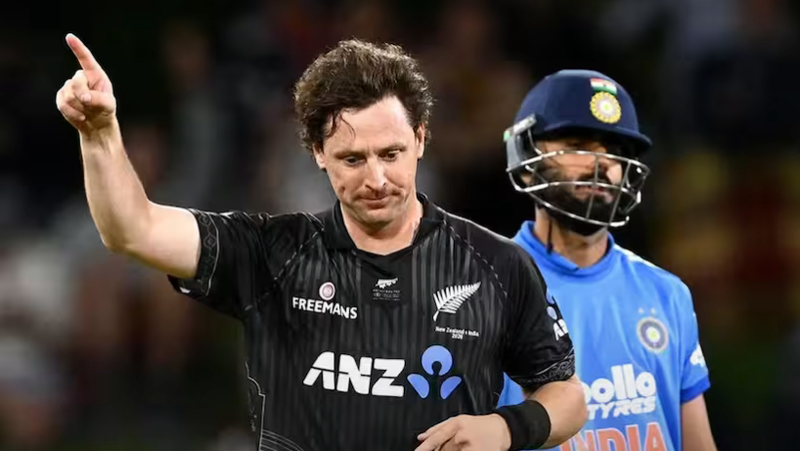
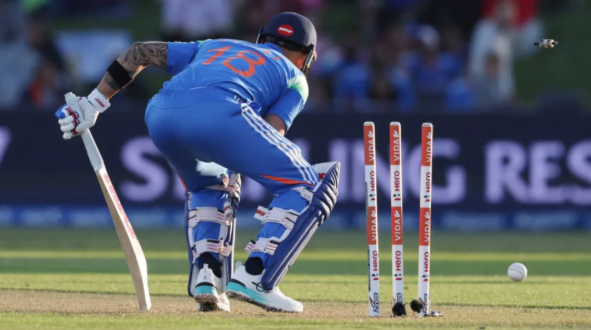
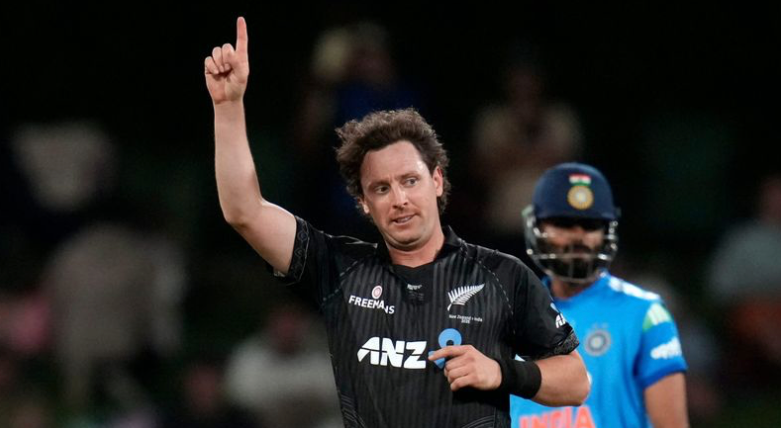
Rohit Sharma, Virat Kohli and Shreyas Iyer were all dismissed for ducks. India were 0/3, and Matt Henry had produced an opening over that Bay Oval will remember for years.
By the time the innings ended, India had been bowled out for just 89 in 26.4 overs.
New Zealand had won by 244 runs, handing India their second-largest defeat by runs in One Day International cricket.
But this extraordinary match wasn't decided by Henry's bowling alone. It was also shaped by opportunities India failed to take much earlier in the afternoon.
The scorecard
Match details
Figures
New Zealand
333 all out (50 overs)
India
89 all out (26.4 overs)
Result
New Zealand won by 244 runs
Matt Henry
6/27 (9.4 overs)
Matthew Fisher
3 wickets
Player of the Match
Matt Henry
Series
India lead 2–1
Two catches India will regret
Before Henry's extraordinary opening over, India had opportunities to restrict New Zealand's total.
Will Young was dropped twice in the second over, on successive deliveries.
Those missed chances proved costly.
Young went on to score a century, helping New Zealand establish a strong foundation alongside Tim Seifert.
The opening pair added 85 runs before Young combined with Finn Allen for another important partnership worth 90.
New Zealand were not completely dominant throughout their innings. India fought back at different stages, taking wickets and preventing the hosts from reaching the 350–360 total they had threatened.
Axar Patel was particularly economical, while India's other bowlers contributed to restricting the scoring towards the end.
Still, 333 was a formidable target.
And Young's early reprieves had played a significant part in getting New Zealand there.
Six balls that changed everything
India's chase began with a moment that immediately silenced hopes of another famous batting performance.
Henry's first delivery removed Rohit Sharma, who edged to slip.
Virat Kohli followed in the same over, beaten by movement that brought the ball back into his stumps.
Then came Shreyas Iyer.
The Indian captain was trapped lbw, with New Zealand successfully reviewing the on-field decision.
Three experienced international batters. Three ducks. Not a single run on the scoreboard.
India: 0/3 after one over.
For a team chasing 334, it was a devastating beginning.
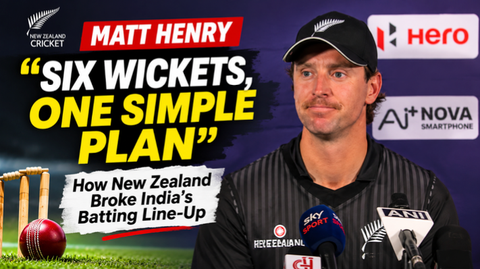
Henry had not relied on complicated variations. He attacked the stumps, maintained a testing length and used the movement available from the surface.
The simplicity of his approach made it even more impressive.
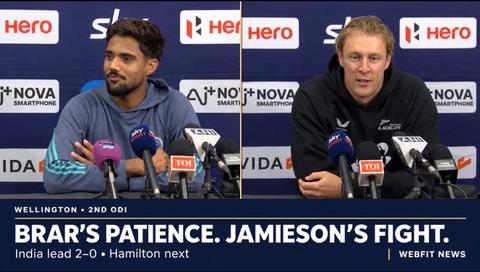
Speaking after the match, Henry explained that his focus had been on bringing the stumps into play and making the most of the early movement.
The plan worked almost perfectly.
From 0/3 to 89 all out
India's problems did not end with the opening over.
Kyle Jamieson removed Ruturaj Gaikwad, leaving the visitors struggling at 9/4.
Ishan Kishan and Axar Patel briefly resisted, putting together a 44-run partnership.
But New Zealand's fast bowlers maintained their pressure.
Matthew Fisher removed Axar for 21 and later dismissed Auqib Nabi and Naman Dhir.
Henry returned to remove Kishan for 27, before dismissing Kuldeep Yadav and Gurnoor Brar to complete career-best ODI figures of 6/27.
India were eventually dismissed for 89.
Kishan's 27 was the highest individual score of the innings.
The contrast could hardly have been greater. New Zealand had produced a century-maker in Will Young, while India could not manage a single individual score above 27.
How historic was the defeat?
The numbers underline just how unusual Friday's result was.
Record
What happened
India's second-largest ODI defeat
Lost by 244 runs
India's sixth-lowest ODI total
89 all out
New Zealand's second-largest ODI victory
Won by 244 runs
Henry's career-best ODI figures
6/27
Henry's opening over
3 wickets, 0 runs
India's heaviest ODI defeat remains the 245-run loss to Sri Lanka in Sharjah in 2000.
Friday's result fell just one run short of that unwanted record.
For New Zealand, it was their biggest ODI victory against India by runs and one of their most emphatic performances in the format.
Henry's six-wicket haul also placed him alongside some of New Zealand's finest fast-bowling performances against India, including Shane Bond's famous 6/19 in 2005.
The return that changed New Zealand's attack
Henry's performance carried additional significance because he had missed the opening three matches of the series.
A collision with Devon Conway during pre-series training had delayed his return, with the bowler required to recover carefully from a head injury.
Friday was his opportunity to return to international action.
He could hardly have made a greater impact.
Henry's control of line and length was particularly impressive. According to Cricbuzz's bowling analysis, five of his wickets came from deliveries pitched on a good length or just short of it.
He finished with six wickets for only 27 runs and was named Player of the Match.
New Zealand captain Mitchell Santner praised Henry's ability to exploit conditions with the new ball.
For the Black Caps, the performance was a reminder of how much difference an experienced strike bowler can make.
What India must answer before Sunday
India's defeat will inevitably raise questions about its batting against seam movement and bounce.
The concern is not simply that three leading players were dismissed cheaply. Even world-class batters can be beaten by exceptional deliveries.
The bigger issue is how quickly the entire innings unravelled after those early wickets.
India's middle order was unable to rebuild, and the chase never developed into a meaningful contest.
Captain Shreyas Iyer acknowledged Henry's outstanding bowling and the difficulty of handling deliveries moving in both directions.
He also emphasised the importance of learning from the defeat and returning with a fresh approach.
India still have the series advantage, but Friday's performance exposed vulnerabilities New Zealand will look to exploit again.
One final match, plenty still at stake
The fifth and final ODI will be played at Bay Oval on Sunday, 15 November.
India lead the series 2–1 and can secure an outright series victory with another win.
New Zealand, meanwhile, have the opportunity to finish level at 2–2.
Henry will not feature in Sunday's match as he moves into preparations for the upcoming Test series against India.
His absence may give India's batters some relief, but the wider challenge remains.
New Zealand have demonstrated that disciplined fast bowling, backed by sustained pressure, can dismantle even an experienced batting line-up.
For India, Sunday's match is an opportunity to show that Friday's collapse was an exception rather than a continuing weakness.
For New Zealand, it is a chance to turn a remarkable victory into a strong finish to the series.
And for those who witnessed Friday's contest, one sequence will remain unforgettable.
India dropped Will Young twice and watched him score a century.
Matt Henry needed just six deliveries to remove three of India's biggest names.
One team failed to take its early chances. The other turned its first opportunity into a historic victory.
Sources: ICC official match scorecard and post-match presentation; Cricbuzz match commentary and statistics; ESPNcricinfo match reporting.
Webfit News | Cricket Coverage | India Tour of New Zealand 2026