After dismissing Rohit Sharma, Virat Kohli and Shreyas Iyer in a stunning opening over at Bay Oval, the New Zealand fast bowler explained how the wind, a testing length and...
After dismissing Rohit Sharma, Virat Kohli and Shreyas Iyer in a stunning opening over at Bay Oval, the New Zealand fast bowler explained how the wind, a testing length and relentless accuracy helped produce India's biggest ODI defeat against the Black Caps.
By Webfit News | 14 November 2026
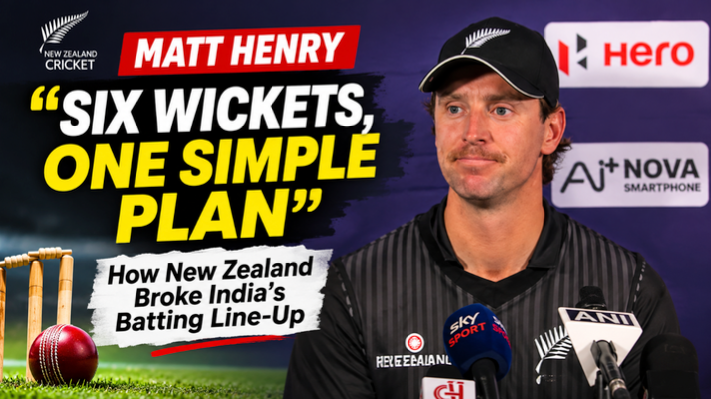
MOUNT MAUNGANUI, NEW ZEALAND: Matt Henry had just delivered one of the most extraordinary opening overs in one-day international cricket. Rohit Sharma was gone. Virat Kohli was gone. Shreyas Iyer was gone. India were 0/3 before their chase had properly begun.
Yet when Henry sat down to explain how he had dismantled one of cricket's most celebrated batting line-ups, there was no talk of a secret delivery or a complicated strategy.
His explanation was almost disarmingly simple.
He had bowled into the breeze, adjusted his length and tried to make the batters play.
"Sometimes the simpler it is, the more it works in your favour," Henry said during the post-match press conference at Bay Oval on Friday.
It was an understated explanation for a remarkable performance.
Henry finished with career-best ODI figures of 6/27 as New Zealand dismissed India for just 89 in 26.4 overs, securing a 244-run victory after posting 333.
But behind those figures was a fascinating contest involving technique, conditions and the split-second decisions that separate international batting success from failure.
The first over that left India stunned
India began their chase knowing they needed 334 runs to win.
Six deliveries later, the contest had changed dramatically.
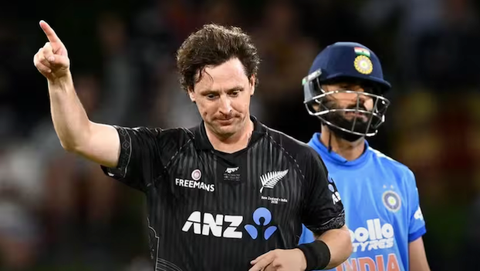
Henry removed Rohit Sharma with the first ball, finding the edge for a slip catch.
Virat Kohli followed, bowled without scoring.
Captain Shreyas Iyer was then trapped lbw, with the decision confirmed after a review.
Three of India's most important batters had departed for ducks.
Henry had completed a triple-wicket maiden.
India were 0/3.
Kyle Jamieson soon added another wicket, and the visitors were reduced to 9/4.
The collapse was devastating, but Henry's explanation afterwards suggested that his success was not simply a matter of the ball moving sharply.
He had deliberately chosen a length that made it difficult for batters to decide whether to move forward or backward.
And he had done it before they could settle.
Why the wind changed Henry's approach
One of the most revealing details from Henry's press conference was the influence of the Bay Oval breeze.
Bowling into the wind, Henry realised he was unlikely to generate the conventional outswing he might normally seek.
Rather than forcing the ball to behave differently, he adjusted his approach.
He concentrated on accuracy, seam movement and bringing the stumps into play.
"Obviously bowling into the breeze there, probably simplified my plan even more," he explained.
The result was almost counterintuitive.
Henry suggested he had actually been less aggressive in his planning than usual.
By focusing on a disciplined line and length, he created greater danger.
The moving ball did the rest.
It was a reminder that effective fast bowling is not always about producing the most spectacular delivery.
Sometimes the most dangerous ball is simply the one that repeatedly forces a batter to make a decision.
The length that trapped India's batters
Henry's most interesting technical observation concerned the relationship between bowling length and a batter's footwork.
He explained that every pitch requires a different approach.
There is no universal length that works against every batter.
Height, batting style, bounce and surface movement all influence where a bowler should pitch the ball.
The challenge, Henry said, is finding the length that leaves a batter caught on the crease.
That was precisely what happened to India.
Against deliveries that moved after pitching, the batters struggled to commit forward or backward.
The uncertainty was particularly damaging against Henry's accuracy.
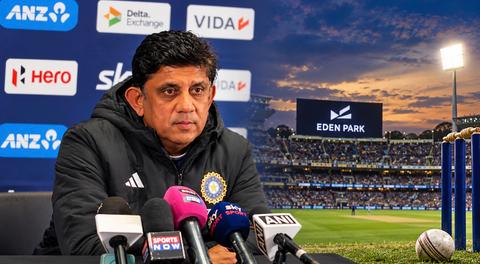
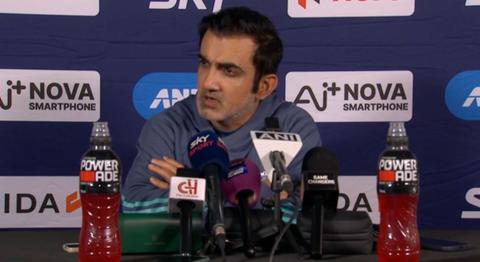
Interestingly, India's head coach Gautam Gambhir independently identified the same weakness during his own post-match press conference.
Gambhir said his batters had struggled against deliveries that were neither full enough to drive nor short enough to play comfortably off the back foot.
The two assessments, from opposite dressing rooms, described the same technical problem.
New Zealand found the difficult length.
India could not consistently negotiate it.
The truth about Henry's wobble seam
Modern cricket analysis often focuses on the wobble-seam delivery, where the seam's movement through the air can make its behaviour after pitching difficult to predict.
Henry acknowledged that the technique had become an important part of his bowling.
But he made an equally important distinction.
A wobble-seam delivery is only threatening when it lands in the right area.
"The key thing about the ball seaming is actually being accurate and being able to be there for long enough because you don't know which way it's going to go," he said.
That explains why his spell was so effective.
Henry was not relying on unpredictable movement alone.
He was repeatedly delivering the ball in areas where even modest movement could create problems.
He also praised Jamieson's ability to adapt.
When the ball offered swing, Jamieson used it. When seam movement became more prominent, he adjusted accordingly.
The success came from recognising the conditions rather than sticking rigidly to a predetermined plan.
Why Henry refused to claim he had mastered Rohit and Kohli
Having dismissed Rohit Sharma and Virat Kohli in the same over, Henry was asked about his record against India's leading batters.
His response was respectful and measured.
He rejected any suggestion that he had established dominance over them.
Both players, he said, had challenged him throughout his career and had enjoyed plenty of success against his bowling.
Henry described them as world-class batters capable of taking a game away from an opposition very quickly.
That made early wickets particularly valuable.
"You just can't give them a chance to get set," he said.
It was an important insight into New Zealand's approach.
The objective was not to win a personal contest against two famous players.
It was to prevent India's most dangerous batters from building an innings.
Friday's opening over achieved exactly that.
The performance New Zealand had been building towards
Although Henry's six wickets dominated the evening, he was keen to explain that New Zealand's bowling success had not appeared from nowhere.
He believed the Black Caps had bowled well earlier in the series, despite failing to secure victories in the opening matches.
Even when defending relatively modest totals, New Zealand's bowlers had managed to create pressure against India's experienced batting line-up.
At Bay Oval, they finally converted that pressure into a comprehensive victory.
Henry repeatedly praised the collective effort.
Jamieson complemented him with bounce and movement, while Matt Fisher's contribution demonstrated the growing depth of New Zealand's pace attack.
For Henry, seeing younger bowlers develop and take responsibility was among the most encouraging aspects of the performance.
The Black Caps have had to manage changes within their bowling group, and the emergence of additional options could prove valuable as their international schedule continues.
The other side of New Zealand's victory
The bowlers finished the job, but New Zealand's victory had been built earlier in the day.
India missed two chances to dismiss Will Young in the second over.
Young capitalised, scoring a century and helping New Zealand establish a commanding total of 333.
The contrast was striking.
New Zealand survived early pressure and made the most of its opportunities.
India lost three wickets before scoring a run.
Those moments helped shape the result, but they also demonstrated the importance of responding to challenging conditions.
Young found a way to build an innings.
India's leading batters could not.
Henry then ensured there would be no recovery.
A special exchange with Virat Kohli
Away from the intensity of the match, Henry also spoke about a jersey presentation involving Virat Kohli.
The moment offered a glimpse of the mutual respect between players who have competed against each other over many years.
Henry spoke warmly about Kohli, describing him as a fantastic person and a world-class batter.
He said the exchange was special.
It was a small but meaningful reminder that fierce competition and professional respect can exist together.
For all the attention surrounding Kohli's dismissal, Henry's comments reflected admiration rather than triumphalism.
What does this mean for the Test series?
Henry was also asked whether New Zealand's success against India's batters offered a preview of the upcoming Test series.
He was careful not to make premature predictions.
India, he stressed, remain a strong batting side.
New Zealand's bowlers have benefited from conditions offering some assistance, but that does not guarantee similar results in future matches.
His confidence came from the bowling group's development and its ability to challenge high-quality opponents.
The Black Caps now have an opportunity to level the five-match ODI series at 2–2 in Sunday's final match at Bay Oval.
India lead 2–1 and can still secure the series outright.
Henry will miss Sunday's ODI as he prepares for the Test series, leaving New Zealand's other fast bowlers with another opportunity to demonstrate their progress.
What Henry's spell really tells us
There is a temptation to explain India's collapse through the brilliance of one bowler or the failure of a famous batting line-up.
Neither explanation tells the complete story.
Henry's six wickets were the result of several elements working together.
He recognised how the wind affected his bowling. He adjusted his method to the surface. He attacked the stumps, found a length that challenged footwork and maintained enough accuracy to make the movement dangerous.
Just as importantly, New Zealand sustained pressure from both ends.
India's batters were unable to break that pressure.
The performance also highlighted a wider lesson for international cricket.
Conditions matter, but adapting to them matters more.
Gambhir acknowledged that India's players must improve their response to seam movement, particularly with the 2027 World Cup approaching.
Henry, meanwhile, demonstrated how an experienced bowler can make a complicated game look remarkably straightforward.
On a night when India's biggest names struggled to survive, New Zealand's leading fast bowler offered a simple explanation for an extraordinary result.
He did not need a mystery delivery. He needed the right length, the right conditions and the discipline to keep asking the same difficult question.
India had no answer.
This report draws on Matt Henry's post-match press conference following the fourth ODI between New Zealand and India at Bay Oval, Mount Maunganui, on 13 November 2026, alongside the official match scorecard.