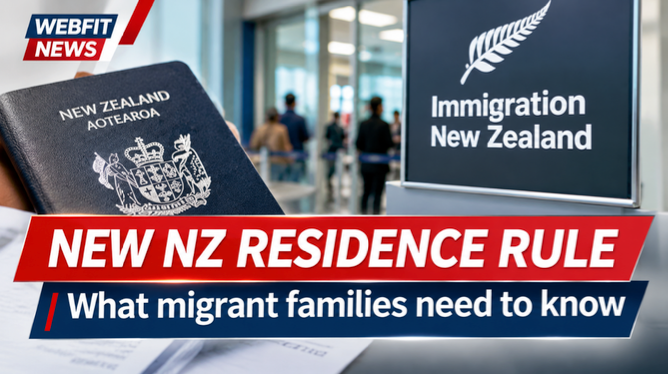
Although the Government expects relatively few applications to be affected, the consequences for individual families could be considerable.
The rule has also prompted political debate, particularly over its potential impact on children with disabilities or health conditions that make obtaining a visa more difficult.
What exactly has changed?
Previously, parents could be granted residence even if a dependent child was living in New Zealand without a valid visa.
That could happen when a child entered on a temporary visa but later became ineligible for another visa, including because of immigration health requirements.
Under the new rules, the child's unlawful status must generally be resolved before residence can be granted to the parents and other secondary applicants.
In practical terms, the child must obtain lawful immigration status or leave New Zealand before the residence application can be approved, subject to specified exceptions.
Importantly, the rule does not mean that every child must be included in the parents' residence application. But excluding a dependent child who remains unlawfully in New Zealand does not remove the problem.
INZ has made clear that a child's immigration status can affect the wider family's residence outcome.
Who is affected, and who is not?
The application date is particularly important.
| Family situation | What the new rule means |
|---|
| Residence application submitted before 12 November 2026 | Assessed under the previous rules |
| Residence application submitted on or after 12 November | New requirement applies |
| Dependent child is lawfully in New Zealand | This particular restriction does not apply |
| Dependent child is unlawfully in New Zealand | Parents' residence generally cannot be approved until the issue is resolved |
| Child is overseas | The rule concerning a child unlawfully in New Zealand does not apply solely because the child is overseas |
| Child becomes unlawful while included in a pending application | Application must be put on hold until the child obtains a visa or leaves |
| Child is excluded or removed from the application but remains unlawfully in NZ | The residence application will be declined unless an exception applies |
This is not a blanket ban on migrant families with children.
Nor does it mean parents who already hold residence automatically lose that status because their child's visa expires.
The change concerns the assessment of specified residence applications.
Other immigration obligations and consequences may still apply to a child who remains in New Zealand without a valid visa.
What if you applied for residence before 12 November?
Families who lodged their residence applications before the new rule took effect have an important protection.
Immigration New Zealand has confirmed that those applications will continue to be assessed under the instructions that applied when they were submitted.
That means the new requirement is not being applied retrospectively to applications already lodged.
However, families should not interpret this as permission for a child to remain in New Zealand unlawfully.
A child without a valid visa may still face immigration consequences, regardless of when the parents submitted their residence application.
What happens if your child's visa expires while your residence application is being processed?
This is one of the most important details in the new instructions.
The outcome depends partly on whether the dependent child is included in the residence application.
If the child is included: INZ says the application must be placed on hold until the child obtains another valid visa or leaves New Zealand.
If the child is not included, or is removed from the application: The residence application will be declined if the child continues living in New Zealand unlawfully, unless an exception applies.
That distinction matters for families who may be considering removing a child from their application in the hope of allowing the parents' residence to proceed.
Simply excluding the child does not necessarily solve the problem.
INZ says applicants will be given an opportunity and time to respond to concerns about their child's immigration status before a final decision is made.
Families should therefore take correspondence from INZ seriously and respond within the specified timeframe.
What if your child was born in New Zealand?
A child born in New Zealand is not automatically a New Zealand citizen in every circumstance.
Citizenship by birth depends on the relevant legal requirements, including the parents' status at the time of birth.
Some children born in New Zealand may instead hold a visa by operation of immigration law.
Parents should confirm their child's citizenship or immigration status rather than assume that being born in New Zealand automatically gives the child an unrestricted right to remain.
If the child's status is uncertain, INZ provides guidance on checking the immigration position of children born in New Zealand.
Are there exceptions?
Yes. The rule contains important exceptions that should not be overlooked.
INZ says a parent may still qualify for residence while a dependent child is unlawfully in New Zealand if:
The child is aged 15 or younger; and
The parent does not have the legal right to remove the child from the country where custody or visitation rights were granted, or from the child's country of residence.
Evidence, including custody documentation, may be required.
The restriction also does not apply in the same way to applications for a Permanent Resident Visa, a Second or Subsequent Resident Visa, or an Australian Resident Visa.
These are specific legal exceptions, not general exemptions for every family facing hardship.
Applicants should check the requirements of their particular visa category.
Why children with disabilities have become part of the debate
One of the most sensitive aspects of the change concerns children who cannot meet New Zealand's immigration health requirements.
Immigration New Zealand itself has acknowledged that problems can arise when a child enters on a temporary visa but cannot qualify for a longer-term visa because they do not meet the Acceptable Standard of Health.
In some cases, a child may have a disability or medical condition that creates difficulties under those requirements.
Previously, parents might have been granted residence while the child's immigration situation remained unresolved.
The new rule generally prevents that outcome.
Green Party immigration spokesperson Ricardo Menéndez March has criticised the change, warning that it could have serious consequences for families with disabled children.
He described the potential impact as “life-ruining for families with disabled children”.
Labour immigration spokesperson Phil Twyford also questioned the timing of the change, which was announced during the caretaker government period following the general election.
Their concerns centre on whether families could face particularly difficult choices when a child cannot obtain lawful immigration status.
However, the existence of a disability does not automatically mean a child will be refused a visa. Immigration health assessments and any available waivers or exceptions depend on the relevant visa category and individual circumstances.
Why the Government introduced the rule
Immigration Minister Erica Stanford has defended the policy, saying it is intended to ensure immigration decisions consider the position of the entire family.
The Government's concern is that granting residence to parents while leaving a child unlawfully in New Zealand can create a difficult and inconsistent situation.
Once the parents become residents, resolving the child's status may become more complicated.
Stanford told RNZ that parents are responsible for ensuring their dependent children are lawfully in the country.
She said the new instructions are designed to prevent family members receiving different immigration outcomes without the child's situation first being addressed.
The Minister also rejected suggestions that the decision itself had been made during the caretaker period.
According to Stanford, the decision was taken in October, before the 7 November election, with the detailed instructions prepared and approved afterwards.
She said the change was expected to affect fewer than 35 applications annually.
That estimate suggests the measure is relatively narrow in its direct reach.
But for the families concerned, a single application may represent years of employment, financial commitment and plans to settle permanently in New Zealand.
What if your child is already in New Zealand without a valid visa?
A child whose visa has expired and who remains in New Zealand is generally considered unlawfully present.
This is a serious immigration matter.
INZ states that people who are unlawfully in New Zealand, including children, cannot make an ordinary visa application from within the country.
However, there is a discretionary process under section 61 of the Immigration Act 2009 through which a person unlawfully in New Zealand may request consideration for a visa.
A section 61 request is not a normal visa application and does not guarantee approval.
Immigration authorities have discretion over whether to consider or grant such a request.
Making a request also does not automatically provide lawful immigration status or protection from deportation.
Families in this situation should obtain appropriate professional advice promptly, particularly before making decisions about departure, custody arrangements or an existing residence application.
What does this mean for families planning to move to New Zealand?
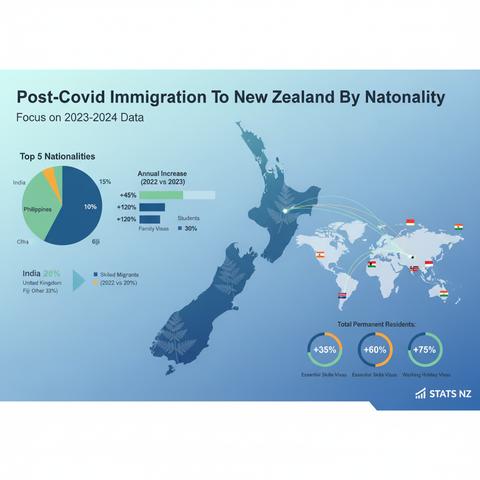
For people currently living in India, Fiji, the Philippines, South Africa, the United Kingdom or elsewhere, the new rule is another reason to consider the immigration status of every family member before relocating.
It does not prevent families from bringing children to New Zealand where they meet the relevant visa requirements.
And it does not mean that a child living overseas without a New Zealand visa automatically blocks the parents' residence application under this particular rule.
The concern arises when a dependent child is physically in New Zealand and unlawfully present.
Families planning to migrate should consider whether their children will qualify for the appropriate temporary visas, how long those visas will remain valid and whether any health or custody issues could complicate future residence plans.
A parent's eligibility for a work or residence pathway does not automatically guarantee that every dependent child will qualify for the same immigration outcome.
That is particularly important when planning a move that involves schooling, employment and long-term settlement.
Five questions families should ask before applying
Rather than waiting until a problem arises during residence processing, families can use the following questions to identify potential issues.
Does every dependent child currently in New Zealand have lawful immigration status? Check the actual visa conditions and expiry dates.
When was the residence application submitted? Applications lodged before 12 November 2026 are assessed under the previous instructions.
Could a child's visa expire before residence is decided? Consider whether the child has a lawful pathway to remain during processing.
Are there health, custody or other eligibility complications? These may affect what options are available and whether a specific exception applies.
Has qualified immigration advice been obtained where the situation is complicated? A licensed immigration adviser or a lawyer authorised to provide immigration advice can assess the family's circumstances.
These checks are especially important for families who have already spent considerable time and money preparing for residence.
Can families appeal if their residence application is declined?
Immigration New Zealand says declined residence applications can still be appealed to the Immigration and Protection Tribunal where applicants believe special circumstances apply.
However, appeal rights are subject to legal requirements and deadlines.
The availability and grounds of an appeal depend on the circumstances of the decision.
An appeal should not be treated as a guaranteed way to overcome the new rule.
Families considering an appeal should seek qualified advice promptly.
The bigger question: Keeping families together while applying immigration rules
The change highlights a difficult issue in immigration policy.
The Government wants to prevent situations in which parents become residents while a dependent child remains unlawfully in New Zealand.
Critics are concerned that the new requirement may make an already complicated situation even harder for families whose children face significant barriers to obtaining visas.
Both issues have practical consequences.
An unresolved immigration status can leave a child and their family facing prolonged uncertainty.
At the same time, refusing the parents' residence while that status remains unresolved may create further pressure on families who have established their lives in New Zealand.
The question is how those competing concerns are handled in individual cases, particularly where health requirements or custody arrangements make the available options limited.
For now, the legal position is clear.
From 12 November 2026, a dependent child's unlawful immigration status can prevent parents and other secondary applicants from being granted New Zealand residence, even when the adults otherwise meet the requirements.
For families already living in New Zealand, and those planning to make it their home, understanding that distinction early could make a significant difference.
Official information and further reading
Immigration New Zealand:
Disclaimer: This article is published by Webfit News for general news and public information purposes only. It does not constitute immigration or legal advice. Immigration rules, eligibility requirements, exceptions and appeal rights depend on individual circumstances and may change. Readers should consult Immigration New Zealand's official guidance or seek advice from a licensed New Zealand immigration adviser or appropriately qualified lawyer before making immigration decisions.
Webfit News | Immigration & Migration | New Zealand