“With Business, There’s a Responsibility”: Veer Khar’s Call as NZ and India Mark 100 Years of Connection
NZICA President Veer Khar used the 100 Years of Unity through Sport celebration in Auckland to call for a deeper kind of New Zealand–India relationship, one where trade, education...
NZICA President Veer Khar used the 100 Years of Unity through Sport celebration in Auckland to call for a deeper kind of New Zealand–India relationship, one where trade, education and business are matched by social responsibility. Former Indian cricket captain Ajinkya Rahane and New Zealand Olympic hockey gold medallist Ramesh Patel also shared their vision for stronger sporting exchanges and closer ties between the two countries.
By Webfit News | Auckland | 13 November 2026
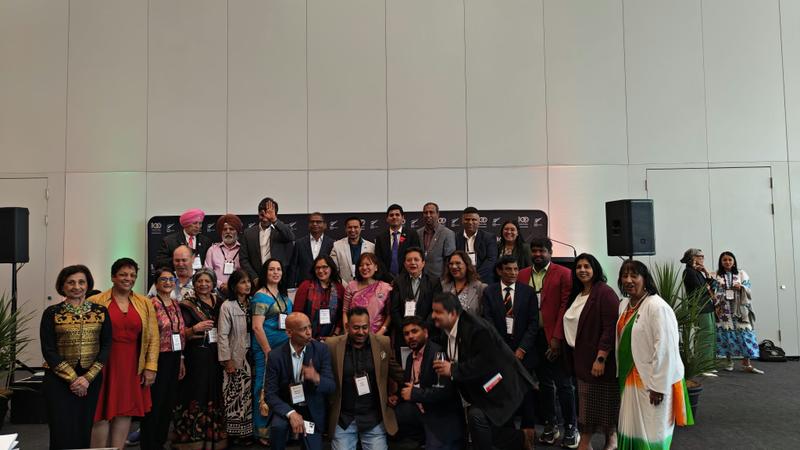
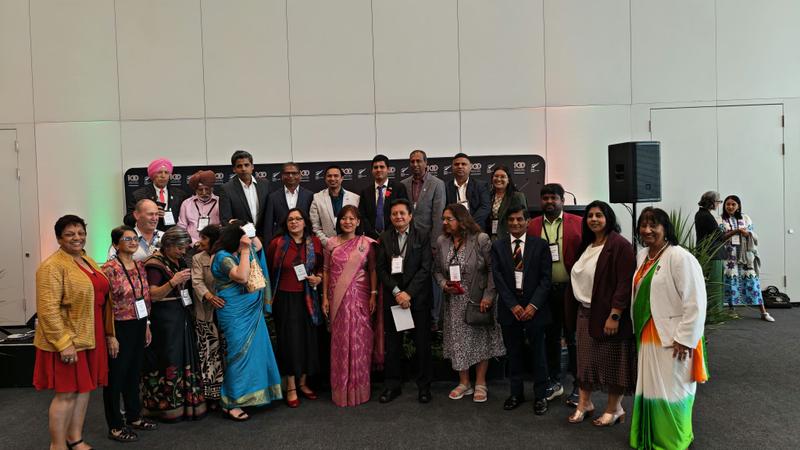
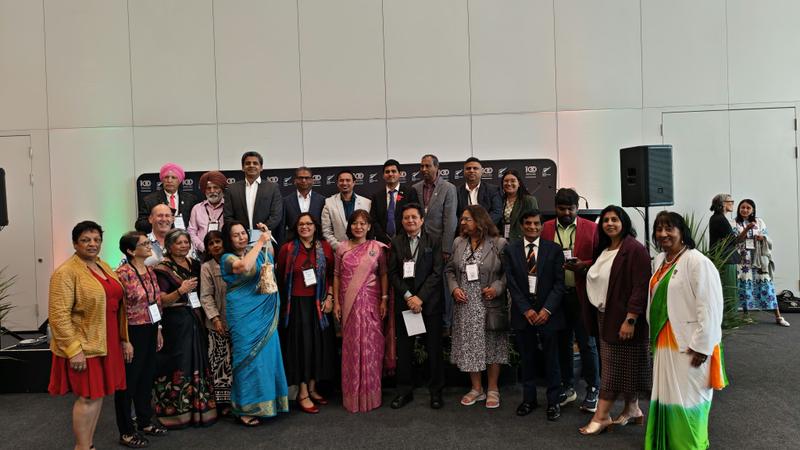
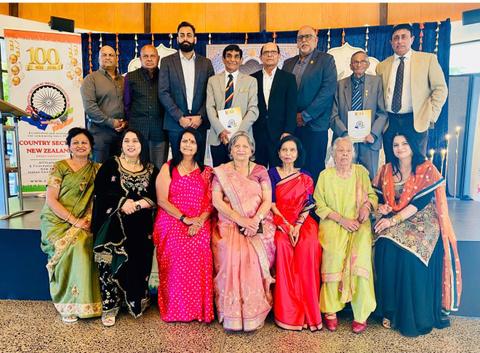
AUCKLAND: A celebration of 100 years of sporting ties between New Zealand and India became something bigger on Friday evening.
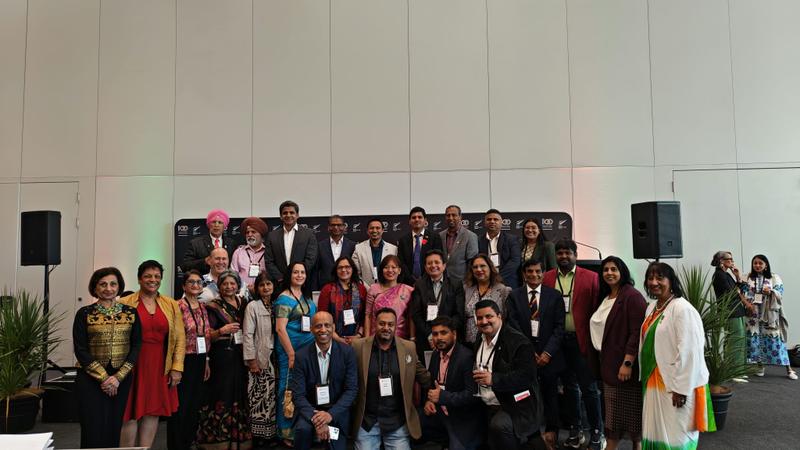
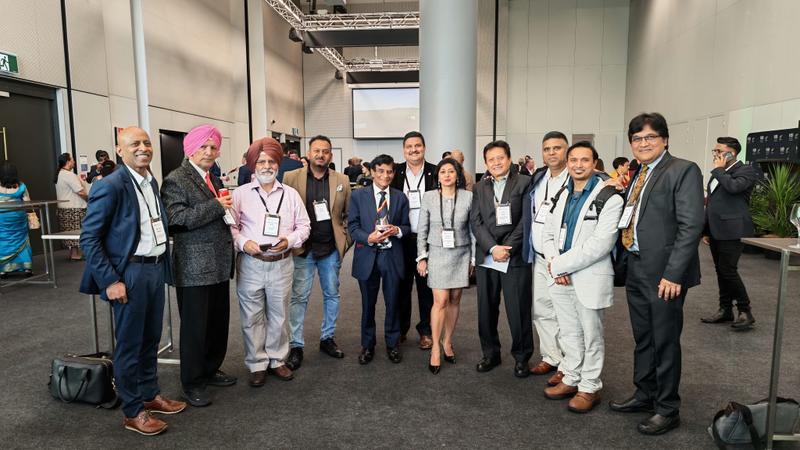
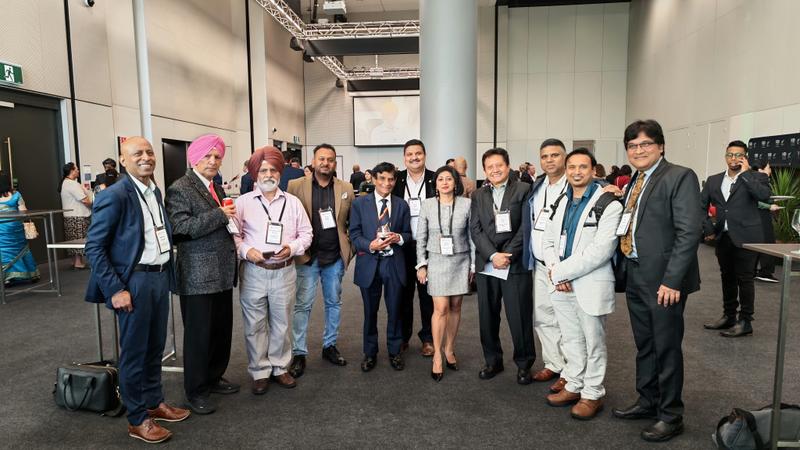
At the New Zealand International Convention Centre, community leaders and sporting figures reflected not only on a century of connection, but also on what the relationship between the two countries should look like next.
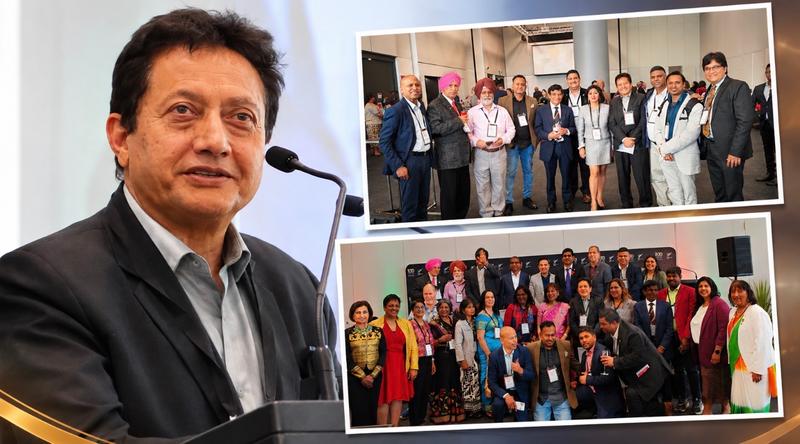
Among the strongest messages of the evening came from New Zealand Indian Central Association President Veer Khar, who used the occasion to argue that future business, education and trade links with India should carry a clear sense of social responsibility.
Former Indian cricket captain Ajinkya Rahane spoke about the value of sporting exchanges between the two countries, while New Zealand’s 1976 Olympic hockey gold medallist Ramesh Patel reflected on competition, friendship and the importance of broadening sporting participation.
Together, the three perspectives gave the centenary celebration a wider meaning.
This was not simply an evening about remembering the past.
It was about asking what New Zealand and India should build next.
Veer Khar: “With Business, There’s a Responsibility”
Veer Khar’s address became one of the most thought-provoking parts of the evening.
Speaking as President of the New Zealand Indian Central Association, Khar reflected on the history of the Indian community in New Zealand and the significance of reaching a 100-year milestone.
He said New Zealand had a special place in the history of the Indian diaspora because Indian communities here had organised collectively at a national level very early.
Rather than individual Indian associations operating in isolation, communities in different New Zealand centres came together through what became the New Zealand Indian Central Association.
Khar contrasted that with examples overseas where Indian community organisations in different cities could remain disconnected from one another.
For him, the significance of the centenary was not simply that an organisation had survived for 100 years.
It was that Indian communities in New Zealand had learned to organise, engage and work collectively.
Acknowledging the Difficult Parts of History
Khar also spoke openly about the fact that the relationship had not always been easy.
He acknowledged that New Zealand, like other countries, had experienced discrimination.
But he said what distinguished New Zealand was its willingness to continue engaging with Indian communities.
That engagement, he suggested, allowed trust to develop over time.
It was a point that led directly into his message for the future.
The trust that had been built socially and culturally over generations, he argued, now needed to be earned again through trade and business.
And simply making money would not be enough.
Business Should Give Something Back
Khar urged businesses working between New Zealand and India to think beyond commercial opportunity.
India, he reminded the audience, is a vast country with communities facing very different economic and social realities.
Rather than approaching India only as a market, he encouraged businesses to consider supporting practical projects in the communities they work with.
His suggestions were simple and direct.
Support a school.
Help with a sanitation project.
Choose a small village initiative.
Do something that leaves a positive impact.
The underlying argument was that companies that genuinely contribute to communities can build stronger trust and deeper relationships.
Khar summed up that philosophy in a line that captured the wider message of his speech:
“With business, there’s a responsibility.”
A Direct Challenge to the Education Sector
Khar then turned specifically to international education.
He said studying in New Zealand was simply not financially accessible to most Indian families.
In his view, only a relatively small percentage of Indian families are in a position to send their children overseas for education.
That reality, he argued, should encourage New Zealand education providers and those involved in international student recruitment to think differently.
His suggestion was that institutions should include scholarship opportunities for students who would otherwise not have the financial means to study in New Zealand.
Khar also directed a message to education agents.
Those benefiting commercially from international student recruitment, he said, should make it part of their model to support at least two or three students who meet such criteria.
The proposal was not presented as a formal NZICA scholarship scheme.
It was a challenge to the sector.
If businesses and agents benefit from the New Zealand–India education relationship, Khar argued, they should also help create opportunities for students who would otherwise be excluded from it.
That point gave his speech significance beyond the celebration itself.
He was effectively asking what kind of relationship New Zealand wants to build with India: one based purely on transactions, or one where commercial success also creates wider social benefit.
The Scale of India
Khar also used a simple example to illustrate the scale of the opportunity in India.
He recalled discussions about New Zealand supplying kiwifruit plants to India and concerns that local production there might eventually compete with New Zealand fruit.
His response was to look at the size of India’s population.
Even if New Zealand’s entire kiwifruit supply went to India, he suggested, the amount available per person would remain tiny.
His point was less about kiwifruit itself and more about perspective.
India’s scale means New Zealand businesses should not always view growth in India as a threat.
In many cases, the market is large enough to support significantly deeper trade and cooperation.
But Khar’s wider message remained consistent: opportunity and responsibility should develop together.
100 Years of the New Zealand Indian Central Association
The evening also recognised the centenary of the New Zealand Indian Central Association.
Established in 1926, NZICA has played a longstanding role in connecting Indian communities across New Zealand.
Its history runs alongside the broader story of New Zealand–India relations.
Over the past century, Indian New Zealanders have contributed through business, culture, education, community organisations and sport.
Khar’s address placed that history at the centre of the evening.
The association’s centenary was not treated simply as an organisational anniversary.
It represented a century of Indian communities building a place for themselves in New Zealand while maintaining ties with India.
Ajinkya Rahane Looks to Sporting Exchanges
Former Indian cricket captain Ajinkya Rahane brought the conversation back to sport, but with a strong focus on the future.
Rahane spoke about the potential for more sporting exchange programmes between India and New Zealand.
He highlighted the diversity of sporting environments across India, where different states and cities have their own cultures, training approaches and methods.
His message was that players from both countries could learn considerably by spending more time in each other’s sporting systems.
New Zealand athletes could gain exposure to different conditions, methods and sporting cultures in India.
Indian athletes could similarly learn from New Zealand’s sporting systems, facilities and approaches to development.
Rahane’s point extended beyond elite international teams.
Stronger exchange programmes could also create opportunities for younger athletes, coaches and sporting organisations.
The benefit would not simply be technical.
Players travelling between the two countries would also experience different cultures and build relationships that can last beyond their sporting careers.
Sport Can Open Other Doors
Rahane’s comments also reflected a wider theme running through the evening.
Sport does not operate in isolation.
Sporting exchanges can lead to relationships in education, innovation and business.
Players, coaches and organisations travelling between the two countries can become part of a wider network connecting New Zealand and India.
That was particularly relevant given the celebration took place alongside the New Zealand–India Business, Sport and Innovation Summit.
The broader programme brought together people working across government, business, education, technology and sport.
The message emerging from both events was increasingly clear.
Sport may be one of the easiest ways for people from the two countries to connect, but the relationship does not have to end at the boundary line.
Ramesh Patel: Competition and Friendship Can Grow Together
New Zealand Olympic hockey gold medallist Ramesh Patel brought another important perspective to the discussion.
Patel was part of the New Zealand men’s hockey team that won gold at the 1976 Montreal Olympics.
His brother Ramesh Patel was also part of that historic Olympic-winning team.
For New Zealand’s Indian community, their achievements remain a significant part of the country’s sporting history.
Speaking at the Auckland celebration, Ramesh Patel reflected on how sporting competition between New Zealand and India could continue while the friendship between the two countries also grew stronger.
He spoke about his hope that both nations would continue performing strongly on the international stage.
But he also looked beyond traditional sporting strengths.
Patel expressed interest in seeing both countries develop further across a wider range of sports.
Beyond Cricket
Patel also reflected on the strong connection Indian migrants in New Zealand have with cricket.
For many people arriving from India, cricket is naturally one of the first sporting communities they gravitate towards.
It is familiar.
It creates connections.
And it provides a relatively easy way to meet people and become involved in community life.
But Patel’s reflections also highlighted the opportunity to broaden participation.
Indian New Zealanders can become more involved in other sports, local clubs, volunteering and community competitions.
That matters because the New Zealand–India sporting relationship should not be measured only through international cricket series.
It can also be measured through what happens at grassroots level.
A Relationship That Began With Hockey
The centenary celebrations trace their sporting roots back to 1926, when an Indian Army hockey team toured New Zealand.
That visit helped establish early sporting connections between the two countries.
Over the decades, hockey and cricket became two of the most visible parts of the relationship.
But the connection gradually expanded.
Today it includes athletes, community organisations, volunteers, supporters and sporting bodies across multiple disciplines.
The 100-year anniversary therefore represents more than a sequence of international matches.
It reflects a century of people-to-people connections.
Three Different Messages, One Shared Direction
The strength of Friday’s discussion came from the fact that the three speakers did not simply repeat the same message.
Each approached the future from a different direction.
Veer Khar focused on responsibility.
His argument was that stronger trade, business and education links should also create social benefit.
Businesses working in India should consider supporting communities.
Education providers and agents should create opportunities for students who would otherwise be unable to study overseas.
Ajinkya Rahane focused on exchange.
He saw opportunities for athletes, coaches and sporting organisations to learn from different sporting environments and cultures.
Ramesh Patel focused on participation, competition and friendship.
He wanted to see both countries continue challenging each other internationally while encouraging broader involvement across different sports.
Together, those messages offered a much wider definition of what New Zealand–India relations can become.
Key Moments in a Century of Connection
Year
Milestone
1926
An Indian Army hockey team tours New Zealand, helping establish early sporting connections between the two countries.
1926
The New Zealand Indian Central Association is established.
1976
New Zealand wins Olympic men’s hockey gold in Montreal, with Mohan Patel and Ramesh Patel among the team members.
2026
NZICA marks 100 years of organised Indian community representation in New Zealand.
2026
New Zealand and India celebrate 100 years of sporting connection in Auckland.
2026
Auckland hosts the New Zealand–India Business, Sport and Innovation Summit alongside the centenary programme.
What Should the Next 100 Years Look Like?
That became the central question of the evening.
The first century has already produced sporting rivalry, community organisations, Olympic success, migration, business links and deep personal connections.
The next century could be shaped by something more deliberate.
More athlete exchanges.
More opportunities for young people.
More participation across different sports.
More educational pathways.
More trade.
And, if Khar’s challenge is taken seriously, more responsibility accompanying that growth.
For New Zealand businesses seeking opportunities in India, that could mean looking beyond sales figures.
For education institutions and agents, it could mean ensuring that access to New Zealand education is not limited entirely to families able to afford it.
For sporting organisations, it could mean creating practical exchanges that allow young athletes from both countries to train and learn together.
And for communities, it could mean continuing the work that began generations ago by using sport, education and culture to build connections.
From 1926 to the Next Century
A hundred years ago, sport helped establish an early bridge between New Zealand and India.
That bridge has since expanded through migration, community organisations, education, business and generations of personal relationships.
Friday’s celebration recognised what has already been achieved.
But its strongest messages were about what happens next.
Rahane challenged the two countries to create more opportunities to learn from one another through sport.
Patel spoke about maintaining competition while strengthening friendship and participation.
And Khar issued perhaps the broadest challenge of the evening.
As business and trade between New Zealand and India grow, he argued, responsibility must grow with them.
That may ultimately be the most important lesson from a century of connection.
The next 100 years should not only be about doing more business, playing more sport or increasing trade. They should also be about ensuring that the relationship creates opportunities for people who might otherwise be left behind.