Hamilton Council Reshapes Committees, Targets Bottle Stores and Keeps STV for 2028
Hamilton City Council has made three decisions that could directly affect how the city is run, how alcohol is sold, and how residents vote at the next local election.
Hamilton City Council has made three decisions that could directly affect how the city is run, how alcohol is sold, and how residents vote at the next local election.
Hamilton Council Reshapes Committees, Targets Bottle Stores and Keeps STV for 2028
Hamilton City Council has made three decisions that could directly affect how the city is run, how alcohol is sold, and how residents vote at the next local election.
At an Extraordinary Council meeting on 19 August 2026, councillors approved a new governance structure, agreed to develop a targeted Local Alcohol Policy focused on off-licence alcohol sellers, and decided to retain the Single Transferable Vote system for the 2028 local election.
For ordinary Hamilton residents, the decisions come down to three practical questions:
Council changes the way it organises its work
Hamilton City Council has approved a revised committee structure for the remainder of the 2025 to 2028 term.
The previous committee model was introduced at the beginning of the current council term. Since then, councillors unanimously adopted the Mayor’s Plan 2025 to 2028, and Council says the new structure is intended to better align its work with those priorities.
The new structure will have four main committees focused on:
There will also be dedicated subcommittees dealing with council-controlled organisations, procurement, funding and partnerships, regulatory matters and public submissions.
Mayor Tim Macindoe said the goal was to keep Council focused on areas that matter most to residents, including value for money, central city revitalisation, economic growth and the delivery of infrastructure.
For residents, committee structures may sound like internal Council business, but they matter because they determine where major issues are debated, which councillors take responsibility for them and how decisions move through Council.
The real test will be whether the new structure actually leads to clearer, faster and more accountable decision-making.
Bottle stores and takeaway alcohol are under closer scrutiny
The second decision is likely to have a more visible impact on neighbourhoods.
Council has agreed to move ahead with drafting a Local Alcohol Policy focused specifically on off-licence premises.
These are businesses that sell alcohol for people to take away and drink somewhere else.
They include:
The proposed policy could eventually introduce local rules around where these outlets can operate, how many there can be, their signage and the hours they are allowed to sell alcohol.
No final restrictions have been adopted yet.
Council will first develop the draft policy, analyse the options and then consult the public before making a final decision.
Why Council is looking at off-licence alcohol outlets
The decision follows research, stakeholder engagement and a perceptions of alcohol survey carried out in February 2026.
Research presented to Council showed significant community concern about the number and location of takeaway alcohol outlets.
According to the information presented:
The issue is not simply whether people should be allowed to buy alcohol.
The broader concern is whether a high concentration of bottle stores, particularly near schools, health services, addiction treatment facilities or other sensitive locations, can contribute to alcohol-related harm in communities.
Council will now consider whether local rules could help address those concerns.
What could actually change in a Hamilton neighbourhood?
Consider a simple example.
Imagine a suburban shopping centre with a supermarket, takeaway food businesses and two bottle stores.
Nearby there is also a school, an early childhood centre and a community health service.
Under a future Local Alcohol Policy, Council could potentially introduce rules limiting where new off-licence alcohol businesses can open.
It could also consider restrictions on:
That does not mean existing bottle stores will automatically close.
The exact rules have not yet been decided, and any proposals would need further analysis and public consultation.
That consultation will be important because tighter rules could bring both benefits and costs.
Some residents may support tougher restrictions because they believe there are already too many alcohol outlets in their neighbourhoods.
Businesses, meanwhile, may argue that additional rules could increase costs, reduce competition or make licensing more complicated.
Council will ultimately have to balance those competing views.
Why alcohol availability matters
Alcohol-related harm can take many forms.
It can include violence, family harm, disorderly behaviour, drink-driving, health problems and pressure on emergency and health services.
The availability of alcohol is only one factor behind those problems, and limiting bottle stores will not eliminate alcohol-related harm by itself.
But local alcohol policies are one tool councils can use to influence where alcohol is sold and when it can be purchased.
For Hamilton, the question will be whether more targeted rules can reduce harm without placing unnecessary restrictions on responsible consumers and legitimate businesses.
STV will stay for the 2028 local election
Council also revisited how Hamiltonians will vote in future local elections.
In a majority decision, councillors agreed to retain the current Single Transferable Vote system for the 2028 election.
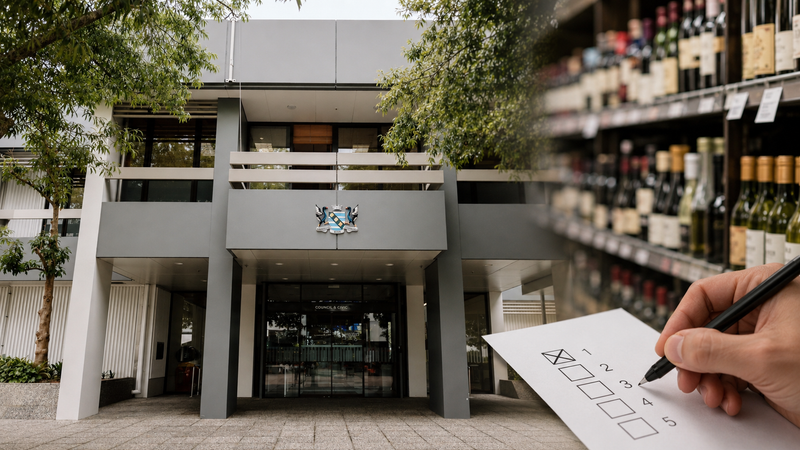
Under STV, voters rank candidates in order of preference.
For example:
Voters do not have to rank every candidate.
The counting system then uses those preferences as candidates are elected or eliminated.
That is different from First Past the Post, where voters generally place ticks beside their preferred candidates and the candidates with the most votes win.
Why does Hamilton use STV?
Supporters of STV argue that ranking candidates gives voters more choice and can result in elected representatives who reflect a broader range of voter preferences.
Supporters of First Past the Post generally argue that it is easier to understand and simpler to count.
There is no perfect voting system.
STV can look complicated to someone using it for the first time, particularly because the ballot requires rankings instead of simple ticks.
But its supporters argue that it reduces the number of wasted votes because later preferences can still count if a voter’s first-choice candidate is eliminated or already has enough support to be elected.
The debate is therefore partly about simplicity and partly about representation.
Hamilton voters will get the final say
The most important part of Wednesday’s decision is that Hamilton voters themselves will eventually decide which system they prefer.
Alongside the 2028 local election, residents will be asked to choose their preferred voting system in a poll.
The result of that poll will take effect from the 2031 local election.
Council has also directed staff to gather community feedback about the different voting systems and report those findings back to elected members.
That means the 2028 election will involve two separate democratic decisions.
Hamiltonians will elect their mayor and councillors using STV.
At the same time, they will decide which voting system should be used from 2031.
Why the voting system debate matters
For many people, arguments about electoral systems may seem technical and distant from everyday life.
But the voting system can influence who gets elected and how accurately election results reflect the preferences of the wider community.
There is also a bigger issue facing local government.
Turnout in council elections is often much lower than in general elections.
The reasons are complex.
Some residents may not know enough about the candidates. Others may not understand what councils are responsible for. Some may simply feel disconnected from local politics.
Changing the voting system alone will not solve those problems.
If Hamilton wants stronger participation in future elections, the city may also need better voter education, clearer information about candidates and stronger public engagement.
Three decisions, but the real impact comes later
Wednesday’s meeting produced three significant decisions, but much of their practical impact will not be immediate.
The new committee structure will change how Council organises its work.
The alcohol policy still needs to be drafted, analysed and consulted on before any new restrictions are introduced.
STV will remain in place for the 2028 election, but residents will then get the opportunity to determine what happens from 2031.
For many Hamilton residents, the proposed alcohol policy could eventually be the most noticeable change because it may influence what kinds of alcohol outlets can open in their neighbourhoods and when they can trade.
For Council itself, however, the governance restructure could be just as important if it genuinely improves decision-making and accountability.
And on voting, councillors have effectively decided that Hamiltonians themselves should make the longer-term call.
What happens next?
Council staff will now begin developing the proposed Local Alcohol Policy.
Residents are expected to get an opportunity to provide feedback before final rules are adopted.
Issues likely to be considered include:
On elections, STV remains in place for 2028.
The public poll held alongside that election will determine which voting system Hamilton uses from 2031.
The decisions made this week are therefore not the end of these debates.
For Hamilton residents, they are the beginning of several decisions that could shape how their city is governed, how alcohol is sold in their communities and how they choose their future representatives.
References
Hamilton City Council, Extraordinary Council meeting, 19 August 2026.
Hamilton City Council, Mayor’s Plan 2025 to 2028.
Hamilton City Council, perceptions of alcohol research and stakeholder engagement, 2026.
Hamilton City Council, Local Alcohol Policy discussion material, 2026.
Hamilton City Council, voting system decisions for the 2028 and 2031 local elections.