New Endometriosis Guidelines Could Cut Years Off Diagnosis Waits for Kiwi Women
For thousands of New Zealand women and girls living with endometriosis, getting a diagnosis can take close to a decade.
For thousands of New Zealand women and girls living with endometriosis, getting a diagnosis can take close to a decade.
New Endometriosis Guidelines Could Cut Years Off Diagnosis Waits for Kiwi Women
For thousands of New Zealand women and girls living with endometriosis, getting a diagnosis can take close to a decade.
That could begin to change under new clinical guidelines announced by the Government, which will allow GPs to diagnose suspected endometriosis using symptoms, family history and clinical examination, rather than requiring surgery as the main route to confirmation.
The move is significant because endometriosis affects about one in 10 women and girls in New Zealand and can have a major impact on schooling, work, relationships, fertility and everyday life. Endometriosis New Zealand estimates at least 120,000 people in the country are living with the condition.
What has actually been announced?
Health Minister Simeon Brown and Minister for Women Nicola Grigg announced on 18 August that Health New Zealand will adapt the Royal Australian and New Zealand College of Obstetricians and Gynaecologists’ Australian Living Evidence Guideline on Endometriosis for use in New Zealand.
The guideline is expected to be published in mid-2027, after clinical assessment and adaptation to the New Zealand health system.
Under the proposed approach, GPs will be supported to make a clinical diagnosis based on factors including:
Once a clinical diagnosis is made, treatment could begin without waiting for laparoscopic surgery purely to confirm the condition.
That does not mean surgery is disappearing. Surgery will still be available when clinically required, particularly for complex disease, severe symptoms, fertility concerns or cases that do not respond to first-line treatment.
What is endometriosis?
Endometriosis is a chronic inflammatory condition in which tissue similar to the lining of the uterus grows elsewhere in the body, commonly in the pelvis.
Health New Zealand lists pelvic pain as the most common symptom. Other symptoms may include painful periods, pain during or after sex, pain when urinating or having a bowel movement, bloating, constipation, fatigue and fertility problems.
The condition can vary enormously from one person to another. Some women may have severe symptoms, while others may have relatively few.
That inconsistency is one reason diagnosis can be difficult.
Why has diagnosis taken so long?
The Government says research shows New Zealand patients can wait eight to 12 years for a diagnosis. RANZCOG says the median delay is around 10 years.
Historically, laparoscopic surgery has commonly been used to confirm endometriosis.
A laparoscopy involves inserting a small camera through an incision in the abdomen so surgeons can examine the pelvis and, where appropriate, take tissue samples or treat lesions.
The problem is obvious.
If confirmation depends heavily on access to surgery, patients can become caught in specialist referral queues, imaging delays and operating theatre waiting lists.
RANZCOG says the delay also reflects barriers to ultrasound and MRI, access to specialist services and lack of awareness about the condition.
What the Prime Minister’s message means
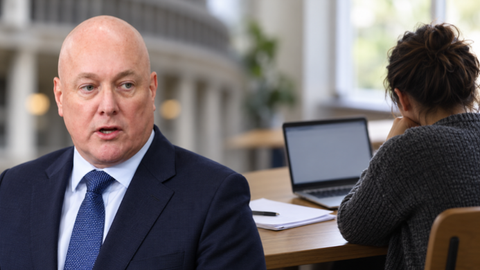
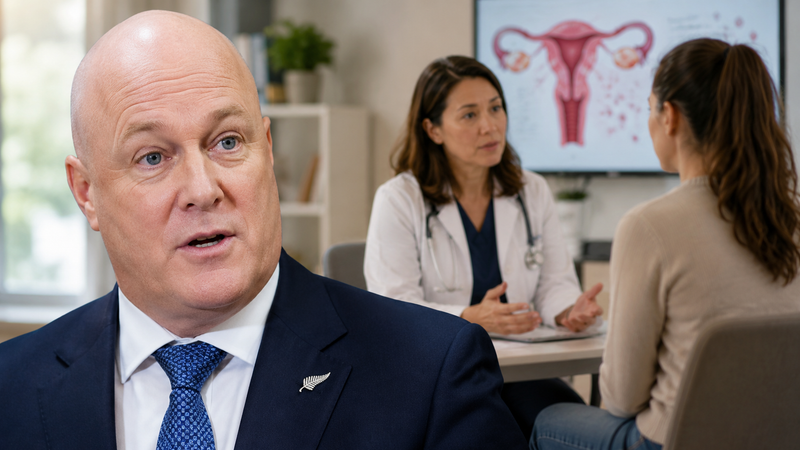
Prime Minister Christopher Luxon shared the Government’s announcement on social media, highlighting the one-in-10 prevalence figure, the eight-to-12-year diagnostic delay and the plan to allow GPs to diagnose and begin treatment earlier.
The core message is straightforward.
The Government wants endometriosis to be treated more like other chronic conditions where primary care doctors can act on strong clinical evidence rather than forcing patients to wait for a specialist procedure before anything meaningful happens.
The post also highlighted another issue that has frustrated patients for years: women being told severe period pain is simply normal.
Women’s Minister Nicola Grigg said too many women had spent years reporting that something was wrong, only to have their symptoms dismissed.
That may be as important as the technical change in diagnosis.
A new guideline only works if clinicians recognise the warning signs early.
A simple example of how the new system could work
Consider a hypothetical case.
A 22-year-old Auckland university student has suffered severe period pain since she was 15.
Every month she misses one or two days of study. She experiences pelvic pain, bowel pain during menstruation and pain during exercise. Her mother was diagnosed with endometriosis in her thirties.
Under a surgery-centred pathway, she may visit her GP several times, try pain medication, wait for a specialist appointment and potentially wait again for surgery before receiving confirmation.
Under the proposed guideline, her GP could look at the combination of symptoms, family history, examination findings and appropriate imaging.
If the clinical picture strongly suggests endometriosis, the GP could make a clinical diagnosis and begin first-line treatment while continuing to monitor her condition.
That could potentially turn years of uncertainty into months.
It is an illustrative example, not a guarantee of how every case will be managed, because treatment will depend on the individual patient and the final New Zealand guideline.
What treatment could begin earlier?
The Government says low-impact hormonal medication can be effective for up to 60 percent of women with endometriosis.
RANZCOG’s guideline places a strong emphasis on first-line hormonal treatment while diagnostic investigations are still underway. It also supports greater use of non-invasive techniques such as transvaginal ultrasound and MRI where appropriate.
The guideline also promotes multidisciplinary care involving health professionals such as physiotherapists, psychologists, pain specialists and fertility specialists.
That is important because endometriosis is not simply a problem solved by one medication or one operation.
For some patients, long-term pain management, pelvic-floor physiotherapy, mental-health support or fertility care may form part of treatment.
Why advocates have been pushing for change
The announcement did not come from nowhere.
In August 2025, Endometriosis New Zealand publicly urged health authorities to replace New Zealand’s 2020 guidance with the newer Australian Living Evidence Guideline.
The organisation argued that the existing approach was falling behind modern evidence and that greater use of imaging and earlier treatment could reduce delays.
Endometriosis New Zealand estimated at the time that about 120,000 New Zealanders were living with the condition.
RANZCOG has now welcomed the Government’s decision, calling the adoption of the guideline an important step towards improving evidence-based care in New Zealand.
This is not an overnight fix
There is one important detail patients should understand.
The new guideline is not operating nationwide today.
Health New Zealand is expected to publish the adapted guideline in mid-2027. Training and education resources for primary care providers are also being developed.
That distinction matters.
People experiencing symptoms should not assume the announcement means every GP clinic has already moved to a new national process.
There is also a broader challenge.
New Zealand already published endometriosis guidance in 2020 aimed at encouraging earlier recognition and management in primary care.
The real test will therefore be implementation.
GPs need training, patients need access to appropriate imaging, treatment must be affordable and specialist services still need enough capacity for complex cases.
A guideline sitting on a website will not shorten a 10-year wait by itself.
Why this could still be a major change
If implemented properly, the new model could change where the first serious intervention occurs.
Instead of the patient waiting to enter the hospital system before receiving answers, much more of the early diagnosis and treatment could happen at the local GP clinic.
The Government argues this could also reduce unnecessary specialist referrals and allow gynaecologists to focus more resources on people who genuinely need specialist assessment or surgery.
For patients, however, the biggest benefit may be simpler.
Being believed earlier.
For years, endometriosis advocates have argued that severe menstrual pain is too often normalised.
The new guidelines will not eliminate that problem on their own, but they send a clearer clinical message that persistent, disabling pain deserves investigation.
For someone who has spent years hearing that their symptoms are “just part of having periods”, that change could be substantial.
What symptoms should people take seriously?
Health New Zealand advises people to speak with a healthcare provider if they are concerned about symptoms such as:
These symptoms do not automatically mean someone has endometriosis, but persistent or disabling symptoms deserve medical assessment.
The bottom line
The Government’s announcement represents a shift away from treating surgery as the main gateway to an endometriosis diagnosis.
From mid-2027, New Zealand’s planned guideline is expected to give GPs a stronger role in recognising the condition, making a clinical diagnosis and beginning treatment earlier.
That could be particularly important for younger women and girls who might otherwise spend much of their teens and twenties trying to find an explanation for debilitating pain.
But the success of the policy will ultimately be measured by something much more concrete than the publication of a new guideline.
It will be measured by whether the current eight-to-12-year wait actually falls.
References
New Zealand Government, Beehive, “Ending the decade-long wait for an endometriosis diagnosis”, 18 August 2026.
Health New Zealand, Endometriosis health information.
Royal Australian and New Zealand College of Obstetricians and Gynaecologists, statement on implementation of the Australian Living Evidence Guideline in Aotearoa New Zealand, 19 August 2026.
1News, “Guidelines to let GPs diagnose endometriosis more easily”, 18 August 2026.
Endometriosis New Zealand, advocacy for updated clinical guidelines, August 2025.