By Webfit News | Auckland
Education reform, immigration policy, permanent residency, school overcrowding and the future of New Zealand’s workforce were among the major issues discussed at a public meeting in Auckland on Thursday evening.
By Webfit News | Auckland Education reform, immigration policy, permanent residency, school overcrowding and the future of New Zealand’s workforce were among the major issues...
By Webfit News | Auckland
Education reform, immigration policy, permanent residency, school overcrowding and the future of New Zealand’s workforce were among the major issues discussed at a public meeting in Auckland on Thursday evening.
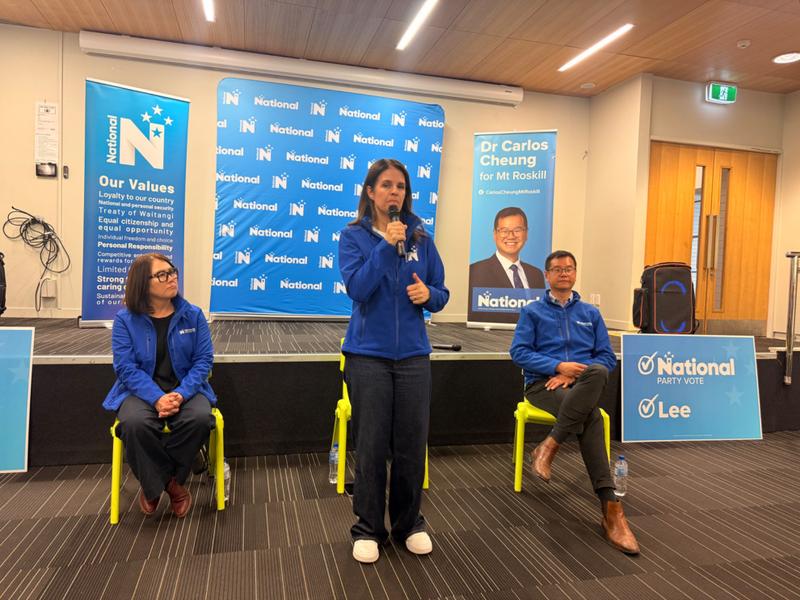
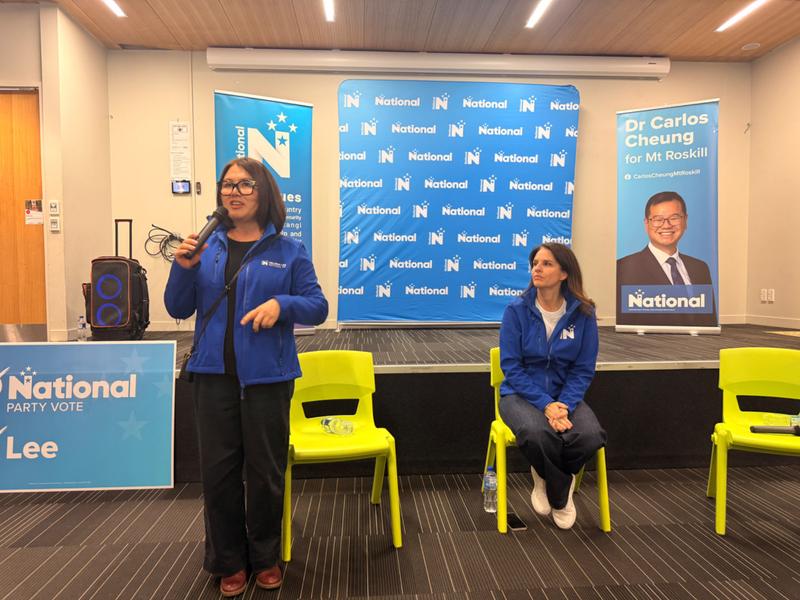
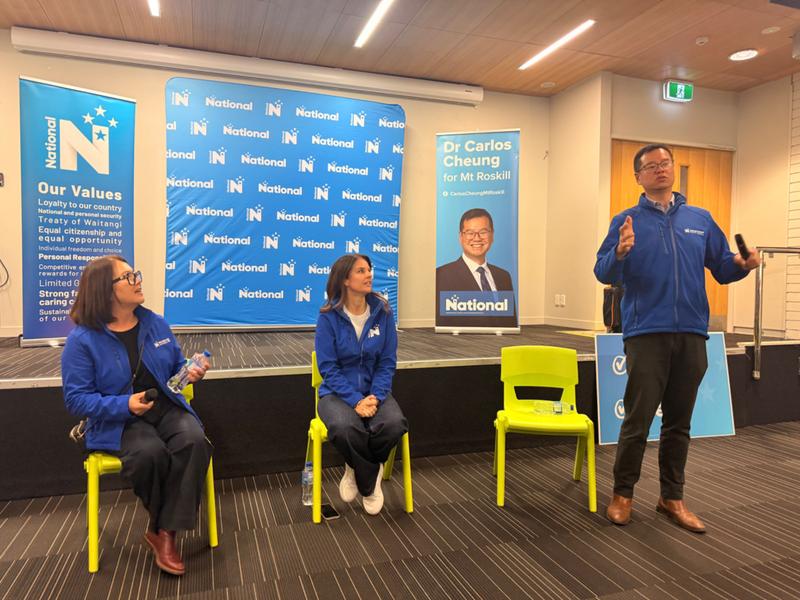
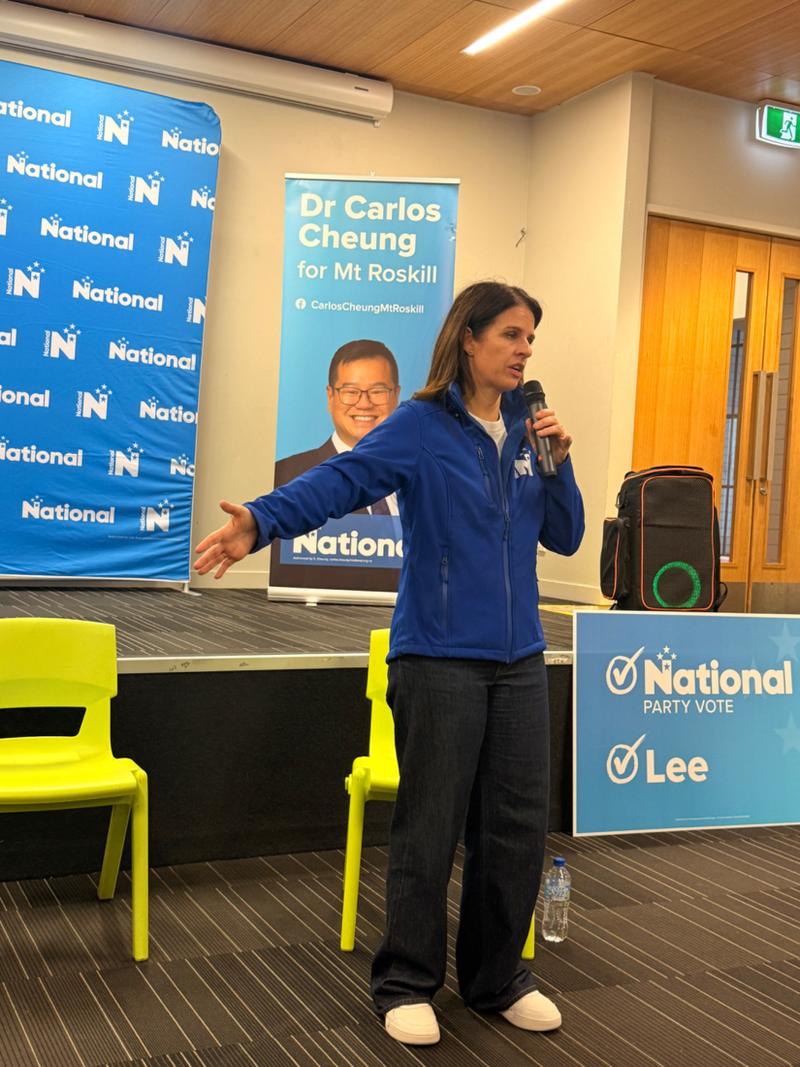
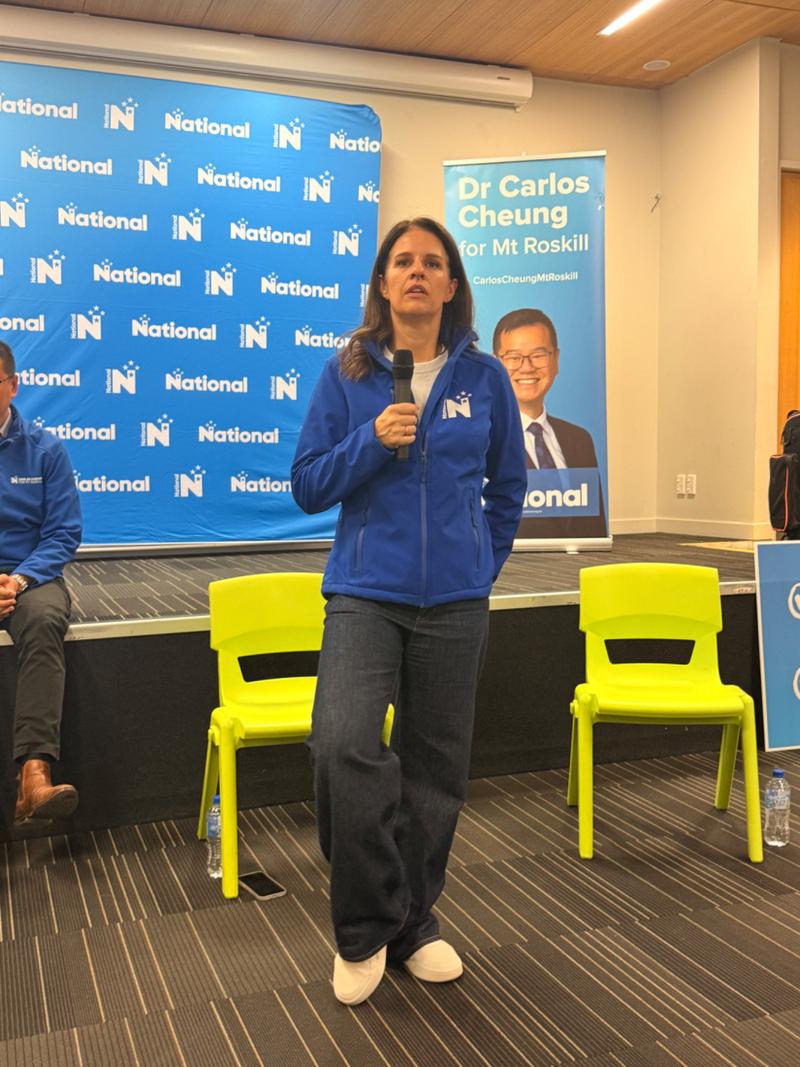
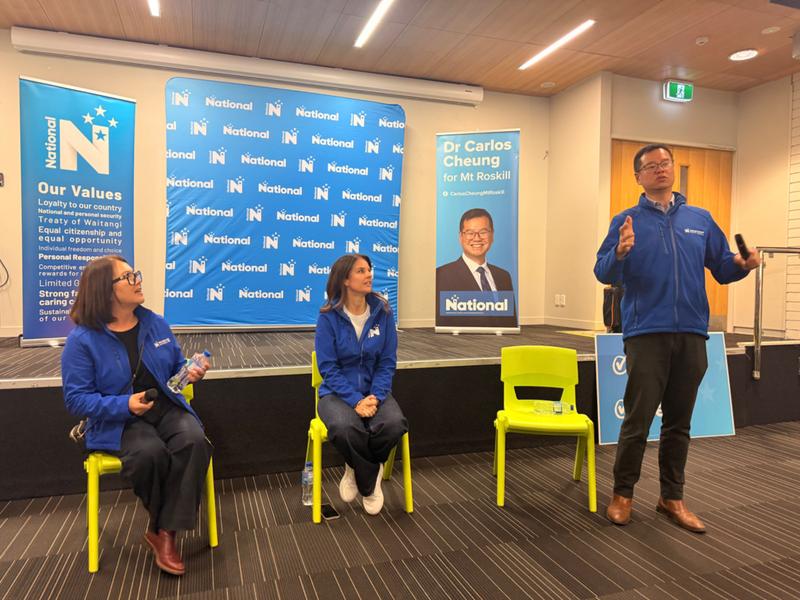
Education and Immigration Minister Erica Stanford joined National MP Dr Carlos Cheung at the Fickling Convention Centre, 546 Mt Albert Road, for a community discussion that moved well beyond prepared political speeches.
Webfit News attended the meeting, where members of the public, teachers, parents, business owners and students had the opportunity to question the minister directly.
The discussion came during the 2026 general election campaign, with Stanford defending the Government’s record while addressing concerns about immigration settings, education standards and the potential impact of a change in government.
One of the evening’s most significant exchanges concerned New Zealand’s permanent residency system and political proposals that have caused anxiety among migrant communities.
Permanent residency: Stanford pushes back against calls for change
Immigration became one of the strongest talking points when an audience member raised concerns about rhetoric from New Zealand First and its potential implications for Chinese, Indian and other migrant communities.
Stanford responded by defending permanent residency as an important feature of New Zealand’s immigration system.
She argued that the ability to retain permanent residency without necessarily becoming a citizen gives New Zealand a competitive advantage when attracting skilled migrants.
The minister pointed to international competition for doctors, nurses, teachers and other professionals, saying New Zealand must remain attractive compared with countries such as Australia, Canada and the United Kingdom.
She also questioned what practical problem would be solved by removing permanent residency arrangements.
Her comments highlighted a potential area of disagreement within the governing coalition, particularly as immigration becomes a more prominent election issue.
For migrant families who have established their lives in New Zealand, the exchange offered an indication of Stanford’s position, although it did not amount to a guarantee about future coalition negotiations or legislation.
Parent visas: Government says family concerns influenced changes
Dr Carlos Cheung opened the meeting by highlighting Stanford’s involvement in immigration matters affecting local communities.
He specifically referred to parent visa arrangements, acknowledging longstanding concerns about delays and the difficulties families face when trying to reunite with parents overseas.
Cheung said community feedback had helped drive changes to the system.
Stanford also expressed satisfaction with changes made to parent-related immigration settings, describing the aim as creating a fairer arrangement for families.
The discussion was particularly relevant to migrant communities, including New Zealanders with parents living in India, China and other countries.
However, the meeting did not provide a detailed breakdown of visa eligibility, processing times or the precise conditions attached to the changes.
Immigration policy: Skilled migration and local employment remain priorities
Stanford described immigration as essential to New Zealand’s economic future, particularly as the population ages and businesses face shortages of skilled workers.
She shared her own family’s migration history, explaining that her father arrived from the Netherlands in 1952.
Drawing on that experience, she acknowledged the contribution migrant families have made to New Zealand through employment, education and community participation.
The minister also defended changes to immigration settings during the Government’s term.
She said net migration had reached approximately 134,000 in December 2023 and had since fallen to around 20,000.
Stanford also claimed that the composition of migrant arrivals had shifted significantly towards higher-skilled workers.
These figures were presented by the minister during the meeting and should be considered alongside official immigration statistics, including differences in reporting periods and migrant classifications.
Despite emphasising the importance of immigration, Stanford said employers should make genuine efforts to recruit New Zealanders before seeking workers from overseas.
The challenge, she acknowledged, is balancing businesses’ demand for skills with employment opportunities for people already living in New Zealand.
Education reforms: Stanford warns against reversing course
Education dominated much of the evening.
Stanford argued that declining achievement in literacy and mathematics had required substantial changes to the education system.
She defended the Government’s emphasis on structured literacy, mathematics instruction, clearer year-by-year curriculum expectations and regular assessments.
The minister said the reforms were intended to ensure that a child’s educational opportunities were not determined by their family’s income or circumstances.
She also expressed concern that changes proposed by opposition parties could reverse progress.
Stanford argued that schools need consistency and that teachers must be supported with practical resources, professional development and clear curriculum guidance.
She said approximately 30,000 teachers had received structured literacy training, while more than 20,000 had undertaken structured mathematics training.
These were figures cited during her presentation.
The minister also highlighted the Government’s ambition to have 80 percent of students achieving at the expected curriculum level by 2030.
Whether the reforms deliver sustained improvements across different communities, particularly lower-income areas, remains an important measure of their success.
Auckland school overcrowding and the search for another secondary school
One of the most locally significant discussions concerned increasing pressure on secondary schools in central Auckland.
An audience member questioned Stanford about capacity at Mount Albert Grammar School and the possibility of using the historic Carrington buildings for educational purposes.
Stanford acknowledged the need for additional secondary school capacity and said the Ministry of Education was investigating land acquisition options.
She indicated that possibilities could include another campus or a separate secondary school, although no final decision had been made.
The minister was cautious about identifying potential sites, explaining that publicly signalling government interest in particular land could affect its purchase price.
She also acknowledged uncertainty about the ownership and suitability of the historic Carrington buildings and undertook to seek further information.
The exchange illustrated growing concern about whether Auckland’s school infrastructure can keep pace with population growth.
Homeschooling oversight raised after Tom Phillips case
The meeting also addressed the monitoring of homeschooled children.
A member of the public questioned whether sufficient safeguards exist to ensure children educated outside conventional schools receive appropriate support and oversight.
Stanford said homeschooling numbers had increased significantly and that she had received advice identifying gaps in the existing monitoring system.
She referred to the Tom Phillips case as an example of why greater oversight deserved attention.
According to Stanford, she had previously attempted to introduce legislative changes allowing more regular contact with homeschooling families, but the proposal did not secure sufficient support.
She said further legislation would be a priority within the first 100 days of a returned National-led government.
The minister was careful to distinguish between families providing effective home education and situations where children might be at risk.
She acknowledged that many homeschooling parents do an excellent job while maintaining that the state has a responsibility to identify children who may not be receiving adequate education or protection.
Trades education: A stronger alternative to traditional academic pathways
A question about vocational education prompted Stanford to outline plans to give trades training greater recognition within secondary schools.
She rejected the perception that vocational subjects should be reserved for students who struggle academically.
Instead, she said trades and academic qualifications should be treated as equally valuable pathways.
Stanford discussed new vocational subjects covering building and construction, manufacturing, energy, hospitality and primary industries.
She said the Government was working with industry representatives to ensure the subjects reflected skills employers actually need.
The minister also highlighted plans to expand practical work experience and strengthen connections between schools, training providers and local businesses.
The broader objective, she explained, was to keep more young people engaged in education while preparing them for employment.
Students from lower-income families: Who gets left behind?
One audience member raised concerns about literacy and numeracy assessment results, particularly among students from lower-income households.
The question challenged whether tougher academic expectations could disadvantage children who already face barriers to educational achievement.
Stanford acknowledged that many students enter secondary school without the reading, writing and mathematics skills expected at their age.
She argued that the solution was not to lower expectations but to improve foundational learning much earlier.
The minister pointed to structured literacy, mathematics acceleration programmes, targeted tutoring and additional teaching resources.
She also emphasised that children from financially disadvantaged households often cannot access private tutoring.
The Ministry of Education’s published 2026 initiatives include additional funding for mathematics support, writing resources and targeted literacy programmes.
The exchange raised an important question for the Government: whether its reforms will close achievement gaps or whether some students will continue to fall behind despite increased support.
University rankings and retaining skilled graduates
Another participant questioned New Zealand’s ability to compete internationally with leading universities in countries such as Singapore.
The audience member argued that improving school education was only part of the challenge. New Zealand also needed to attract and retain talented young people.
Stanford acknowledged the issue and pointed to the relationship between international education and immigration policy.
She said attracting overseas university students, particularly those pursuing postgraduate qualifications and research, could benefit the economy.
She also discussed residence pathways for international graduates who secure skilled employment.
Her argument was that New Zealand could benefit twice: first through international education and subsequently by retaining qualified workers who have already studied and developed connections here.
Government spending: Stanford calls for stronger accountability
Public sector efficiency also came under scrutiny.
Asked how ministries could better manage taxpayer money, Stanford described changes she said she had introduced to financial oversight within the Ministry of Education.
She argued that government departments should not simply receive additional funding without demonstrating whether existing programmes are effective.
Stanford said she had required officials to examine thousands of spending lines and assess whether programmes were delivering measurable outcomes.
She described a shift towards evaluating expenditure against student achievement, attendance and other performance measures.
The minister claimed the approach had enabled significant reprioritisation of education funding.
These statements reflected her assessment of the ministry’s performance and were not independently audited as part of Webfit News’ coverage of the meeting.
Mental health and support for students
A question towards the end of the evening focused on mental health challenges facing children and young people.
Stanford acknowledged that schools were dealing with serious mental health concerns and emphasised the importance of earlier intervention.
She referred to work across education, health and social services to help young people receive support before their difficulties reach crisis level.
While the minister outlined the Government’s approach, the discussion did not establish specific new funding commitments or programmes for individual Auckland schools.
Teachers and parents must be part of the reform process
The final discussion returned to education reform, with an audience member questioning whether teachers and families were receiving enough support to implement rapid curriculum changes.
Stanford agreed that introducing new requirements without adequate training and resources would be ineffective.
She highlighted professional development, teaching guides, textbooks, classroom resources and the Government’s parent portal.
The portal, she explained, was intended to help parents understand what their children should be learning at each year level and how they could support learning at home.
She also discussed assessment tools designed to identify learning difficulties earlier and help teachers respond appropriately.
The Ministry of Education confirms that its foundational learning programme includes structured teaching, phonics checks, mathematics checks and student monitoring tools.
An election campaign meeting with questions beyond party politics
Although the event was organised under National Party branding, the audience’s questions extended into practical issues affecting everyday life.
Parents wanted to know whether schools would have sufficient classrooms and whether their children would receive the support they needed.
Teachers questioned how curriculum reforms would work in real classrooms.
Migrants wanted reassurance about permanent residency and family reunification.
Business owners were interested in skilled migration, workforce development and government efficiency.
Stanford used the meeting to defend the National-led Government’s record and argue for continuity, while also acknowledging areas where further work was required.
Dr Carlos Cheung emphasised the importance of elected representatives listening to local communities and carrying their concerns into government.
For Auckland residents, the evening provided an opportunity to question a senior minister directly rather than relying solely on campaign advertisements or political announcements.
What happens next?
Several issues raised during the meeting remain unresolved.
The future of permanent residency settings may depend on election outcomes and subsequent coalition negotiations. Additional secondary school capacity in central Auckland remains subject to planning and land decisions. Proposed changes to homeschooling oversight would require further legislative action.
Meanwhile, the effectiveness of education reforms will ultimately depend on measurable improvements in student achievement, particularly for children facing the greatest disadvantages.
The meeting offered a detailed account of Stanford’s priorities, but also demonstrated that voters are looking for more than political commitments. They want to understand how government decisions will affect their families, schools, employment opportunities and future in New Zealand.
For Webfit News, which attended the discussion, the strongest takeaway was the range of questions put forward by the community.
As New Zealand approaches the general election, education and immigration remain closely connected to a bigger question: what kind of opportunities will the country offer to the next generation, and to the people who choose to build their lives here?