By Webfit News | 9 October 2026 | Politics and Analysis
New Zealand First has promised to ban the public sale and private use of fireworks, reopening a debate that the coalition government decided against acting on earlier this year.
By Webfit News | 9 October 2026 | Politics and Analysis New Zealand First has promised to ban the public sale and private use of fireworks, reopening a debate that the coalition...
By Webfit News | 9 October 2026 | Politics and Analysis
New Zealand First has promised to ban the public sale and private use of fireworks, reopening a debate that the coalition government decided against acting on earlier this year.
The party says legislation is already prepared and would be put before Parliament within the first 100 days of the next government. Approved public displays would continue.
But the announcement comes with two important qualifications: the ban is not current law, and NZ First does not have an agreement from its coalition partners to deliver it.
What NZ First is proposing
In its announcement on Friday, the party argued that injuries, fires, animal distress and pressure on emergency services outweighed the benefits of private fireworks.
Its stated policy would stop retail sales and the manufacture and importation of fireworks for public use, while retaining approved displays.
For households, that would mean moving away from fireworks bought for backyard celebrations towards organised events.
The policy would affect private celebrations generally, rather than only Guy Fawkes. Its eventual definitions and exemptions would therefore matter for families and communities celebrating occasions such as Diwali.
NZ First presents the proposal as a way to prevent harm and reduce public costs, rather than an unnecessary restriction on personal freedom.
What the rules allow today
The Environmental Protection Authority says fireworks can currently be bought only between 2 and 5 November, by people aged 18 or older.
That sales window does not mean fireworks can only be used during those four days. Other restrictions, including local rules and fire-risk controls, can apply.
This year, Guy Fawkes falls on 5 November, two days before the 7 November general election. NZ First’s announcement does not change the rules for this year’s celebrations.
|
Issue |
Current position |
NZ First’s stated proposal |
|
Consumer sales |
Permitted during the four-day November window |
Ban public retail sales |
|
Private use |
Permitted subject to applicable restrictions |
Ban private use |
|
Consumer supply |
Regulated importation and manufacture |
Stop supply for public use |
|
Approved public displays |
Permitted under relevant requirements |
Continue |
|
Implementation |
Existing rules remain in force |
Put legislation before Parliament within 100 days |
The harm is real, but the savings need scrutiny
Official figures provide evidence of injuries and emergency-service demand.
Fire and Emergency reported 166 fireworks-related calls in 2024, including nine structure fires, in its October 2025 safety advice. It encouraged people to attend public displays instead of lighting their own fireworks.
ACC data released under the Official Information Act recorded:
|
Measure |
2023 |
2024 |
|
New non-work fireworks-related claims |
340 |
284 |
|
Payments on active claims |
$764,044 |
$877,433 |
New claims fell, while payments increased. However, payments can relate to injuries from earlier years, so these figures do not establish that injuries occurring in 2024 were more severe.
ACC also cautions that the figures rely on keywords in claim descriptions and exclude certain costs, including acute public-hospital treatment funded through bulk payments.
The data supports concern about harm. It does not establish exactly how much a ban would save. NZ First’s latest announcement does not provide a detailed estimate balancing potential savings against enforcement and implementation costs.
Where National and NZ First disagree
The disagreement is more substantial than different campaign wording.
In July, the coalition government rejected a recommendation from Parliament’s Petitions Committee to ban public sales and private use.
The government acknowledged harm to people, animals and property, but argued that retaining existing controls was proportionate and preserved individual choice. It also cited disruption to legitimate businesses and the need for new enforcement arrangements.
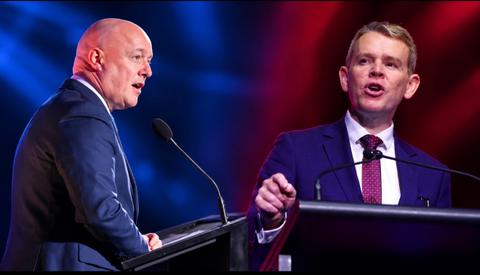
National leader Christopher Luxon answered “no” when asked during Tuesday’s TVNZ leaders’ debate whether public fireworks sales should be banned. Labour leader Chris Hipkins gave the same answer.
ACT leader David Seymour has also opposed a ban, according to RNZ reporting republished by the Otago Daily Times.
NZ First is therefore campaigning to reverse a decision made by a government it currently helps support. That is a policy difference within the coalition, rather than evidence that the coalition has agreed to change direction.
How could it become law?
If NZ First participates in the next government, it could seek a fireworks commitment during coalition negotiations.
An agreement could place legislation on the government’s programme. Without one, a member’s bill remains another route, although introduction generally depends on parliamentary ballot arrangements or sufficient qualifying support.
Either route requires parliamentary approval.
Introducing legislation within 100 days is not the same as passing it within 100 days, or bringing a ban into operation immediately.
NZ First would need enough MPs to support the legislation through its parliamentary stages. Its own election result would influence its negotiating strength, but would not give it the power to impose a ban alone.
The published draft leaves questions
The party’s published 2025 draft, bearing Jenny Marcroft’s name, prohibits retail sales and imports or manufacture for retail sale.
It also proposes increasing the maximum fine under the fireworks misuse provision from $200 to $2,000, extending protection to animals, and allowing distributors and retailers a six-month transition.
However, the operative clauses reviewed do not clearly establish a blanket offence covering every private use of previously purchased fireworks.
That is a gap between the broad campaign promise and the published draft, which could be revised before being introduced.
A final bill would need clarity about existing stock, disposal, exemptions and enforcement. Households would need to know whether fireworks already bought could be retained or used, while businesses would need clear arrangements for remaining inventory.
A campaign promise with a practical test
The proposal has a documented basis in public-safety concerns and an existing legislative draft. It is also a campaign pledge timed ahead of Guy Fawkes.
Its credibility will depend on whether NZ First secures parliamentary support and produces workable legislation.
For now, voters have a clear policy choice, but no confirmed ban or commencement date.
Sources: New Zealand First; Environmental Protection Authority; ACC; Fire and Emergency New Zealand; government Cabinet documents; New Zealand Parliament; RNZ reporting by Craig McCulloch, republished by the Otago Daily Times.