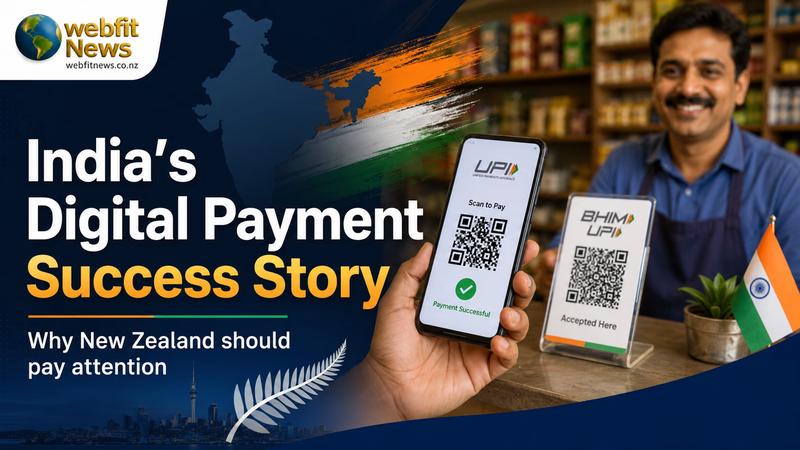
Street food vendors, local grocery stores, taxi drivers, market traders and small businesses across the country now routinely accept digital payments.
For many business owners, this has reduced the need to handle cash while making it easier to receive payments, keep financial records and serve customers who increasingly prefer digital transactions.
The technology has also helped many small businesses become part of the formal financial system, making it easier to access banking services and business finance.
Why This Matters to New Zealand
At first glance, India’s payment system may seem far removed from everyday life in New Zealand. However, there are several reasons why it is becoming increasingly relevant.
The recently signed India-New Zealand Free Trade Agreement is expected to encourage stronger trade and business relationships between the two countries. As commercial links grow, New Zealand businesses working with Indian suppliers, customers and technology companies will increasingly interact with a market where digital payments are the norm.
For Kiwi exporters, understanding how Indian consumers and businesses operate can provide valuable insights when entering one of the world’s fastest-growing economies.
New Zealand companies involved in financial technology, retail, tourism and e-commerce may also find opportunities to learn from India’s experience in delivering secure, low-cost and highly accessible payment systems.
Supporting Financial Inclusion
India’s digital payment revolution has also been closely linked with efforts to expand financial inclusion.
Government programmes encouraging bank account ownership, combined with affordable smartphones and improved internet connectivity, have enabled millions of people to access digital banking services for the first time.
Government benefits, pensions and subsidies can now be transferred directly into bank accounts, reducing delays while improving transparency.
For many people living in rural areas, digital payments have provided easier access to financial services that were previously difficult to obtain.
A Growing Global Interest
India’s payment infrastructure is attracting attention well beyond its own borders.
Governments, central banks and financial institutions around the world are studying how real-time payment systems can improve efficiency, encourage innovation and make financial services more accessible.
Several countries have explored partnerships and knowledge-sharing initiatives with India as they develop their own digital payment ecosystems.
Innovation That Continues to Evolve
Digital payments are now part of everyday life for millions of Indians. From paying utility bills and purchasing train tickets to shopping online and sending money to family members, smartphones have become an essential financial tool.
Innovation continues as payment platforms introduce enhanced security features, improved user experiences and new services for businesses and consumers.
As technology evolves, India’s experience demonstrates how digital infrastructure can support economic growth while making everyday transactions faster and more convenient.
Looking Ahead
For New Zealanders, India’s digital payment story is not simply about technology. It is about how innovation can reshape an economy, support small businesses and improve financial inclusion on an extraordinary scale.
As economic ties between India and New Zealand continue to strengthen, understanding developments such as India’s digital payment revolution helps provide valuable context for future trade, investment and collaboration.
The next time a Kiwi visitor scans a QR code while travelling through India, they may discover that the country’s digital economy is not just larger than expected. It is also offering lessons that many nations are watching with interest.