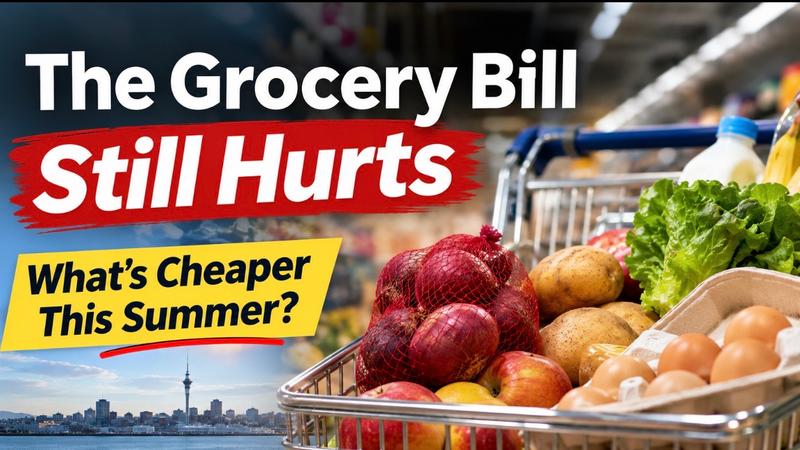
And that is the problem with the way grocery inflation is often discussed. A slowdown in price increases can sound like relief, even when families are still paying considerably more than they did a few years ago.
There is some genuinely encouraging news. Eggs, apples, cabbage, lettuce and several other everyday foods are cheaper than they were last October.
But onions have become dramatically more expensive. Potatoes and kūmara are also costing more.
Meanwhile, the New Zealand dollar has slipped to around 55 US cents, raising questions about whether imported foods could face further price pressure.
With summer approaching, Webfit News examined the latest figures to find out where shoppers are getting a break, where they are not, and what could happen next.
First, the good news: Some everyday foods really are cheaper
The October figures offer something New Zealand shoppers have not had enough of recently: meaningful price reductions.
According to Foodstuffs’ analysis of Stats NZ data, cabbage prices were down 46.4% compared with October last year.
Free-range eggs were down 30.4%, apples 22.8%, and lettuce and green kiwifruit both around 21%.
Butter, which became a symbol of rising grocery costs for many households, was also 10.4% cheaper.
Here are some of the biggest annual price falls.
|
Grocery item
|
Change from October 2025
|
|
Cabbage
|
-46.4%
|
|
Free-range eggs
|
-30.4%
|
|
Cauliflower
|
-29.5%
|
|
Apples
|
-22.8%
|
|
Lettuce
|
-21.0%
|
|
Green kiwifruit
|
-21.0%
|
|
Broccoli
|
-15.8%
|
|
Oranges
|
-13.7%
|
|
Standard eggs
|
-12.6%
|
|
Tomatoes
|
-12.3%
|
|
Butter
|
-10.4%
|
Source: Foodstuffs’ October 2026 food price analysis.
That is not insignificant.
For a household buying eggs every week, a sustained reduction can make a difference. The same applies to families who regularly buy apples for school lunches or vegetables for home-cooked meals.
But there is a catch.
These are percentage changes for individual products, not a measure of how much an entire family’s shopping bill has fallen.
A household buying several of these items may notice savings. Someone whose trolley contains more meat, potatoes, onions and packaged groceries may have a very different experience.
Then there are onions. Yes, onions.
If there is one product that illustrates how uneven grocery prices have become, it is the humble onion.
Stats NZ’s national average price data show that a kilogram of onions cost about $1.76 in October 2025.
A year later, the price was approximately $3.66.
That is an increase of about 108%.
Foodstuffs’ separate selected-item comparison recorded an even larger annual increase of 141.9%. The measures use different product specifications, but both show a substantial rise.
And onions are hardly a luxury purchase.
They go into curries, soups, stews, pasta sauces and countless everyday meals.
Potatoes, another staple, were up 23.7%, while kūmara increased 19.1%.
|
Grocery item
|
Annual price increase
|
|
Onions
|
+141.9%
|
|
Dried apricots
|
+51.2%
|
|
Honey
|
+29.4%
|
|
Capsicums
|
+23.9%
|
|
Potatoes
|
+23.7%
|
|
Kūmara
|
+19.1%
|
|
Courgettes
|
+17.2%
|
|
Avocados
|
+16.1%
|
Source: Foodstuffs’ selected-item analysis. The onion figure differs from Stats NZ’s separately reported national average price series.
This is why a headline saying food inflation has eased does not necessarily match what people experience at the checkout.
The price of one commonly used ingredient can wipe out some of the savings made elsewhere.
And when several staples remain expensive, shoppers may feel little improvement at all.
What does the average grocery basket actually tell us?
Stats NZ’s October figures show that food prices fell overall during the month, with fresh produce providing much of the relief.
But the annual picture is more mixed.
|
Food category
|
October monthly change
|
Annual change
|
|
Fruit and vegetables
|
-1.6%
|
+1.1%
|
|
Grocery food
|
-0.9%
|
+2.1%
|
|
Meat, poultry and fish
|
+0.1%
|
+2.5%
|
|
Non-alcoholic beverages
|
+0.2%
|
+2.1%
|
|
Restaurant and ready-to-eat food
|
+0.3%
|
+3.4%
|
|
All food
|
-0.4%
|
+2.3%
|
Source: Stats NZ, Selected Price Indexes, October 2026.
There is an important distinction between prices falling for a month and prices falling over a year.
October’s 0.4% monthly decrease is welcome, but it does not erase the much larger increases that accumulated during earlier years.
And while fresh produce is becoming more affordable in some categories, meat, packaged groceries and prepared food are still more expensive than a year ago.
For families buying food for several people, those costs add up.
Why doesn’t lower inflation feel like lower prices?
Consider a simple example.
Imagine a basket of groceries that cost $200 before a period of substantial food inflation.
If its price increased by 20%, it would cost $240.
Now imagine prices rise by only another 2%.
That basket would cost $244.80.
Inflation would have slowed dramatically, but the household would still be paying nearly $45 more than before.
That is the difference between the rate at which prices are changing and the actual price level.
New Zealand experienced double-digit annual food inflation during 2022 and 2023, with the rate reaching 12.1% in March 2023.
Today’s 2.3% annual rate is a major improvement.
But the earlier increases remain built into many prices.
That helps explain why shoppers may feel frustrated when they hear that inflation is under control.
They are not comparing today’s grocery bill with an inflation statistic.
They are comparing it with what the same shopping used to cost.
Summer is coming. Will fruit and vegetables finally become affordable?
There is reason to expect more seasonal relief.
New Zealand’s warmer months usually bring greater availability of locally grown fruit and vegetables.
Foodstuffs says supplies of asparagus and berryfruit are building, while stonefruit, sweetcorn and salad vegetables should become more plentiful as the season progresses.
Tomatoes, cucumbers and capsicums also recorded monthly price falls in October.
But summer does not guarantee that everything will be cheap.
Growing conditions, weather, transport costs and demand can all influence prices.
And some products may remain expensive even when others become plentiful.
For shoppers, the practical opportunity is to follow what is in season rather than buying exactly the same produce every week.
What to watch this summer
|
Produce
|
What the season could mean
|
|
Strawberries and berries
|
More local supply may create better value
|
|
Peaches, nectarines and plums
|
Prices may ease as harvest volumes build
|
|
Sweetcorn
|
Seasonal supply could improve affordability
|
|
Tomatoes
|
Already showing monthly price relief
|
|
Cucumbers
|
October prices declined
|
|
Lettuce
|
Already considerably cheaper annually
|
|
Capsicums
|
Monthly improvement, but still expensive compared with last year
|
|
Avocados
|
Worth comparing carefully because annual prices remain higher
|
These are seasonal expectations, not guaranteed price reductions.
A poor harvest or unexpected weather can change prices quickly.
Now comes another problem: The 55-cent New Zealand dollar
Just as households are looking for relief, the New Zealand dollar has weakened against the US dollar.
On 18 November, the Reserve Bank’s reference exchange rate was around 55 US cents for NZ$1.
That matters because New Zealand imports a wide range of food products, ingredients and packaging.
Many international transactions are influenced by US-dollar pricing.
When the Kiwi weakens, businesses may need more New Zealand dollars to purchase the same quantity of goods from overseas.
To understand the difference, consider a business buying US$10,000 worth of products.
|
Exchange rate
|
Cost in NZ dollars
|
|
NZ$1 = US$0.60
|
$16,667
|
|
NZ$1 = US$0.57
|
$17,544
|
|
NZ$1 = US$0.55
|
$18,182
|
At 55 US cents, the business would pay approximately $1,515 more than at 60 cents for the same US$10,000 purchase.
That is about 9.1% more in New Zealand-dollar terms.
But this does not mean supermarket prices will automatically rise by 9.1%.
Importers may have existing contracts, currency hedging arrangements or stock purchased when exchange rates were different.
Some may absorb part of the increase.
Others may pass costs on gradually.
And many products are sourced from countries where exchange rates against currencies other than the US dollar are more relevant.
Still, prolonged currency weakness creates a risk worth watching.
Imported fruit versus New Zealand-grown produce
This is where the approaching summer becomes particularly interesting.
Locally grown produce may benefit from increasing seasonal supply.
Imported fruit and food products, meanwhile, can face pressure from currency movements, international freight and overseas growing conditions.
That does not mean imported food is always more expensive.
Nor does it mean local produce is immune from rising costs.
New Zealand growers also pay for fuel, machinery, fertiliser, packaging and other inputs that may be affected by international prices.
But the sources of pressure differ.
|
Cost factor
|
Imported food
|
Locally grown food
|
|
Weak NZ dollar
|
Can directly raise import costs
|
Can raise some input costs
|
|
International shipping
|
Often significant
|
Usually less direct exposure
|
|
Local seasonal harvest
|
Limited influence
|
Major influence
|
|
Weather
|
Overseas growing conditions
|
NZ growing conditions
|
|
Fuel and transport
|
Important
|
Important
|
|
Currency hedging
|
Can delay price changes
|
Relevant to some inputs
|
|
Summer supply
|
Depends on origin
|
Often improves for seasonal produce
|
For shoppers, the country of origin is useful information, but the final price still matters most.
A locally grown product in peak season may be excellent value.
An imported product on promotion may sometimes be cheaper.
The sensible approach is to compare actual prices rather than assuming one category will always win.
Which imported foods could be vulnerable?
There are several categories worth monitoring if the Kiwi remains weak.
Imported fruit sold when local alternatives are unavailable may face higher replacement costs.
Coffee, cocoa and chocolate are affected by international commodity markets and exchange rates.
Dried fruit, nuts, rice, spices and other pantry staples may also be exposed to overseas prices and freight charges.
Some packaged foods contain imported ingredients even when the final product is manufactured in New Zealand.
However, it would be misleading to blame the recent currency decline for every increase in imported food prices.
International commodity prices, harvest conditions and supply contracts can be just as important.
The latest data do not establish that the 55-cent Kiwi has already caused a particular increase in supermarket fruit prices.
That impact will need to be monitored over the coming months.
Is there anything worth buying more of right now?
There are some useful opportunities in the latest figures.
Eggs have become cheaper, particularly compared with last year.
Chicken drumsticks were down 6.5%, while pork leg was 8.8% cheaper.
Apples and several green vegetables also showed significant annual reductions.
That gives shoppers options.
A household that normally buys more expensive cuts of meat might find better value in chicken drumsticks.
Someone buying expensive out-of-season vegetables might consider cabbage, lettuce or other seasonal alternatives.
Families can also compare fresh produce with frozen or canned options.
The point is not to tell people what they should eat.
It is to recognise that supermarket prices have become uneven enough that flexibility can make a meaningful difference.
The Christmas grocery shop is approaching
The next major test will be the Christmas and summer holiday period.
Demand increases for meat, fresh produce, drinks and entertaining essentials.
Retailers also need to manage freight, stock availability and holiday delivery schedules.
Foodstuffs says its cooperatives have been preparing for the Christmas period, including bringing some longer-life imported products into the country earlier where practical.
That may reduce some supply disruption risks.
But it does not guarantee that festive groceries will be cheaper.
For shoppers, comparing prices early and avoiding unnecessary last-minute purchases may help.
There is also no reason to assume that every Christmas special represents genuine value.
Unit prices and pack sizes remain worth checking.
What shoppers can realistically do
There is no magic way to make a supermarket bill cheap again.
And households should not be expected to solve food inflation through clever shopping alone.
But there are a few decisions that can help.
Buy seasonal produce when prices are favourable.
Compare the cost per kilogram rather than the advertised discount.
Consider different cuts of meat or alternative protein sources when prices change.
Check frozen and canned options, especially when fresh produce is expensive.
And avoid assuming that buying in bulk always saves money.
For households that can compare prices between retailers, the difference on frequently purchased products may be worthwhile.
The objective is not to spend hours chasing tiny discounts.
It is to recognise where prices have changed enough to justify buying differently.
What happens next?
Three developments will be worth watching.
The first is the summer harvest.
If growing conditions remain favourable and supply increases, more fresh produce could become affordable.
The second is the New Zealand dollar.
If the Kiwi remains weak for an extended period, some importers may face higher costs when purchasing new stock or renewing contracts.
The third is the broader cost of food production and distribution.
Fuel, freight, labour and supplier prices will continue to influence what shoppers pay.
The latest figures suggest that the worst period of rapid food inflation has passed.
But they do not establish that grocery prices are about to return to pre-inflation levels.
And they certainly do not mean every household is experiencing the same relief.
A better summer for shoppers? Perhaps, but not for everything
New Zealanders heading into summer have some reasons to be optimistic.
Eggs, apples, cabbage and several other foods are genuinely cheaper than they were a year ago.
More seasonal fruit and vegetables should become available in the coming weeks.
That is welcome news after several difficult years of rising food costs.
But onions, potatoes, kūmara and other staples remain expensive.
Eating out is still becoming costlier.
And the weak Kiwi dollar could put additional pressure on some imported foods if it stays at current levels.
For many families, the question is not whether the official inflation rate has improved.
It is whether they can get through their weekly shopping without putting something back on the shelf.
Until that changes, the cost-of-living story is far from over.
Webfit News | Economy & Consumer Affairs
This report uses Stats NZ’s October 2026 food price data, Foodstuffs’ selected-product analysis and Reserve Bank exchange-rate information. Individual supermarket prices vary by location, retailer, product specification and promotion. Currency calculations are illustrative.
Sources
Stats NZ: Selected Price Indexes, October 2026
https://www.stats.govt.nz/information-releases/selected-price-indexes-october-2026/
Foodstuffs: October 2026 food price analysis
https://www.foodstuffs.co.nz/news-room/2026/food-price-inflation-remains-subdued-as-foodstuffs-co-ops-gear-up-for-christmas-rush
Reserve Bank of New Zealand: Exchange rates
https://www.rbnz.govt.nz/statistics/series/exchange-and-interest-rates/exchange-rates-and-the-trade-weighted-index