Core retail spending, which excludes fuel and motor vehicles, dropped even further, falling 1.2%, or $73 million.
Retail NZ says shoppers are delaying purchases while higher fuel costs continue to squeeze household budgets.
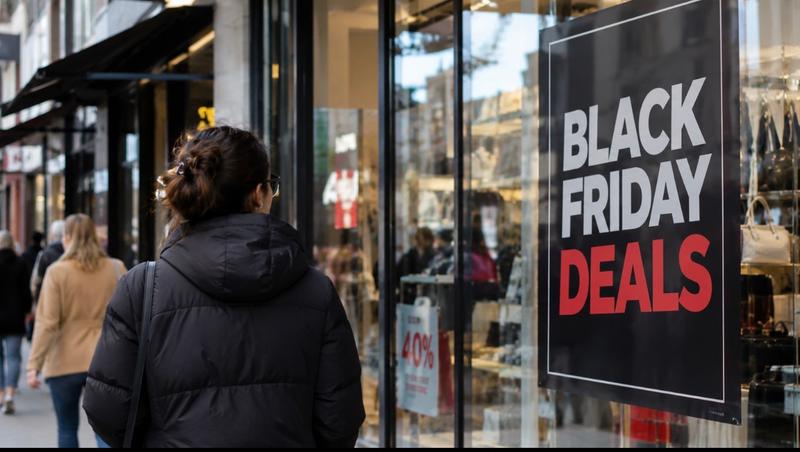
Its chief executive, Carolyn Young, believes the growing importance of Black Friday is also changing how people shop.
“The fall in durables tells us many people are putting off bigger purchases,” Young said in a media release issued on 12 November.
“With Black Friday now dominating November promotions, retailers have told me recently that customers are not buying unless a product is on sale.”
It is a telling observation.
The question is no longer simply whether people want to spend. It is whether they can afford to spend now, or whether they believe waiting another week might save them money.
October’s spending figures reveal where the pressure is building
The latest Stats NZ data show spending declined across several retail categories.
Fuel was the notable exception.
|
Retail category
|
Change from September 2026
|
|
Durable goods
|
-2.1%
|
|
Motor vehicles, excluding fuel
|
-2.0%
|
|
Hospitality
|
-1.6%
|
|
Apparel
|
-0.7%
|
|
Consumables
|
-0.3%
|
|
Fuel
|
+4.8%
|
|
Total retail spending
|
-0.7%
|
|
Core retail spending
|
-1.2%
|
Source: Stats NZ, October 2026 electronic card transactions. Seasonally adjusted monthly changes.
Durable goods, which include products such as furniture, appliances and other longer-lasting household purchases, recorded the largest dollar decline.
Spending in that category fell by $34 million during October.
Hospitality spending dropped $23 million, while consumables fell by $7.5 million.
Fuel spending, meanwhile, increased by $25 million.
The figures suggest households were spending less in several areas where they had some flexibility, while fuel continued to take a larger share.
However, the data cannot establish how much of the decline was caused specifically by shoppers waiting for Black Friday.
That explanation comes from Retail NZ’s discussions with retailers and its assessment of consumer behaviour.
Fuel is taking money that might otherwise be spent elsewhere
For many households, fuel is not an optional expense.
People still need to get to work, take children to school, attend appointments and manage everyday responsibilities.
Retail NZ says New Zealanders spent $77 million more on fuel in October than in the same month last year, an increase of 15.9%.
Young said fuel prices were around $3.60 a litre for regular unleaded petrol during October.
At that price, filling a 50-litre tank would cost $180.
For a household filling that tank once a week, the monthly cost could exceed $700.
That is a simple illustration rather than a typical household spending estimate. Actual costs vary considerably depending on vehicle, location, fuel type and driving habits.
But it demonstrates why fuel prices can have such a significant effect on spending decisions.
Money spent at the petrol station is money that cannot be used elsewhere.
And when fuel costs rise alongside electricity, insurance, housing and food expenses, households have less flexibility.
That can affect everything from restaurant visits to clothing purchases and home improvements.
Why Black Friday has become so important
Black Friday falls on Friday, 27 November this year, followed by Cyber Monday on 30 November.
What was once largely an American shopping event has become a major part of New Zealand’s retail calendar.
For shoppers, the appeal is straightforward.
Why buy a television, washing machine or other expensive item today if the same product might be discounted next week?
For retailers, however, this creates a difficult situation.
Customers may delay purchases for weeks, leaving October sales weaker.
Retailers then face pressure to offer substantial promotions in November to attract those customers back.
According to Retail NZ, one in three retailers say they are investing more in promotions this year.
That suggests competition for consumers’ limited spending money is intensifying.
But there is a catch.
More sales activity does not necessarily mean retailers will make more profit.
A store may sell more products during Black Friday while earning less on each sale because of deeper discounts.
For smaller retailers already facing rising operating costs, that can be a difficult balance.
Are shoppers becoming more careful or simply running out of money?
The latest figures do not provide a complete answer.
Some households may be deliberately waiting for Black Friday deals.
Others may be reducing spending because they have less disposable income.
Many are probably doing both.
Retail NZ says shoppers are increasingly reluctant to buy products unless they are discounted.
That does not necessarily mean consumers have stopped wanting those products.
It may mean they are trying to stretch their budgets further.
There is also a psychological element.
When major sales events become predictable, shoppers learn to wait.
A product advertised at full price in October may seem less attractive when customers expect it to be discounted in November.
This creates a cycle in which retailers depend more heavily on promotions, while shoppers become increasingly resistant to ordinary prices.
The result can be a difficult trading environment outside major sales periods.
The numbers look different when fuel is included
One particularly interesting detail in the October figures is the difference between overall retail spending and core retail spending.
Retail NZ reported that actual total retail card spending was 0.3% higher than in October last year.
But core retail spending was 0.8% lower.
The distinction matters.
Total retail spending includes fuel and motor vehicles.
Core retail excludes those categories, giving a clearer view of spending in areas such as clothing, household goods, groceries and hospitality.
When fuel spending rises sharply, it can lift the total amount spent through retail cards even while other parts of the sector are struggling.
In other words, more money going through the retail system does not necessarily mean people are buying more discretionary goods.
Some of that spending simply reflects the higher cost of essential purchases.
A weak Kiwi dollar adds another concern
Retailers are also dealing with a weaker New Zealand dollar.
The Kiwi has recently traded around 55 US cents.
That matters for businesses importing products or paying overseas suppliers.
When the New Zealand dollar falls, imported goods priced in foreign currencies can become more expensive.
The effect may not appear immediately.
Retailers may have purchased stock earlier, entered fixed-price contracts or protected themselves against exchange-rate changes.
But prolonged currency weakness can increase the cost of replacing inventory.
That creates another challenge for retailers already under pressure to offer discounts.
Customers want lower prices.
Suppliers and operating costs may be moving in the opposite direction.
The outcome will depend on each retailer’s products, purchasing arrangements and ability to absorb costs.
The Christmas shopping season is now crucial
Despite the weak October figures, Retail NZ says there is still optimism among its members.
Three-quarters of respondents indicated confidence that trading would be good heading into the holiday season.
November and December are traditionally important months for retailers, particularly those selling gifts, clothing, electronics, toys and household goods.
A successful Black Friday period could help recover some of the spending deferred during October.
But strong November sales would not necessarily mean the wider retail sector had returned to sustained growth.
If shoppers are simply moving purchases from October into November, the timing of spending has changed rather than the total amount households can afford.
That distinction will become clearer when Stats NZ releases its November electronic card transaction figures on 14 December.
Until then, expectations of a Black Friday rebound remain expectations rather than confirmed results.
What the figures mean for smaller retailers
Large retail chains may have greater capacity to negotiate supplier prices, carry inventory and run extensive promotional campaigns.
Independent retailers often have fewer options.
They still need to pay rent, wages, insurance, electricity and other operating costs.
But they are competing for customers who may be waiting for significant discounts.
For some businesses, matching the promotional prices of larger competitors may not be financially realistic.
Retail NZ has called for the incoming Government to address rising fuel and power costs, arguing that these expenses are affecting both businesses and consumers.
Young said retailers were struggling to get relief from operating cost pressures.
The concern is understandable.
If customers are spending less while business expenses continue to rise, retailers face pressure from both sides.
Black Friday shoppers should still check whether a deal is genuine
With promotions expected to intensify, consumers have an opportunity to compare prices carefully.
But a large discount displayed on a website or shop window does not automatically mean the product is good value.
A television advertised as 40% off may still be more expensive than a comparable model elsewhere.
A discounted appliance may have features a household does not need.
And buying something simply because it is on sale does not create a saving if the purchase was unnecessary.
Consumers can take a few practical steps before spending.
- Compare the same model or product across different retailers.
- Check the final price, including delivery fees.
- Review the retailer’s returns policy and warranty information.
- Be cautious of countdown timers or claims that a deal is available for only a few minutes.
- Avoid taking on expensive debt for purchases that are not essential.
- Check whether the product was genuinely cheaper than its usual selling price.
New Zealand’s Fair Trading Act prohibits misleading representations, including misleading pricing claims.
Consumers can find guidance through the Commerce Commission and Consumer Protection websites.
https://www.comcom.govt.nz/
https://www.consumerprotection.govt.nz/
Then comes Giving Tuesday, a very different kind of spending decision
Just one day after Cyber Monday, New Zealanders will mark Giving Tuesday on 1 December.
The international movement encourages people to support charities, community organisations and causes that matter to them.
It provides an interesting contrast with the shopping events immediately before it.
Black Friday and Cyber Monday focus on purchasing.
Giving Tuesday asks people to consider what they can contribute.
And that contribution does not always have to be financial.
People can support community organisations through volunteering, donating suitable goods, offering professional skills or helping connect charities with the resources they need.
For households already under financial pressure, that distinction matters.
Not everyone can afford to make a donation.
But some people may be able to give their time, help organise collections or share information about local community initiatives.
What support might be useful?
Different organisations have different needs.
Foodbanks may need particular non-perishable food items.
Community groups supporting families may require clothing, household supplies or volunteers.
Other charities may need regular financial contributions to cover operating costs.
However, it is important not to assume that every organisation needs the same things.
People should contact charities directly before donating goods, especially clothing or bulky items.
A donation is most useful when it meets an organisation’s actual requirements.
Webfit News encourages readers to check with their local charities about what would make the greatest difference.
A difficult choice for households this Christmas
The contrast between Black Friday and Giving Tuesday says something about the economic pressures facing New Zealand.
Retailers need customers to spend.
Households are trying to save.
Charities and community organisations need support.
All three depend, in different ways, on the financial health of the same communities.
There is no simple answer.
Spending at local businesses supports jobs and economic activity.
Saving money helps households manage uncertainty.
Donating to community organisations can support people facing even greater difficulties.
For many families, the decision will come down to what they can realistically afford.
And there is nothing wrong with choosing carefully.
What happens next?
The coming weeks will provide a clearer picture of consumer confidence.
Black Friday on 27 November will test whether shoppers who delayed purchases are ready to spend.
Cyber Monday on 30 November will provide another opportunity for retailers to attract customers online.
Giving Tuesday on 1 December will shift attention towards community support.
And Christmas trading will determine whether retailers can finish a difficult year on a stronger note.
For now, the October data show a retail sector under pressure.
Households are prioritising essential expenses.
Discretionary purchases are being delayed.
And fuel costs are absorbing money that might otherwise circulate through shops, restaurants and other businesses.
Retailers are hoping Black Friday will change that.
But the more important question is whether shoppers have enough money left to spend, even when the discounts arrive.
Because for many New Zealand households, the biggest saving this Christmas may not come from finding a bargain. It may come from deciding what they can afford to leave behind.
Webfit News | Business, Economy & Community
This report draws on Retail NZ’s media release dated 12 November 2026 and Stats NZ’s October 2026 electronic card transaction figures. The Giving Tuesday section provides community context and does not represent verified interviews with Auckland charities.
Sources and further information
Stats NZ: Electronic Card Transactions, October 2026
https://www.stats.govt.nz/information-releases/electronic-card-transactions-october-2026/
Retail NZ
https://retail.kiwi/
Commerce Commission: Consumer information
https://www.comcom.govt.nz/
Consumer Protection New Zealand
https://www.consumerprotection.govt.nz/
Giving Tuesday
https://www.givingtuesday.org/