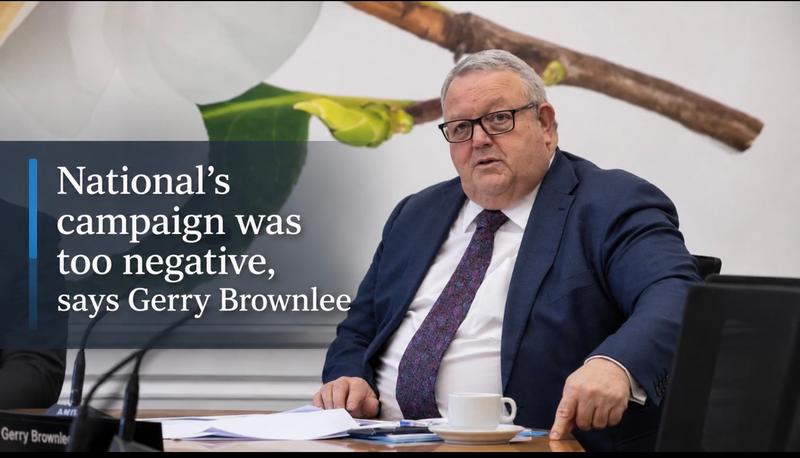
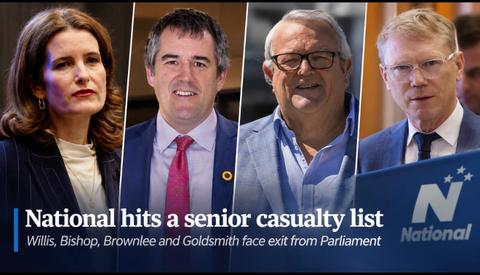
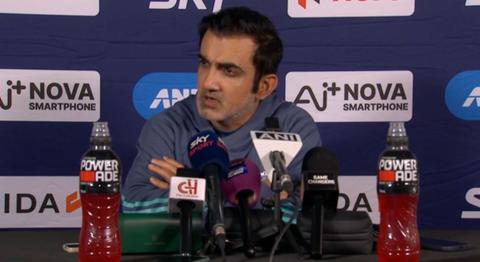
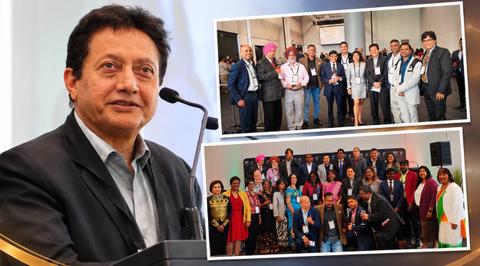
Brownlee is among those affected, alongside Nicola Willis, Chris Bishop and Paul Goldsmith.
The immediate question is whether National’s campaign relied too heavily on attacking its opponents.
But the more important question is why a party capable of winning so many local seats struggled to convince enough New Zealanders to give it their party vote.
Brownlee raised concerns before voters went to the polls
Brownlee told The Spinoff that he had expressed his concerns to people at National’s headquarters during the campaign.
“My personal view is that it was too negative,” he said.
He argued that a political campaign should demonstrate a party’s record and intentions, rather than concentrate on criticising opponents.
Brownlee also suggested that relying heavily on attacks could indicate a lack of confidence in a party’s own political position.
His comments carry particular weight because he was not publicly campaigning against National’s strategy at the time.
As Speaker, he had maintained distance from the day-to-day political contest.
Now, with his parliamentary career approaching its end, he has offered a rare public assessment from inside the party.
It is not proof that National’s campaign strategy cost it votes. But it does show that concerns about the approach existed before the results were known.
The election numbers tell two very different stories
The Electoral Commission’s preliminary results reveal a striking contrast.
<box gap={2}>
<grid columns={3} gap={2}>
<grid-item>
<box background="surface-secondary" radius="lg" padding={3} gap={1}>
National party vote
<title size="xl" color="default" tabularNums>29.21%</title>
<caption>42 electorate seats</caption>
</box>
</grid-item>
<grid-item>
<box background="surface-secondary" radius="lg" padding={3} gap={1}>
Labour party vote
<title size="xl" color="default" tabularNums>29.36%</title>
<caption>21 electorate seats</caption>
</box>
</grid-item>
<grid-item>
<box background="surface-secondary" radius="lg" padding={3} gap={1}>
Difference
<title size="xl" color="default" tabularNums>3,650</title>
<caption>Votes ahead for Labour</caption>
</box>
</grid-item>
</grid>
<caption>Source: Electoral Commission, preliminary count, 7 November 2026. Special votes are not yet included.</caption>
</box>
National received 706,680 party votes, compared with Labour’s 710,330.
Under New Zealand’s MMP electoral system, voters choose both a local electorate representative and a political party.
The party vote normally determines each party’s overall share of Parliament, while the electorate vote determines who represents a particular area.
National’s 42 electorate victories exceed the number of seats its nationwide party vote would ordinarily provide. That creates an overhang and leaves the party with no additional list seats under the preliminary allocation.
The result has placed senior National politicians outside Parliament despite the party remaining central to possible government formation.
But the deeper political significance is not simply the loss of experienced MPs.
It is the difference between National’s strength in individual electorates and its weaker nationwide support.
Did voters trust National’s candidates more than National itself?
This is the question the party needs to examine.
A voter might support a familiar National MP because they are accessible, experienced or effective in their community, while giving their party vote to ACT, New Zealand First or another party.
That is entirely possible under MMP.
It is also possible that some voters were dissatisfied with the government’s performance but still preferred their local National candidate over the alternatives.
The preliminary results do not establish exactly how many people split their votes or why.
However, they suggest that National’s local electoral organisation and candidate appeal were stronger than its national party-vote performance.
That distinction matters.
Winning an electorate requires convincing voters about a particular candidate. Winning the party vote requires persuading people to support the party’s broader direction, leadership and programme for government.
National succeeded extensively at the first task.
Its result in the second was much less convincing.
The challenge for Christopher Luxon is to understand why.
Was National’s campaign actually more negative?
Independent research gives substance to Brownlee’s criticism.
An analysis of 2,222 Facebook posts published by political parties and their leaders between 5 October and 1 November found that National had the highest proportion of negative posts among the parties examined.
Approximately 66 percent of National’s posts were classified as negative, compared with 51 percent of Labour’s.
In total, researchers identified 371 negative posts from National and 214 from Labour.
Victoria University of Wellington political scientist Dr Mona Krewel described the increase in negative campaigning since 2020 as substantial.
But National was not alone in using attack messages.
Both major parties devoted more than half their analysed Facebook content to criticism of opponents.
The research establishes that negativity was a significant feature of the campaign. It does not establish that those messages caused voters to abandon National.
That would require evidence about how voters responded to the advertising, what influenced their decisions and whether different messaging would have produced a different result.
National says the attacks were deliberate
National campaign manager Simeon Brown has defended the strategy.
Speaking on TVNZ’s Q+A after the election, he acknowledged that the party made deliberate decisions to draw contrasts with its opponents.
Those included warnings about tax policies and the potential influence of the Greens.
National’s argument is that voters needed to understand the consequences of choosing a different government.
That is a legitimate part of democratic campaigning.
Political parties should be challenged over their policies, costs and potential coalition arrangements.
But there is a difference between explaining why an opponent’s policy may be flawed and allowing criticism of opponents to dominate a campaign.
A party can spend considerable time telling voters what is wrong with everyone else without giving them a sufficiently convincing reason to support its own programme.
Brownlee believes National crossed that line.
Whether voters agreed remains an open question.
The election result points to more than one possible explanation
It would be convenient to blame National’s disappointing party vote entirely on negative advertising.
It would also be too simplistic.
The election followed a full parliamentary term in which voters had opportunities to judge the government’s performance.
Decisions about household finances, public services, economic management and political leadership may all have influenced the result.
Competition from smaller parties also matters under MMP, particularly when voters want a particular coalition outcome but prefer to give their party vote to a potential partner.
National’s campaign strategy is therefore one possible explanation among several.
What makes Brownlee’s intervention important is that he is questioning something the party could control: how it communicated with voters.
The government cannot control every economic condition or political event.
It can decide whether its campaign spends more time explaining its achievements and plans or attacking its opponents.
That makes campaign messaging a reasonable place to begin an internal review, even if it is not the whole explanation.
National could remain in power despite the warning signs
The preliminary parliamentary numbers leave National, ACT and New Zealand First with a combined 67 seats in a projected 131-seat Parliament.
That is one seat above the 66 required for a majority.
However, approximately 399,000 special votes were still to be checked and counted when the preliminary results were released.
The official results are expected on 27 November, and the eventual government will depend on the final numbers and political agreements.
National may therefore remain in government despite its reduced party vote and the potential departure of senior figures.
But forming a government and securing a strong electoral endorsement are not the same thing.
A party can have enough parliamentary support to govern while still facing serious questions about its public standing.
National’s result illustrates that distinction.
Its electorate victories demonstrate considerable local strength.
Its party vote suggests that strength did not translate into equally broad national confidence.
Both conclusions can be true.
Brownlee’s departure leaves National with a question it cannot ignore
Brownlee has spent three decades in Parliament, including periods as a senior minister, deputy National leader and Speaker.
His departure marks the end of a substantial political career.
But his criticism of the campaign may prove more consequential than the circumstances of his own exit.
National now has to decide what lesson to take from an election in which it won the most electorates but finished behind Labour in the party vote.
It could conclude that negative campaigning was necessary and helped protect its electorate position.
It could decide that the strategy distracted from its own achievements and policies.
Or it could find that voters were responding primarily to government performance, leadership and economic conditions rather than campaign advertising.
A serious review would examine all three possibilities rather than selecting whichever explanation is most politically comfortable.
For voters, the issue goes beyond National.
New Zealand’s major parties increasingly use criticism of opponents to compete for attention. Yet voters also need clear explanations of what parties will deliver, how they will pay for it and how their promises will improve people’s lives.
Brownlee’s criticism is ultimately a reminder that winning an argument against an opponent is not necessarily the same as winning public confidence.
National won 42 electorates. But the preliminary party vote shows that thousands of voters were less convinced by the party nationally than its local success might suggest.
The question now is whether National is prepared to examine that gap, regardless of whether it returns to government.
Sources and reporting: Electoral Commission preliminary results, 7 November 2026; Toby Manhire’s interview with Gerry Brownlee for The Spinoff’s At Large, 11 November 2026; RNZ reporting by Lillian Hanly on research into political parties’ Facebook campaigns, 5 November 2026; and Simeon Brown’s post-election comments on TVNZ’s Q+A, as reported by The Spinoff.
Editorial note: This is a Webfit News political analysis based on publicly reported interviews, campaign research and official preliminary election figures. It does not claim that negative advertising caused National’s electoral losses. Final results may change the parliamentary seat allocation.