Tararua District Council is moving ahead with upgrades to the Dannevirke Water Treatment Plant, aimed at making the town's drinking water supply more reliable during exactly the conditions that currently put it under the most strain, heavy rainfall and high river flows.
Why This Upgrade Is Needed
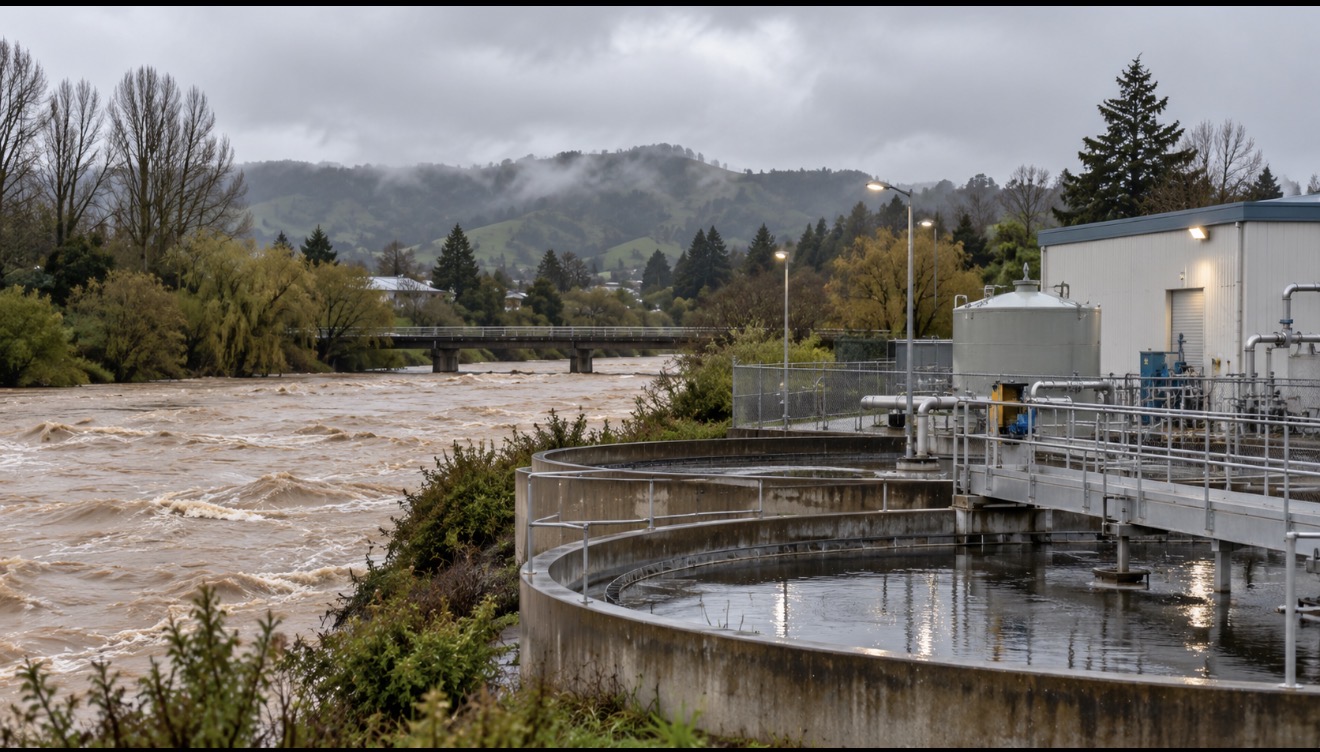
Dannevirke draws its water from the Tamaki River, storing it in the Dannevirke impounded water supply and reservoirs. The problem shows up specifically during heavy rain, when the river can turn highly turbid, meaning it becomes murky and cloudy with sediment.
That murkiness is measured using something called Nephelometric Turbidity Units, or NTU. Right now, the treatment plant can only process water with turbidity at or below 10 NTU. Once river conditions push turbidity above that threshold, the plant simply can't treat the raw water adequately, and the town has to fall back on stored water reserves instead.
That creates a genuine vulnerability. The exact moments when adverse weather makes river conditions worst are also the moments the plant is least equipped to handle them.
What's Actually Changing
To fix this, Council is installing coagulation and flocculation systems as part of a broader clarification pre-treatment process. In plain terms, this pre-treatment stage will help settle out sediment and impurities from murky river water before it ever reaches the plant's main treatment system, allowing the plant to cope with higher turbidity levels than it currently can.
Once complete, the upgrade should significantly reduce Dannevirke's reliance on stored water reserves during poor river conditions, strengthening overall security of supply for the town.
Part of a Much Bigger Resilience Programme
This treatment plant upgrade doesn't exist on its own. It's one piece of a wider programme connected to the Dannevirke Impounded Water Supply project, which also includes:
- Investigating alternative or enhanced raw water sources
- Adding further treated water storage reservoirs
- Improving access to stored water within the impounded supply
- Ongoing monitoring and maintenance of existing infrastructure
An Update on the Impounded Supply's Stability
Council also used this release to address the current state of the impounded water supply directly, following earlier repair work.
According to Council, the supply has remained stable since those repairs were completed. Some seepage is still present, but at a significantly reduced rate compared to before.
Importantly, Council was upfront about a genuine limitation in fully explaining that seepage.
"This is expected as the design allows for some discharge from the system for naturally occurring groundwater; however, Council does not have the historical baseline data needed to definitively distinguish groundwater flows from any residual leakage," Council said.
Despite that uncertainty, Council expressed confidence in the overall outcome of the repair work.
"What we can say with confidence is that the repair work substantially reduced flows, the reservoir remains stable, and ongoing monitoring indicates the supply is operating as intended," Council said.
The current focus has shifted from further repairs toward ongoing monitoring and management, while the broader resilience programme continues in parallel.
Why All of This Matters Together
Taken as a whole, Council said these various projects, the treatment plant upgrade, the wider resilience initiatives, and continued monitoring of the impounded supply, are designed to work together toward one overall goal: strengthening the long-term security, resilience and operational flexibility of Dannevirke's entire water supply network.
Keeping the Community in the Loop
Council has committed to keeping Dannevirke residents informed as the project moves forward, including updates on key milestones and any potential impacts during the actual construction and delivery phases.
Why This Story Matters
For a town whose water supply has a documented weak point, exactly when severe weather hits, this upgrade represents a genuinely practical fix rather than a purely reactive one. Rather than waiting for the next major rain event to expose the same vulnerability again, Council is investing in the treatment capability needed to handle turbid river water directly, while continuing to build out storage, monitoring and alternative source options as part of a longer-term resilience strategy for the community's drinking water.
This article is based on a media release issued by Tararua District Council.