
New Zealand's housing market can't seem to catch a break. Property sales fell for the eighth month running in August, down 11.6 percent year-on-year to just 6,175 deals, and fresh mortgage rate rises look set to keep the pressure on for a while yet.
That's according to Cotality's latest Housing Chart Pack, which paints a picture of a market caught in a genuine holding pattern, buyers with real leverage, sellers under no real pressure to budge, and prices going nowhere fast.
The Numbers at a Glance
|
Measure |
Figure |
|
August property sales |
6,175 |
|
Year-on-year change |
-11.6% |
|
Consecutive months of decline |
8 |
|
Rolling annual sales total |
89,043 |
|
Down from December's mini-peak of |
91,973 |
Why Sales Keep Falling
Cotality Chief Property Economist Kelvin Davidson pointed to a fairly simple explanation for the ongoing sluggishness: borrowing just got more expensive again, right as the market was still trying to find its feet.
"Recent increases in borrowing costs have created a fresh challenge for a market already struggling to gain momentum," Davidson said.
A Market Splitting in Two
Here's where it gets genuinely interesting. Not everyone's sitting on the sidelines equally. First home buyers are having their moment, while everyone else, movers especially, are staying put.
"First home buyers remain a key presence in the property market, accounting for a combined 29.1% of purchases across July and August, hovering at record highs," Davidson said.
Movers tell a completely different story. Their share of purchases across July and August sat at just 24.4 percent, the lowest level since the first quarter of 2009.
|
Buyer Type |
Market Share (Latest) |
|
First Home Buyer |
29.1% |
|
Mover |
24.4% |
|
Multiple Property Owner (Mortgage) |
23.2% |
|
Multiple Property Owner (Cash) |
10.6% |
|
ReEntry |
5.7% |
|
New to Market |
5.1% |
|
Other |
1.9% |
Buyers Are Genuinely in Charge Right Now
With sales slow and listings still sitting well above normal levels, buyers currently hold real pricing power.
"This high level of choice is giving buyers a lot of the pricing power," Davidson said.
Total listings sat at 27,306 in August, close to last year's 27,437 and well above the five-year average of 26,192.
But It's Not a Crash
Despite the weak sales activity, Davidson was careful to note this slowdown looks different from previous downturns, mainly because sellers aren't being forced into desperate moves.
"Most vendors won't be in a forced-selling position, so prices aren't collapsing," he said.
That's borne out in the actual value figures. The Cotality Home Value Index dipped a further 0.4 percent in August. Over three months, national values fell 1.3 percent; over 12 months, just 1.0 percent, hardly dramatic given the circumstances.
Where the Falls (and Gains) Are Happening
Not every region is moving the same direction.
|
Region |
3-Month Change |
12-Month Change |
|
Auckland |
-1.7% |
-2.6% |
|
Wellington |
-2.2% |
-2.7% |
|
Christchurch |
+0.2% |
+3.7% |
|
Hamilton |
0.0% |
+0.1% |
|
Tauranga |
-0.6% |
+2.2% |
|
Dunedin |
-0.3% |
+2.6% |
Christchurch stands out clearly here, genuinely resilient while Auckland and Wellington keep drifting lower. Wellington has now fallen 27.2 percent from its market peak, the worst decline of any main centre, compared to Christchurch's comparatively mild 1.3 percent.
Nationally, We're Still Well Below Peak
Zooming out, New Zealand property values overall remain 18.2 percent below their peak, a reminder of just how far the broader correction has run since the market's earlier highs.
A Glimmer on Rents
There's at least one area showing early signs of turning a corner. Stats NZ recorded a modest 0.9 percent rise in new rents over the year to August, while MBIE's bond data showed rents up 0.3 percent over three months, the first increase in nearly 18 months.
Davidson doesn't expect that to translate into a sharp rental upturn any time soon, though, pointing to still-subdued net migration and a housing stock that's grown considerably in recent years.
Investors Feeling the Squeeze Again
Rental yields have held fairly steady in the high 3 percent range nationally, but rising mortgage rates are tightening the numbers for property investors once more.
Auckland and Wellington remain the weakest yield performers among main centres, while Hamilton, Christchurch and Dunedin are all sitting above 4 percent.
The Bigger Economic Picture
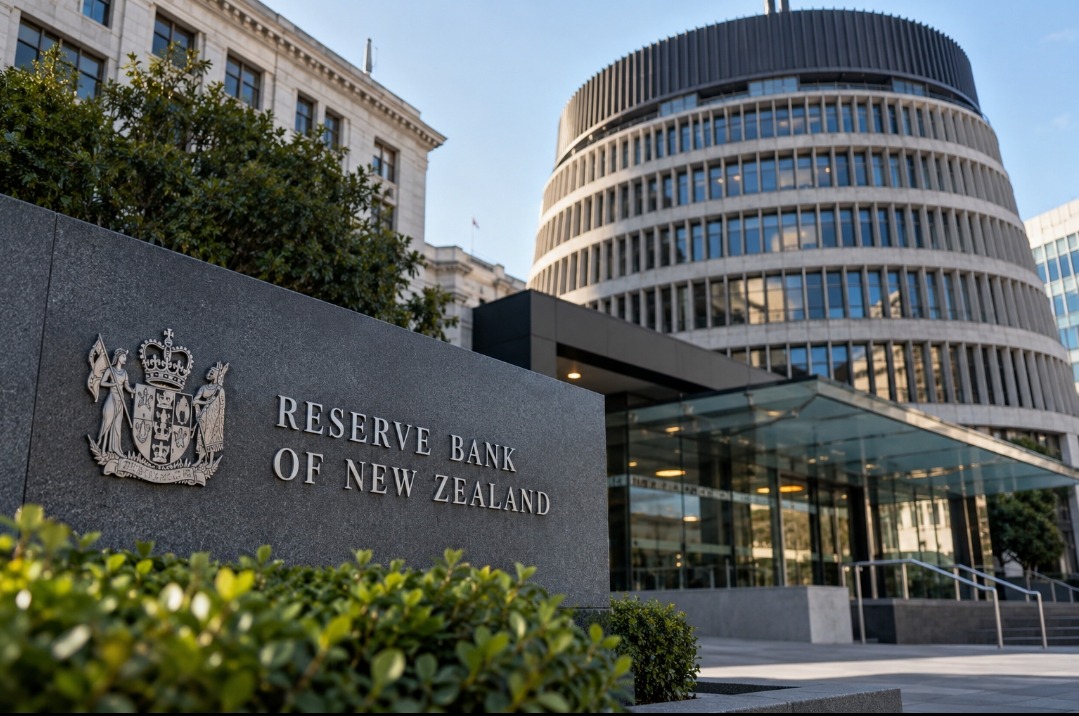
Behind all of this sits a Reserve Bank now firmly in tightening mode. The OCR rose to 2.75 percent on 2 September, with another increase in December looking likely as the Bank continues normalising policy amid ongoing inflation concerns tied partly to the US-Iran conflict.
What Might Actually Turn Things Around
Davidson's read on what happens next comes down to one factor above all else: jobs.
"All in all, the housing market remains subdued and it's difficult to see what changes this holding pattern in the near term," he said. "The labour market may hold the key. Rising employment and better job security may be required before we could expect any kind of growth in property values, although some investors will be buoyed by Labour's announcement that they'll keep interest deductibility."
He was also quick to point out there's a genuine upside buried in this otherwise gloomy picture.
"Of course, this weak patch has seen affordability improve significantly, so there are always two sides to the coin."
This article is based on Cotality's September 2026 Monthly NZ Housing Chart Pack.