
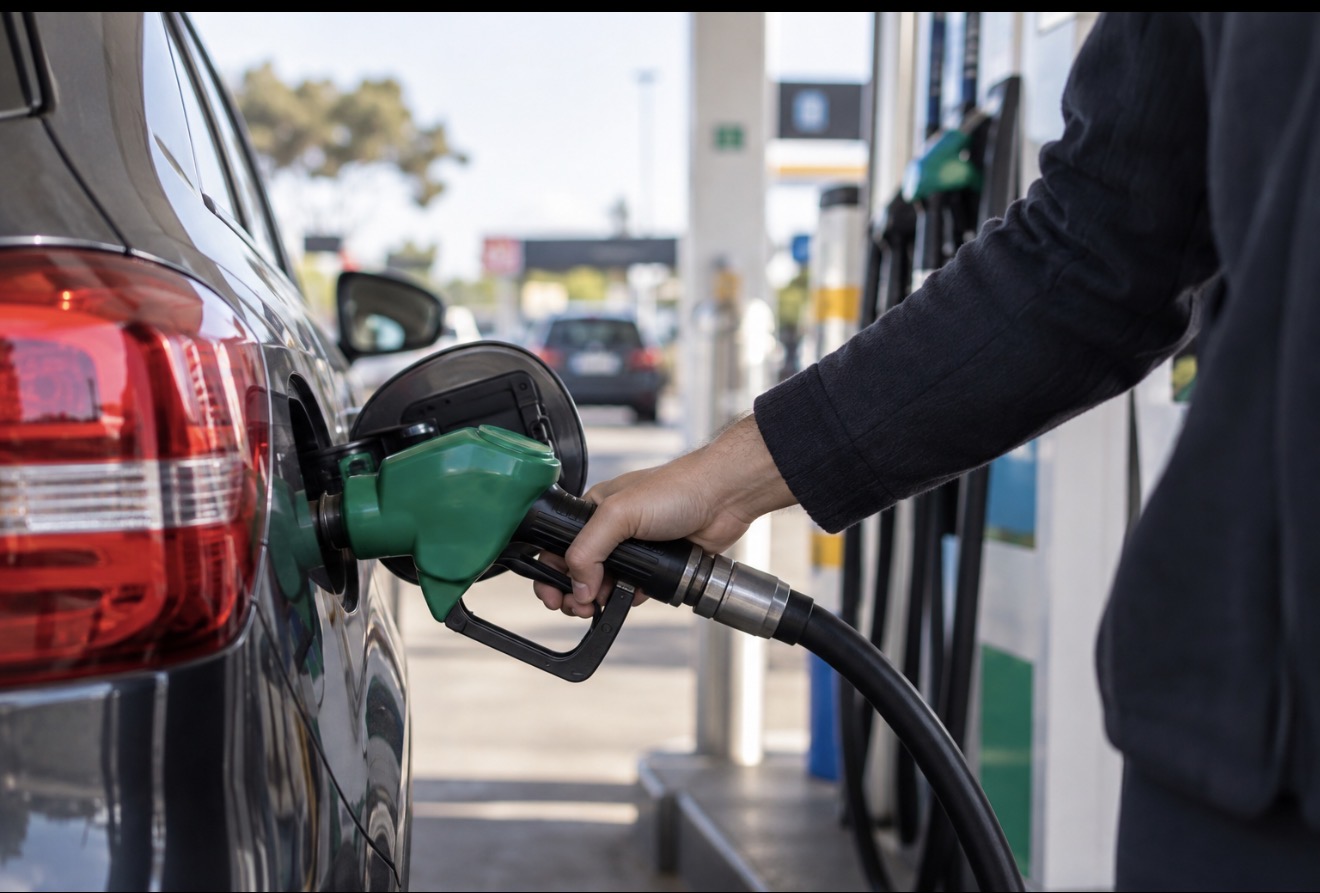
New Zealand motorists are facing another painful trip to the petrol station, with the national average price of 91 petrol now around $3.30 a litre and the Automobile Association warning there may be little meaningful relief for weeks.
AUCKLAND, 21 September 2026: Petrol prices have continued climbing across New Zealand, adding another cost-of-living headache for households and raising concerns about flow-on costs for freight, farming and everyday goods.
Gaspy-derived national price data available on Sunday shows 91 petrol averaging about $3.30 a litre, after reaching around $3.25 on Friday.
Diesel has also moved above $3, averaging about $3.04 a litre, while 95 petrol is around $3.48.
The increases come as New Zealand feels the effects of another period of turmoil in international energy markets.
The AA warned on Friday that high fuel prices could persist for at least another six weeks and potentially through to Christmas.
For motorists, the message is straightforward: the immediate problem is not that New Zealand is running out of fuel. It is how much that fuel is costing.
What Kiwi motorists are paying
Latest Gaspy-derived national figures show how quickly prices have moved.
|
Fuel |
NZ average, 21 Sept |
Change over 28 days |
|
91 petrol |
$3.304/L |
+29.4c/L |
|
95 petrol |
$3.483/L |
+30.1c/L |
|
98 petrol |
$3.624/L |
+29.4c/L |
|
Diesel |
$3.043/L |
+33.5c/L |
These are national averages, so individual Auckland service stations may be noticeably cheaper or more expensive.
The latest official MBIE weekly figure currently available is older. It recorded the national average advertised price for 91 at $3.06 a litre for the week ending 13 September.
MBIE updates its monitoring weekly, meaning rapidly changing daily market prices can move ahead of the official series.
What does another 30 cents actually cost?
For an ordinary household, movements of 20 or 30 cents a litre quickly add up.
Consider a typical 50-litre fill:
|
Petrol price |
Cost to fill 50L |
|
$2.90/L |
$145.00 |
|
$3.00/L |
$150.00 |
|
$3.10/L |
$155.00 |
|
$3.20/L |
$160.00 |
|
$3.30/L |
$165.00 |
A 30-cent increase therefore adds $15 to a 50-litre fill.
For someone filling roughly 50 litres every week, that difference is about $60 over four weeks.
For families running two vehicles, commuting long distances or driving children between school and activities, the impact can be considerably greater.
Why are New Zealand prices climbing?
There is no single reason.
AA principal policy adviser Terry Collins has pointed to several international factors combining at the same time.
Crude oil has again traded above US$100 a barrel, with supplies from key Middle Eastern producers constrained by the continuing conflict involving the United States and Iran.
Movement through the Strait of Hormuz, one of the world’s most important oil routes, has also been disrupted.
The Strait matters enormously to global energy markets. MBIE says around a quarter of the world’s seaborne oil trade normally passes through it, with about 80 percent of the crude travelling through the Strait destined for Asian refineries.
That connection is particularly important for New Zealand.
Why trouble in the Middle East reaches an Auckland petrol station
New Zealand no longer refines most of its own transport fuel.
Following the closure of the Marsden Point refinery in 2022, the country moved to importing its petrol, diesel and jet fuel as finished products.
Those fuels now come predominantly from refineries in Asia, including suppliers in countries such as South Korea, Singapore and Malaysia.
That creates a chain connecting international events with what Auckland motorists eventually see on a service-station sign:
Middle East oil disruption → Asian refinery costs → international shipping and insurance → NZ dollar conversion → New Zealand importer costs → pump price.
New Zealand does not need to buy its petrol directly from the Middle East for a disruption there to affect local prices.
Asian refineries themselves depend heavily on global crude supplies, including Middle Eastern oil.
The Kiwi dollar matters too
Oil and refined fuels are generally traded internationally in US dollars.
That means New Zealand motorists can be hit twice when international conditions turn against us.
If oil becomes more expensive in US dollars, the underlying product costs more.
If the New Zealand dollar is also weaker against the US dollar, buying that same fuel becomes even more expensive in NZ-dollar terms.
The AA has identified the lower Kiwi dollar as one of the factors adding to the current landed cost of fuel.
Shipping costs and sharply higher insurance costs for tankers operating around areas affected by conflict are adding further pressure.
Diesel could become the bigger economic problem
Petrol prices are immediately visible to motorists, but diesel deserves just as much attention.
The AA expects diesel prices could climb further because of strong international competition for available supplies.
Diesel does far more than power private vehicles.
It is fundamental to New Zealand’s freight network, agriculture and parts of the construction and industrial economy.
Higher diesel prices affect:
- trucks moving food and consumer goods around the country;
- tractors and other agricultural machinery;
- harvesting equipment;
- freight and logistics businesses;
- construction machinery; and
- many commercial vehicle fleets.
Businesses initially absorb some of those increases.
But if elevated diesel prices persist, transport and production costs can eventually feed into the prices households pay for goods and services.
The good news: New Zealand is not running out of fuel
Despite the uncomfortable prices, the current situation should not be confused with an immediate fuel shortage.
MBIE’s latest stock update says the fuel supply chain continues to operate normally and shipments are arriving as expected.
As of 13 September, New Zealand had the equivalent of approximately:
|
Fuel |
In NZ |
Including fuel on water |
|
Petrol |
29.6 days |
51.1 days |
|
Diesel |
25.5 days |
48.3 days |
|
Jet fuel |
38.1 days |
42.5 days |
The totals include shipments close to or heading towards New Zealand but exclude the Government’s separate diesel reserve.
Fuel companies are also subject to minimum stockholding requirements.
Importers are required to maintain minimum levels equivalent to 28 days of petrol, 21 days of diesel and 24 days of jet fuel, using qualifying stocks held onshore or within the relevant supply arrangements.
So while geopolitical conditions are making fuel expensive, the latest official information does not indicate New Zealand motorists are about to find empty petrol stations.
Price problem, not supply problem
That distinction is important.
New Zealand’s reliance on imported refined fuel makes the country exposed to international prices, exchange rates and shipping disruptions.
But importing from different refineries and maintaining larger stocks provides some protection against a physical interruption to supply.
The AA says improvements to storage, monitoring and coordination between industry and government have strengthened the country’s ability to manage disruptions.
MBIE’s latest assessment similarly says fuel continues to flow normally and New Zealand is not experiencing sustained direct supply problems affecting everyday access.
In other words, diversification can help keep petrol stations supplied.
It cannot guarantee cheap petrol.
How long could high prices last?
This is the hardest part to predict.
The AA has warned motorists to prepare for elevated prices for at least another six weeks, with the possibility that significant relief may not arrive before Christmas.
That is a warning rather than a guaranteed price forecast.
International oil markets can move quickly in either direction.
An improvement in Middle East supply conditions, lower crude prices, cheaper tanker insurance or a stronger New Zealand dollar could eventually reduce pressure.
Further disruption could have the opposite effect.
The scale of the uncertainty was demonstrated earlier this year when international oil prices surged during the Middle East conflict before subsequently falling as conditions changed.
What motorists can actually do
There is little an individual driver can do about the Strait of Hormuz or the international price of crude oil.
But when petrol is above $3 a litre, small differences between service stations become meaningful.
A 15-cent-per-litre difference between two stations saves $7.50 on a 50-litre fill. A 25-cent difference saves $12.50.
For Auckland motorists, checking nearby prices before filling up can therefore make more difference than it did when fuel was cheaper.
Discount schemes can also reduce the actual price paid below the advertised board price, something MBIE takes into account when distinguishing advertised prices from adjusted retail prices.
Drivers can also reduce unnecessary trips, combine errands where practical and keep tyres correctly inflated, particularly if elevated prices persist for several months.
Another squeeze on household budgets
For many New Zealanders, petrol is not a discretionary purchase.
People still need to travel to work, take children to school, attend appointments and buy groceries.
That is why another 20 or 30 cents a litre matters well beyond the service station.
At roughly $3.30 for 91 petrol, filling a 50-litre tank now costs about $165 before discounts.
And if diesel continues climbing, the effects could gradually spread through freight, farming and other parts of the economy.
For now, New Zealand has fuel.
The uncomfortable question heading towards summer is simply how much Kiwis will have to pay for it.
Sources: New Zealand Automobile Association comments reported by RNZ, Gaspy-derived national fuel-price data, and Ministry of Business, Innovation and Employment fuel-price, fuel-security and stock information. Reporting and additional New Zealand context by Webfit News.