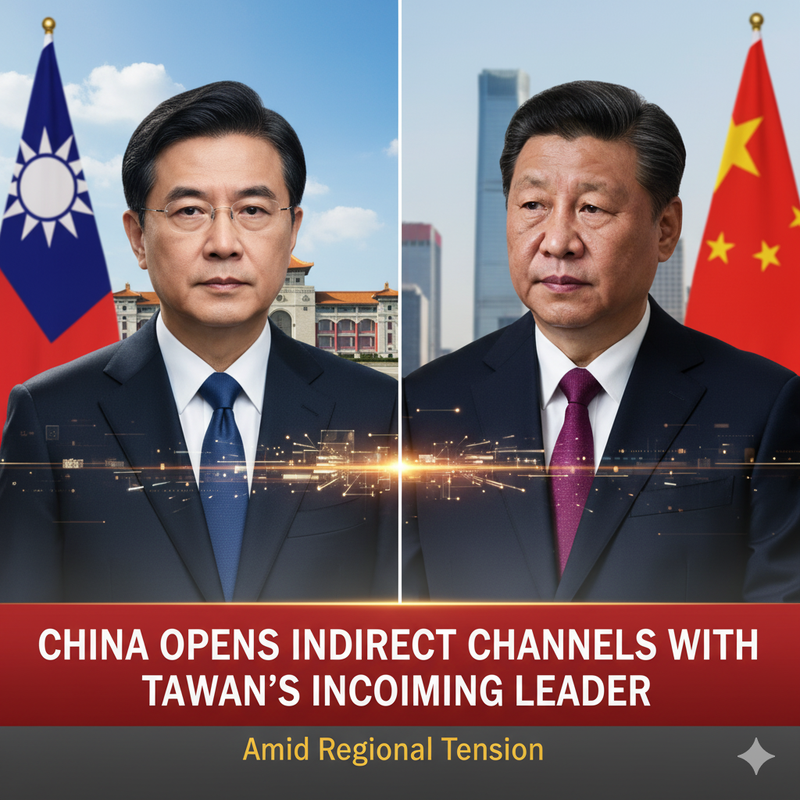
Observers in Taipei see Beijing’s current tone as tactical rather than transformational. “This is engagement with conditions,” said political analyst Chen Li-hua. “China wants a partner in Taipei who will not push formal independence, but who can also manage domestic opinion and cross-strait trade.”
Tensions and Calculations
Despite softer rhetoric, Beijing continues to strengthen its military presence around the Taiwan Strait. The Chinese navy recently conducted additional patrols near the island, describing them as “routine exercises.” Analysts believe these moves are meant to remind Taiwan’s next president of Beijing’s red lines, even while diplomatic signals suggest restraint.
Meanwhile, Taiwan’s new administration is expected to maintain its current security cooperation with the United States and other regional partners, reinforcing deterrence while avoiding direct provocation. Washington has already urged “calm and communication,” emphasizing that stability in the strait benefits all.
Regional Reactions
Neighboring governments, including Japan, South Korea, and members of ASEAN, are closely monitoring the situation. Economic interdependence with China remains high, yet concerns persist about the potential for miscalculation. A senior Japanese diplomat told local media that “any step toward regular dialogue between Beijing and Taipei, even indirectly, is welcome.”
The Road Ahead
For now, Beijing’s outreach appears focused on maintaining stability through the transition of power in Taipei. The coming months will test whether these indirect efforts can evolve into structured communication without triggering backlash from either side’s domestic audiences.
Diplomats and experts agree that both China and Taiwan face growing economic and political pressures, making dialogue, however limited, an essential tool for avoiding confrontation in an already volatile region.