A New Dreamliner After Seven Years
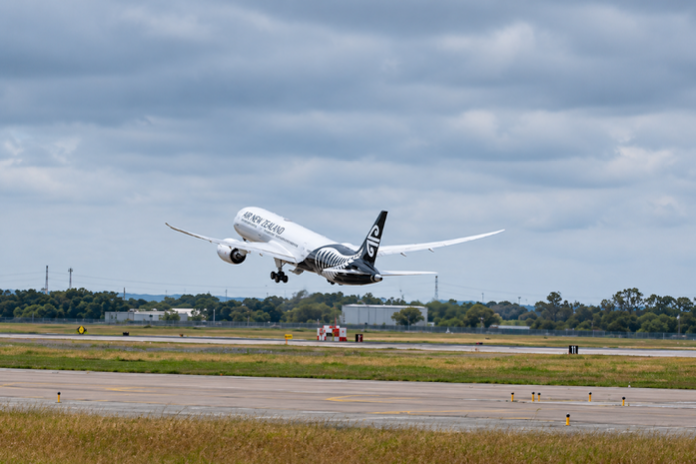
The arrival of ZK-NZT is an important moment for Air New Zealand, which became the launch customer for the Boeing 787-9 in 2014.
More than a decade later, the airline is adding a newer version of the aircraft to its fleet, incorporating both updated cabin products and improvements to its long-range operating capability.
A second new Dreamliner, registered ZK-NZS, was expected to follow within days of the first aircraft's arrival.
The airline announced that both aircraft would feature its latest cabin interiors, reflecting several years of design, development and customer testing.
Air New Zealand Chief Customer and Digital Officer Jeremy O'Brien described the delivery as the result of extensive work to improve the passenger experience.
"There's something really special about welcoming a brand-new aircraft into the fleet, particularly one that's been years in the making to design, test and refine with our customers," O'Brien said.
The timing is particularly important as New Zealand approaches its summer holiday season, when international travel demand traditionally increases.
What Makes This Boeing 787 Different?
The new aircraft features increased Maximum Take-off Weight capability, commonly referred to as iMTOW.
Maximum Take-off Weight is the maximum certified weight at which an aircraft can safely begin its take-off.
That total includes the aircraft itself, passengers, baggage, cargo and fuel.
An increased certified limit gives airlines greater flexibility when balancing these requirements.
Why does that matter?
Long-distance flights require substantial fuel, particularly on routes such as Auckland to New York.
Aircraft operators must carefully calculate how much weight can be carried while remaining within certified limits and meeting operational requirements.
With increased take-off weight capability, an airline may be able to carry additional payload, fuel or a different combination of both, depending on the route and conditions.
For Air New Zealand, that provides greater operational flexibility across its international network.
Aviation industry reporting indicates that the higher-weight Boeing 787-9 configuration increases maximum take-off weight by approximately 4.5 tonnes, with potential improvements in payload or range.
These are aircraft-level capabilities, not a promise that every flight will carry more passengers or cargo.
For travellers, the distinction is important: increased aircraft capacity does not automatically mean higher individual baggage allowances, cheaper fares or new destinations.
Those decisions remain subject to the airline's commercial policies, schedules and operating requirements.
Inside the New Dreamliner: 219 Seats Across Four Cabins
Air New Zealand's new Boeing 787-9 features a redesigned 219-seat layout, with a greater emphasis on premium travel.
| Cabin | Seats | What passengers can expect |
|---|
| Business Premier Luxe | 8 | Premium suites with additional privacy and comfort |
| Business Premier | 34 | Lie-flat seating for long-haul travel |
| Premium Economy | 52 | A separate cabin with additional space |
| Economy | 125 | Redesigned seating, including selected Stretch and Skycouch options |
| Total | 219 | Four main cabin categories |
Within the 125 Economy seats, the aircraft includes nine Skycouch arrangements and 24 Economy Stretch seats.
These are part of the Economy cabin, not additional seats on top of the 219-seat total.
Business Premier Luxe: A More Premium Experience
The eight Business Premier Luxe seats are among the most significant additions to the new cabin layout.
Designed for travellers seeking additional privacy and comfort, the product builds on Air New Zealand's existing long-haul business-class offering.
The airline is placing greater emphasis on premium travel as it responds to demand from international visitors and long-haul passengers.
O'Brien said the increased premium seating would give customers more choice while allowing the airline to respond to demand for higher-end travel experiences.
Premium Economy: More Space on Long Flights
The new Dreamliner includes 52 Premium Economy seats.
Air New Zealand's published seat map lists a seat pitch of approximately 41 inches, or 104 centimetres, in this cabin.
That provides additional space compared with standard Economy seating.
For passengers travelling between New Zealand and destinations in North America or Asia, cabin comfort can be a significant consideration when choosing a fare.
Economy: Updated Seats, Stretch and Skycouch
Economy passengers will also benefit from redesigned interiors.
The new configuration includes standard Economy seating, Economy Stretch seats with additional legroom, and Skycouch options that allow eligible passengers to create a more flexible seating arrangement.
According to the airline's published seat specifications, standard Economy seat pitch is approximately 31 to 32 inches, while Economy Stretch offers approximately 35 inches.
However, passengers should check the aircraft configuration and available products when booking, as cabin features may vary between services.
Skynest Delayed: What Happened to the Economy Sleeping Pods?
While the new Dreamliner is entering the fleet, Air New Zealand's highly anticipated Economy Skynest product has encountered another delay.
Skynest is designed to give eligible Economy travellers the opportunity to lie down and sleep during long-haul journeys.
Unlike Skycouch, which converts a row of Economy seats into a shared resting space, Skynest is a separate sleeping-pod concept.
The product has attracted considerable attention because sleeping fully flat has traditionally been associated with more expensive premium cabins.
Air New Zealand had planned to introduce Skynest in December 2026.
That launch will no longer proceed on the original timetable.
Why has Skynest been delayed?
According to the airline, the product requires two further regulatory certification approvals.
One approval is being handled by an overseas regulator, where resource constraints have delayed the process.
The second approval, involving the local regulator, is progressing.
Air New Zealand says the overseas certification delay means the product cannot be introduced within the original timeframe.
The airline has not announced a replacement launch date.
Instead, Skynest is expected to be installed after the peak summer travel period, subject to the remaining approvals.
Why not wait until Skynest is ready?
The airline has chosen to place its new Dreamliner into service rather than keep the aircraft out of operation while certification continues.
O'Brien explained that the decision reflects the importance of having additional aircraft available during summer.
"We've got a fantastic new 787 Dreamliner ready to welcome customers, and with summer being our busiest time of year, we want it in the air doing what it was built to do," he said.
From an operational perspective, the decision allows Air New Zealand to use its newly delivered aircraft while the separate Skynest certification process continues.
For passengers, it means the upgraded cabins will be available before the sleeping pods.
Skynest vs Skycouch: What Is the Difference?
The names may sound similar, but the products are not the same.
| Feature | Economy Skycouch | Economy Skynest |
|---|
| Concept | Economy seats convert into a flexible resting surface | Dedicated sleeping pods |
| Location | Within the Economy seating cabin | Separate sleeping area |
| Availability | Already offered on selected aircraft | Delayed pending certification |
| Sleeping arrangement | Uses an allocated row of seats | Designed for lying down in an individual pod |
| New Dreamliner launch | Included in the cabin configuration | Not available at initial entry into service |
The distinction is particularly relevant for passengers planning long-haul travel.
Booking a Skycouch is not the same as booking Skynest.
Travellers interested in the sleeping-pod product should wait for Air New Zealand to confirm its revised launch date, booking arrangements and availability.
Why the Auckland–New York Route Matters
Air New Zealand has specifically highlighted its Auckland–New York service as a route that could benefit from the new aircraft's higher take-off weight capability.
Ultra-long-haul flying presents a difficult balance between fuel requirements, passenger demand, cargo and operational conditions.
Aircraft must carry enough fuel for the planned journey and required reserves while remaining within weight and performance limits.
That balance becomes particularly important on very long routes.
The higher-weight Dreamliner gives Air New Zealand greater flexibility in managing those competing requirements.
For the airline, this could support more efficient use of aircraft capacity on suitable services.
For New Zealand, reliable long-haul connections also matter beyond tourism.
They support business travel, international visitors, freight movement and connections between New Zealand and major overseas markets.
However, the airline has not announced a new route or additional flight frequency specifically as a result of this delivery.
Air New Zealand Is Also Upgrading Its Existing Fleet
The arrival of new aircraft is only one part of the airline's cabin modernisation programme.
Air New Zealand confirmed that 13 of its 14 existing Boeing 787-9 aircraft had already been fitted with the redesigned interiors.
The final refurbished Dreamliner was expected to return to flying by the end of 2026.
The programme is also set to extend to the airline's Boeing 777 fleet.
During 2027, Air New Zealand plans to introduce updated Business Premier and Economy cabins across those aircraft.
The objective is to create a more consistent experience across the airline's long-haul network.
That matters because passengers booking the same cabin category on different aircraft may otherwise encounter noticeably different seating products.
A more consistent fleet can help travellers understand what to expect when selecting a flight.
What Does This Mean for Passengers Travelling This Summer?
For travellers preparing to fly internationally over the coming months, the announcement brings several practical points.
1. More aircraft with the latest interiors
The new Dreamliner joins an existing fleet that has largely completed its cabin refurbishment programme.
2. More premium seating choices
The new 219-seat layout includes 42 Business Premier and Business Premier Luxe seats combined, alongside 52 Premium Economy seats.
3. Economy passengers also receive updated cabins
Redesigned Economy seating, Stretch and Skycouch options form part of the aircraft's configuration.
4. Skynest will not be available as originally planned
Passengers should not assume that the sleeping pods will be available on flights during the upcoming summer peak.
5. Check the aircraft and cabin configuration before booking
Aircraft assignments can change, and not every Air New Zealand international flight uses the same seating layout.
The Bigger Picture: A Fleet Investment With a Commercial Purpose
The new Dreamliner represents more than an updated passenger cabin.
It is part of Air New Zealand's longer-term investment in aircraft capability, premium products and international operations.
The airline is responding to several commercial priorities at once.
Premium cabins can generate higher revenue per seat when demand supports them.
Greater aircraft weight capability can provide more flexibility on routes where fuel and payload requirements are demanding.
Modernised interiors can also help the airline compete for international travellers choosing between carriers.
At the same time, the Skynest delay illustrates the complexity of introducing a new aviation product.
Even when a cabin innovation has been developed and tested, regulatory certification remains a separate requirement before it can enter passenger service.
That is particularly relevant when introducing a sleeping arrangement unlike conventional airline seating.
The decision to launch the aircraft before Skynest is ready separates two milestones: putting the new Dreamliner into commercial use and obtaining approval for the new sleeping-pod product.
A New Chapter for Air New Zealand's Long-Haul Fleet
The arrival of ZK-NZT marks Air New Zealand's first new Boeing 787 delivery in seven years and another step in the airline's long-haul fleet renewal.
With upgraded take-off weight capability, 219 redesigned seats and a second new aircraft expected to follow, the airline is preparing for summer with additional long-range capacity and more premium cabin options.
For passengers, the immediate improvements are the refreshed interiors and expanded choice of seating.
For the airline, the benefits include greater operational flexibility on long-distance routes and the ability to put new aircraft to work during a busy travel period.
The missing piece is Skynest.
Air New Zealand remains committed to introducing its Economy sleeping pods, but the launch now depends on completing the outstanding regulatory approvals.
Until then, the new Dreamliner offers a substantially updated flying experience, while one of its most talked-about innovations remains on the waiting list.
Source: Air New Zealand Communications media release, 29 October 2026. Additional information drawn from Air New Zealand's published Boeing 787-9 seating specifications and aviation industry reporting. Statements about future fleet upgrades, Skynest installation and aircraft deployment reflect the airline's announced plans and remain subject to change.