Rob Walter Backs Black Caps After India T20 Series Defeat as Injury Concerns Mount Ahead of ODIs and Tests
New Zealand's head coach says the Black Caps missed an opportunity to win the T20 series against India, praises Glenn Phillips' outstanding batting and explains why protecting key...
New Zealand's head coach says the Black Caps missed an opportunity to win the T20 series against India, praises Glenn Phillips' outstanding batting and explains why protecting key players has become essential ahead of a demanding international schedule.
By Webfit News Sports Desk | 3 November 2026
AUCKLAND: New Zealand head coach Rob Walter has admitted the Black Caps were left with mixed emotions after finishing their T20 series against India with a victory, believing his side had a genuine opportunity to claim the series.
Speaking to reporters following the five-match contest, Walter said New Zealand improved significantly towards the end of the series but had paid the price for failing to capitalise on important moments earlier.
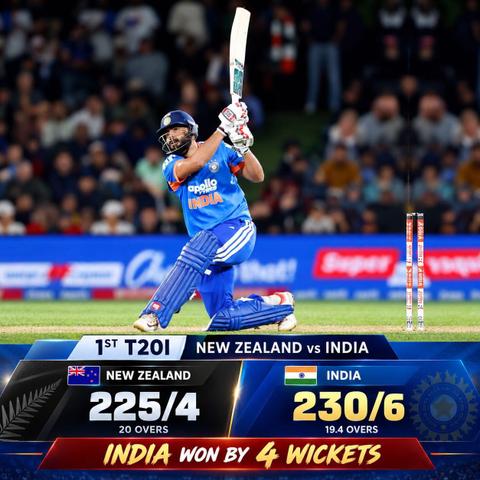
The Black Caps finished the series with a 3-2 defeat, although their performances in the final two matches provided encouragement ahead of the upcoming One Day Internationals.
For Walter, however, the challenge now extends beyond winning individual matches.
With injuries affecting several important players and a demanding schedule ahead, New Zealand must balance immediate results with keeping its squad fit for the longer formats.
'Bittersweet': Walter Reflects on Missed Opportunity Against India
Walter acknowledged that finishing the series with a win was satisfying, but said the result also highlighted what New Zealand might have achieved.
"Probably a bit bittersweet, to be honest, because I think all of us knew that there was an opportunity for us to win that series," he said.
He suggested that only one match had been particularly one-sided, while the other defeats came down to moments when New Zealand failed to execute its plans.
The coach was encouraged by the adjustments his players made as the series progressed.
"I think we got better and better in the last two games," Walter said.
He added that the side had responded well to the experiences of the opening matches, making changes and executing its plans more effectively.
That improvement, he believes, should provide a foundation for the ODI series.
Walter rejected suggestions that New Zealand's slower start should necessarily be a major concern, pointing out that the opening matches had been competitive despite the eventual results.
"We weren't miles off in those first two games," he said, explaining that the team had missed key moments and lacked the polish required at international level.
Glenn Phillips Earns Special Praise for His Remarkable Consistency
One of Walter's strongest endorsements during the press conference was reserved for Glenn Phillips.
The New Zealand batter emerged as a major contributor during the T20 series, demonstrating an ability to score consistently despite the aggressive nature of the format.
Walter said Phillips' performances deserved greater recognition.
"If there was any sort of doubt to his quality, I don't think that would be there anymore," he said.
The coach highlighted how difficult it is for a batter to maintain consistency across five T20 matches, given the risks associated with scoring quickly.
Phillips, he suggested, had made those risks appear manageable through his shot selection, technique and composure.
Walter also praised the calmness Phillips brings to New Zealand's batting unit.
"He's massive for the team," he said, pointing to the variety of shots available to the batter and his ability to maintain control under pressure.
While Phillips' ability has long been recognised within the New Zealand dressing room, Walter believes his recent performances are making a wider audience appreciate his value.
For the Black Caps, that consistency could become increasingly important as the team moves between formats.
Rachin Ravindra's Recovery: Why New Zealand Is Not Taking Risks
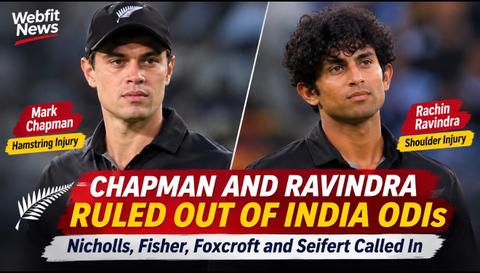
Walter also addressed concerns surrounding Rachin Ravindra's recovery from a shoulder injury.
Although the batter has made encouraging progress, the New Zealand management is unwilling to rush his return to international competition.
Walter explained that Ravindra's batting is not the primary concern.
"I've thrown to him and his batting is absolutely fine," he said.
The remaining challenge is ensuring the shoulder can withstand the demands of fielding, particularly diving and other high-intensity movements.
In ODI cricket, players may be required to spend long periods in the field and react quickly to demanding situations.
Walter said exposing Ravindra to those requirements before he is fully ready would create an unnecessary risk.
He believes the additional recovery period should benefit the player ahead of the Test matches.
"The extra two weeks is, in my opinion, unless something goes wrong along the way, all good for him to be ready," Walter said.
The comments suggest New Zealand is prioritising Ravindra's longer-term availability rather than attempting to bring him back for an immediate ODI appearance.
Matt Henry: Physically Fit, but Not Yet Ready for the Full Demands of ODI Cricket
Matt Henry's availability is another important consideration for the Black Caps.
Walter explained that Henry's injury was not especially severe, but the coaching and medical staff want to ensure he can repeatedly handle high-intensity bowling before returning to international competition.
The distinction, Walter said, is between being physically capable of bowling and being fully prepared for the demands of an international match.
Henry remains a central figure in New Zealand's bowling plans, making his recovery particularly important ahead of the Tests.
Walter said the team does not want to rush him back for an early ODI if that creates problems later.
He also emphasised the intensity of the 50-over format.
"If you ask any bowler, they'll tell you, ODI cricket is intense," he said.
The decision to include an additional bowling option provides New Zealand with greater flexibility while Henry's readiness continues to be assessed.
Walter said Henry is eager to return, but the timing will depend on the team's confidence in his ability to handle competitive workloads.
Ish Sodhi's ACL Injury Raises Fresh Concerns
One of the more concerning updates involved leg-spinner Ish Sodhi.
Walter confirmed that Sodhi had suffered a significant knee injury involving his anterior cruciate ligament, commonly known as the ACL.
The injury is believed to have occurred during a warm-up rather than in a match.
Walter described it as a high-grade ACL injury but said the full extent and likely recovery period were not yet clear.
He acknowledged that such injuries can involve a lengthy recovery.
The coach also expressed disappointment for Sodhi, who had worked hard during the preseason in an effort to strengthen his case for international selection.
Walter said the spinner remained highly motivated to represent New Zealand.
For the Black Caps, Sodhi's injury adds another complication to an already demanding period of squad management.
However, no confirmed return date was provided, and the severity of the injury should not be interpreted as a confirmed complete ACL rupture.
New Zealand's Injury and Availability Picture
Several players are at different stages of recovery or workload management.
Player
Latest update from Walter
Immediate consideration
Glenn Phillips
Praised for consistent T20 batting
Important contributor across formats
Rachin Ravindra
Batting well; shoulder rehabilitation continuing
Avoiding premature exposure to diving and fielding demands
Matt Henry
Physically progressing; match readiness under assessment
Gradual return to high-intensity bowling
Ish Sodhi
High-grade ACL injury reported
Recovery timeline remains uncertain
Will O'Rourke
Rehabilitation progressing well
Targeting domestic red-ball cricket before Australia series
Ben Sears
Ankle rehabilitation showing improved progress
Working towards running and bowling
Zak Foulkes
Making progress from an unusual injury
Careful rehabilitation continues
Lockie Ferguson
Calf recovery progressing
Targeting a domestic 50-over appearance
Jacob Duffy
Workload to be managed
Expected to remain important in upcoming Test plans
These updates reflect Walter's comments during the media conference. Selection and return dates remain subject to fitness assessments.
Why the Black Caps Cannot Keep Playing the Same XI
Beyond individual injuries, Walter highlighted the wider challenge of international scheduling.
New Zealand is managing a substantial amount of cricket across formats, with limited recovery time between competitions.
The coach explained that the planning process began months earlier, with discussions involving players about how their workloads would need to be managed.
He said players naturally want to participate in every match, but that is not always realistic.
"When you're playing 10 games of short-format cricket in 20 days, and then going into six Test matches, it's just not possible to keep the same 11 guys turning up," Walter said.
The problem is especially significant for fast bowlers, whose workloads can increase sharply across T20, ODI and Test cricket.
Walter acknowledged that there is no perfect formula for managing those demands.
Instead, the coaching staff must continually adjust its plans as injuries, fitness and selection requirements change.
The underlying objective is to give players the best possible chance of performing when selected, without exposing them to unnecessary injury risks.
Domestic Cricket Will Play an Important Role
Walter also confirmed that players released from international commitments are expected to return to domestic cricket where appropriate.
For those preparing to rejoin the ODI squad later in the series, domestic 50-over matches provide an opportunity to regain rhythm and adapt to the format.
He said players should remain competitive rather than simply resting between international appearances, unless injury management requires otherwise.
The Ford Trophy is expected to play an important role in that preparation.
For some players, the return to domestic cricket may also involve adjusting to different batting or bowling responsibilities.
Walter said the aim is to ensure players arrive back in the international environment ready to contribute.
Jacob Duffy's Workload Presents Another Selection Challenge
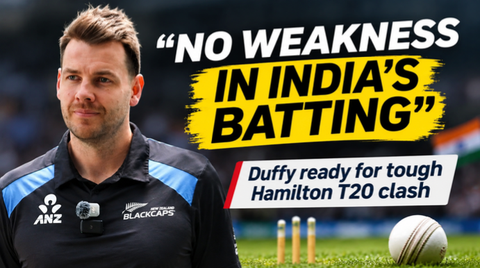
Walter was also asked about Jacob Duffy, who featured heavily during the T20 series and remains part of New Zealand's ODI plans.
The coach acknowledged that Duffy's workload will need careful management before the Test matches.
However, he also noted that the fast bowler enjoys playing and has been finding good rhythm.
Walter joked that Duffy was probably bowling in his room even during his time away from the field.
The serious consideration is determining when to give him a break without disrupting the team's bowling combinations.
Duffy is expected to be an important part of New Zealand's bowling plans over the coming months.
That makes managing his workload a priority, particularly with other fast bowlers recovering from injuries.
Will O'Rourke, Ben Sears and Zak Foulkes: Encouraging Signs From Rehabilitation
There was more positive news regarding several injured New Zealand fast bowlers.
Walter said Will O'Rourke's recovery was progressing according to plan, with the aim of returning through a Plunket Shield match before the Australia series.
He praised O'Rourke's commitment to rehabilitation and said the signs remained encouraging.
Ben Sears is also making progress following an ankle injury that initially proved difficult to manage.
Walter said the early stages of Sears' recovery had been slow, but his rehabilitation had recently gained momentum.
The bowler was approaching the point of returning to running, with a gradual introduction to bowling expected to follow.
Zak Foulkes, meanwhile, is recovering from an injury Walter described as unusual and requiring particular care.
Although progress has been encouraging, the team remains cautious about rushing him back.
Lockie Ferguson's calf rehabilitation was also reported to be progressing well, with a domestic 50-over match identified as his next intended step.
Australia Tests Already on the Radar
Although New Zealand's immediate attention remains on India, Walter acknowledged that preparations for the upcoming Australia series are already part of the broader planning process.
Asked about Australia's recent Test series against South Africa, Walter suggested that the final result did not fully reflect how competitive some passages of play had been.
He observed that Australia had held advantageous positions during the series before South Africa fought back.
Walter said New Zealand could learn from those performances, but he was reluctant to draw firm conclusions about Australia's batting order or selection decisions.
He also stressed that Australia remains a formidable opponent at home, regardless of which players are selected.
For New Zealand, the more immediate priority is ensuring the squad remains competitive and physically prepared through the cricket still to come.
New Zealand A Performances Offer Encouragement for the Future
Another important aspect of Walter's press conference was his assessment of New Zealand A's performances against India A.
The coach said facing a strong India A side, including players with Test experience, provided valuable development opportunities for emerging New Zealand cricketers.
He highlighted the importance of A-team cricket as a bridge between domestic competition and international selection.
Walter said strong performances against high-quality opposition help players understand the standards required at the highest level.
He also referred positively to contributions from Dean Foxcroft and Matt Boyle.
For New Zealand, these matches are not simply about immediate results.
They are an opportunity to develop players capable of stepping into the national side when injuries, workload management or selection changes create openings.
Walter emphasised that international cricket increasingly requires depth beyond a preferred starting XI.
"The more people pushing for places, the stronger we are as a team," he said.
The Bigger Picture: New Zealand Needs More Than Its Best Eleven
Walter's comments reveal a wider challenge facing the Black Caps.
International cricket now demands a squad capable of competing across several formats, often with little time for rest or preparation.
That means success depends not only on the strongest available starting XI but also on the quality of players who can step in when needed.
The India T20 series demonstrated both sides of that challenge.
New Zealand showed it could compete strongly with India and improve as the series progressed.
But the defeat also exposed the importance of taking opportunities early, rather than relying on late recoveries.
Meanwhile, injuries to experienced and emerging players are forcing the coaching staff to think carefully about selection and workload.
Walter's approach appears to be centred on protecting key players while giving others meaningful opportunities to develop.
That strategy may occasionally mean leaving a recognised player out of an ODI even when they are close to full fitness.
The longer-term objective is to avoid turning a manageable injury into a more serious setback.
What Comes Next for the Black Caps?
New Zealand now turns its attention to the ODI series against India, with several players looking to build on the momentum gained during the closing stages of the T20 contest.
Glenn Phillips' batting form provides encouragement, while the progress of Rachin Ravindra, Matt Henry and the recovering fast bowlers will remain important selection considerations.
Ish Sodhi's injury adds uncertainty, and the management of Jacob Duffy's workload will require further planning.
For Walter, the immediate challenge is converting the lessons from the T20 series into stronger performances in the 50-over format.
But the broader task is ensuring New Zealand remains competitive through a demanding international schedule without compromising the fitness of its most important players.
The Black Caps may have lost the T20 series 3-2, but Walter believes the closing performances demonstrated that the team is capable of challenging India.
Whether New Zealand can carry that improvement into the ODIs, while managing an increasingly complicated injury situation, will be the next test.
Source: Rob Walter's post-T20 series media conference, transcript provided to Webfit News.
Editorial note: This report is based on the supplied media conference transcript,