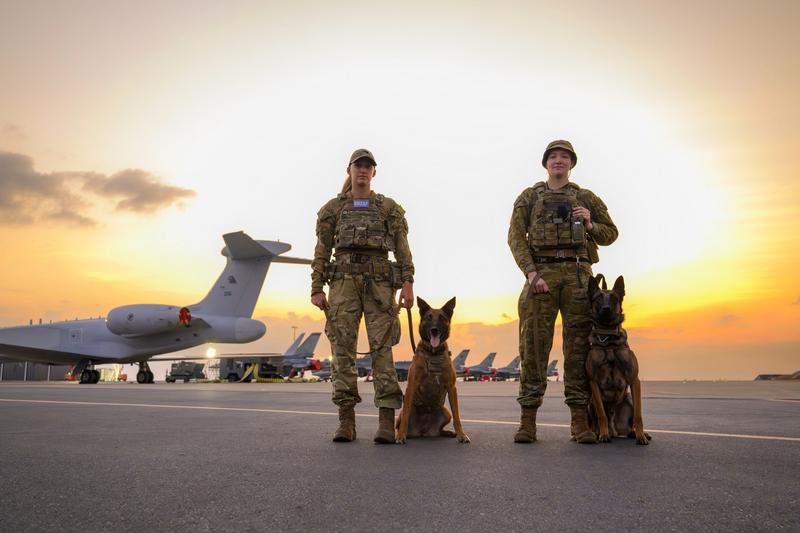
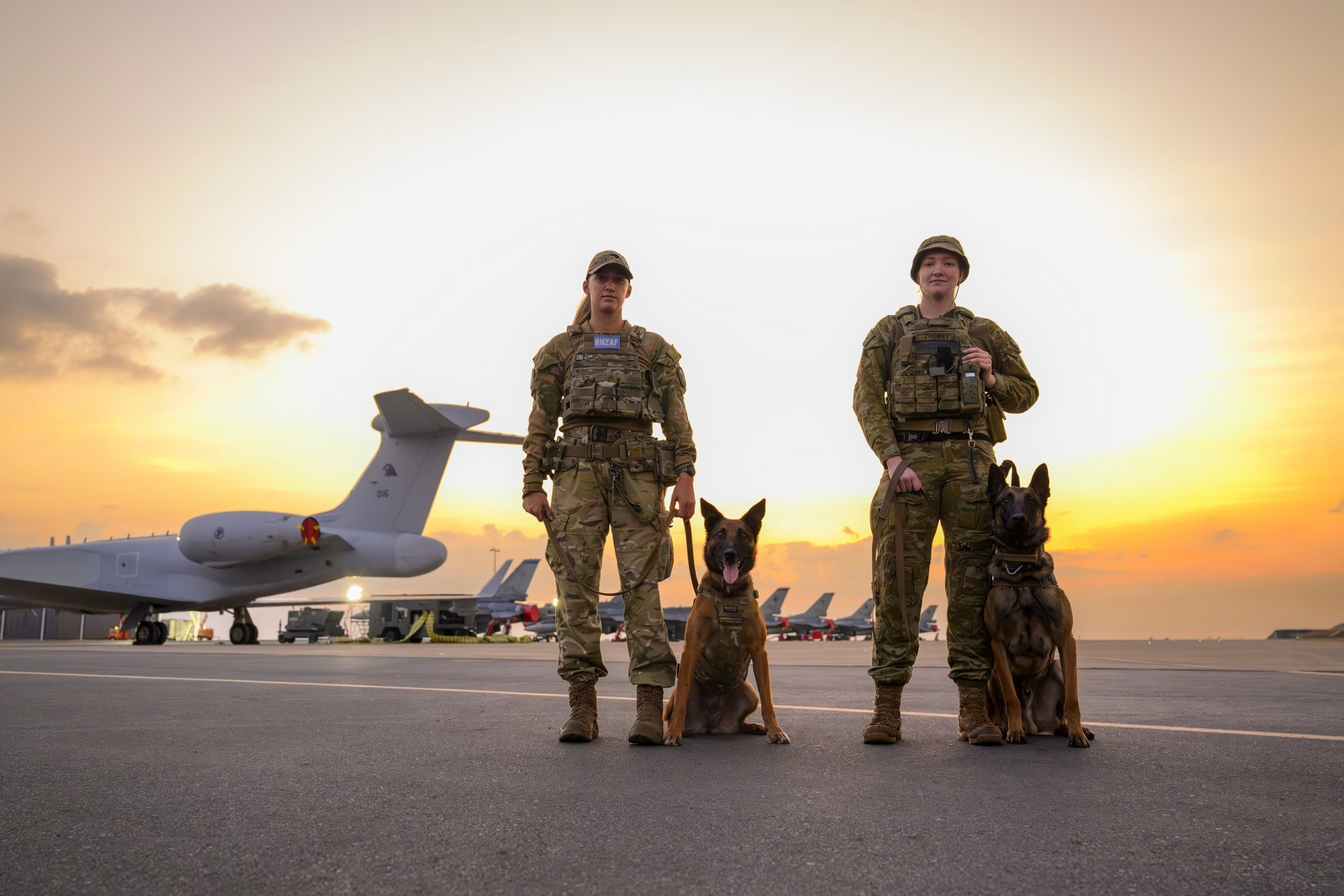
<p>Military Working Dog Handlers and Patrol Dogs, Aviator Claudia Williams (RNZAF) with Trigger and Leading Aircraftswoman Cherie Trickey (RAAF) with Ziggy, work together patrolling the flight line protecting Republic of Singapore F16 and G550 aircraft during Exercise Pitch Black 2026 at RAAF Base Darwin.</p>
<p>Exercise Pitch Black 2026 (PBK26) is the Royal Australian Air Force’s premier biennial international engagement exercise, focused on large-scale fast jet air operations with regional and international partners.<br />
<br />
Held from 20 July to 7 August 2026, PBK26 will take place primarily in Northern Australia, with participants operating from RAAF Bases Darwin, Tindal, and Amberley.<br />
<br />
Fifty-six New Zealand Defence Force personnel based in Darwin, representing 10 Combat Air Enabler trades—including Logistics Specialists, Aviation Fuel Specialists, Ground Safety Equipment Technicians, Machine Tool Setter and Operators, Military Police, Security Forces and Patrol Dogs, Medics, Physical Training Instructors, Chefs, and Intelligence Specialists —will make a significant contribution to the exercise. They will train and operate alongside the Australian Defence Force and international partners, strengthening interoperability, enhancing integrated capabilities, and deepening enduring relationships across the region.<br />
</p>
New Zealand Defence Force personnel have played a significant behind-the-scenes role in one of the Royal Australian Air Force’s largest multinational exercises, helping keep aircraft flying, personnel moving and complex operations running across northern Australia.
Exercise Pitch Black 2026 brought together more than 3,000 personnel from 21 nations and more than 100 aircraft for three weeks of intensive training in the Northern Territory.
For the NZDF, the exercise was not about sending large numbers of combat aircraft into the sky.
Instead, more than 50 New Zealand personnel from the Army, Navy and Air Force supported the enormous logistical and operational effort required to keep an exercise of this scale moving.
Their work included aviation refuelling, aircraft loading, security, catering, intelligence, medicine, logistics, equipment maintenance and photography.
And the numbers involved give a sense of just how large the exercise was.
Royal New Zealand Air Force air load teams helped process the arrival of 1,991 passengers, 120 aircraft and 320 pallets before the exercise even began.
Across the exercise, they handled more than 450,000 kilograms of air cargo.
That kind of work rarely attracts the same attention as fighter jets or combat missions, but without it, the aircraft do not fly and the exercise does not function.
The same applies to fuel.
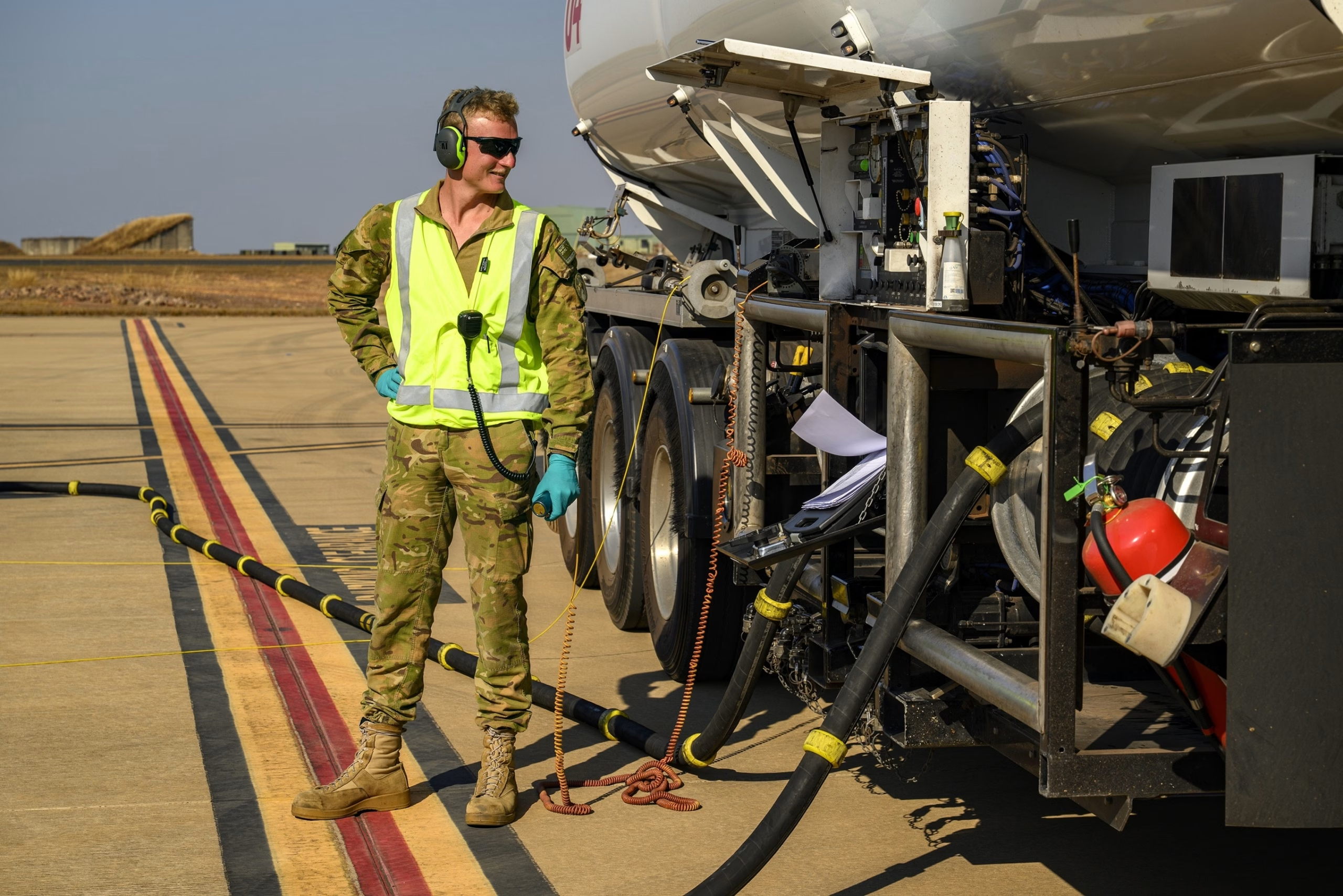
NZDF aviation fuel specialists helped support the pumping of more than 7.1 million litres of aviation fuel during Pitch Black.
The exercise involved daily combat-training sorties around Darwin, operating in both daytime and night-time conditions.
Keeping that amount of flying activity moving required a constant supply of fuel, equipment, ground support and personnel.
More than 166,000 meals prepared
New Zealand Army and Royal New Zealand Navy chefs also worked as part of the multinational support operation.
Together with other personnel, they helped prepare more than 166,440 meals during the exercise.
It is one of those figures that shows the scale of modern military operations.
Major exercises are not simply about pilots and aircraft.
Thousands of people need to be fed, transported, protected, treated medically and supplied every day.
NZDF detachment commander Squadron Leader Dan Hynds said those support roles were essential.
“Our enabler trades are a critical part of getting those aircraft in the air to conduct their tasks, whilst keeping personnel equipped, fed, and safe,” he said.
Five NZDF personnel were recognised with Royal Australian Air Force commendations for their work during the exercise.
New Zealand personnel worked across multiple nations
NZDF members worked directly alongside personnel from Australia, Canada, the United Kingdom, Fiji, the United States and Papua New Guinea.
That multinational environment is one of the main reasons Pitch Black matters.
The exercise is designed to test how different military forces can operate together in realistic, high-pressure conditions.
That means more than simply putting aircraft from different countries into the same airspace.
It involves communication systems, logistics, ground support, fuel procedures, security, intelligence and command structures all working together.
For New Zealand, that interoperability is especially important because the NZDF frequently operates with Australia and other partner nations during deployments, humanitarian operations and regional security missions.
A first-time specialist also made an impact
One of the more unusual New Zealand contributions came from a machine tool setter and operator who deployed to Pitch Black for the first time.
The specialist worked on aircraft arrest systems, which are designed to help military aircraft stop safely in certain situations.
They also designed a bespoke tool to assist German Air Force maintainers.
It was a small example of the practical problem-solving that often defines military support operations.
From four nations to 21
Squadron Leader Hynds first attended Exercise Pitch Black in 2010.
At that time, only four nations were involved.
In 2026, the number had grown to 21.
He said the expansion of the exercise created valuable opportunities for New Zealand personnel.
“It’s fantastic to see how it’s grown with the range of countries and cultures represented here, providing our personnel with a fantastic opportunity to develop relationships while learning from each other.”
That growth also reflects the increasing importance of multinational military cooperation across the Indo-Pacific.
Pitch Black now provides a large-scale environment where countries can test not only combat skills, but also how well their people and systems work together.
Why this matters for New Zealand
Deputy Chief of Air Force Air Commodore Peter Gibson visited the exercise and said Pitch Black was important for testing and improving the NZDF’s ability to operate alongside allies and close partners.
“Pitch Black is a key training opportunity that allows us to prove and enhance our interoperability with our ally and other close partners in a realistic combat scenario,” he said.
He said New Zealand had supported the exercise for many years and that each edition gave a new generation of personnel an opportunity to demonstrate their professionalism.
RAAF exercise commander Air Commodore Matthew McCormack also highlighted the value of New Zealand’s contribution, particularly across 10 ground support trades.
“One of the really good outcomes is our ability to integrate support personnel on the ground,” he said.
The quiet side of military capability
Pitch Black 2026 is primarily known as a major air combat exercise.
Fighter aircraft from multiple countries operate together in complex scenarios designed to simulate high-tempo military conditions.
But the New Zealand contribution highlights a different side of defence capability.
Modern air operations depend on far more than pilots and aircraft.
Fuel teams have to move millions of litres safely.
Load teams have to process passengers, cargo and equipment.
Security personnel protect flight lines and aircraft.
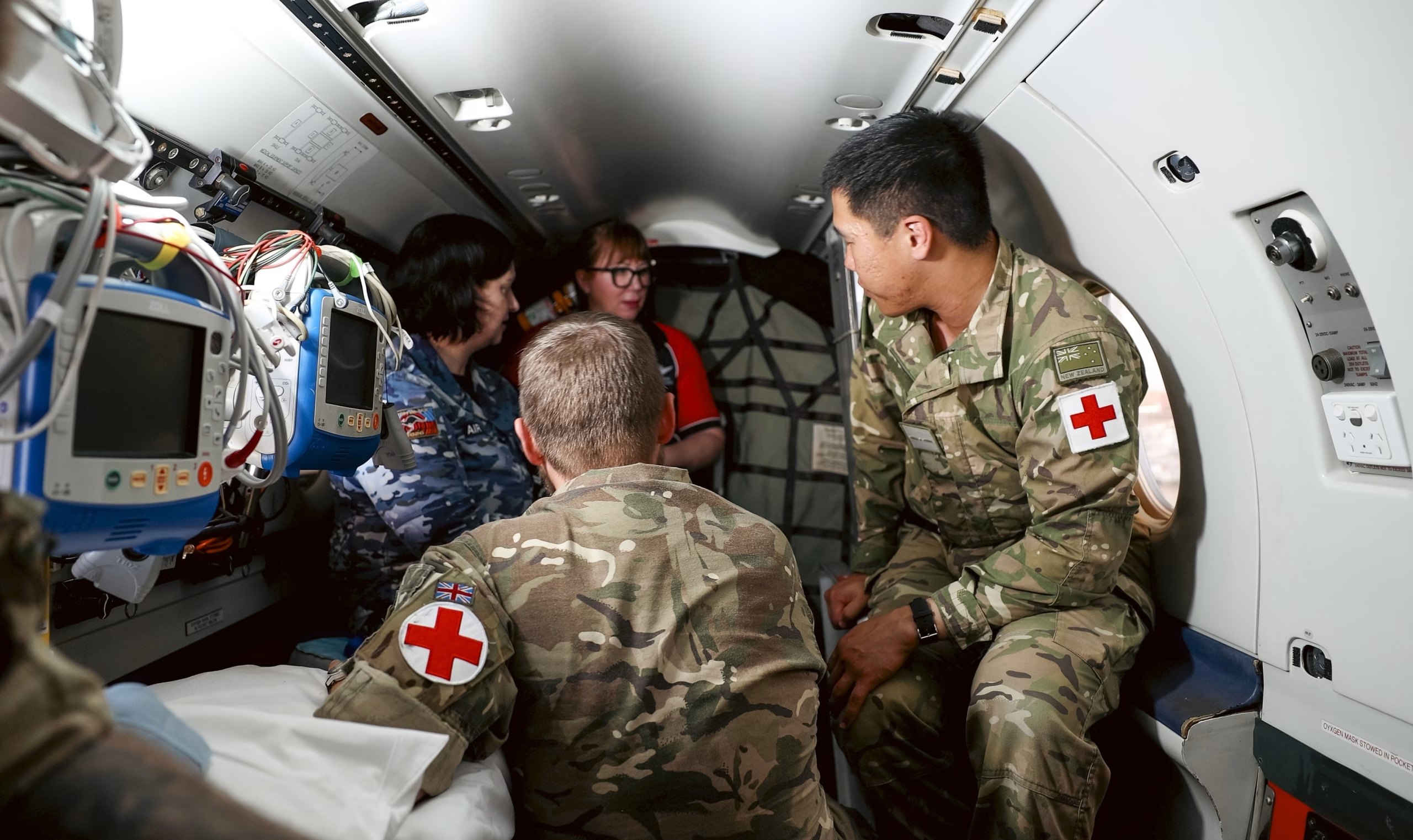
Medics need to be ready.
Chefs feed thousands.
Technicians keep equipment functioning.
Logistics teams make sure the right supplies reach the right place at the right time.
For a relatively small defence force such as New Zealand’s, being able to slot personnel into a multinational operation and perform effectively is an important measure of capability.
Pitch Black 2026 showed that NZDF personnel can do exactly that.
The most visible part of the exercise may have been the aircraft in the sky over Darwin.
But for New Zealand, the real value was also on the ground, proving that its people can integrate, adapt and deliver when the scale of the operation becomes much bigger than anything they would normally handle at home.
Royal New Zealand Air Force Aviation Fuel Specialist, Leading Aviator Nick Dawson refills Indian Air Force Rafale multi-role fighter jets during Exercise Pitch Black 2026.
Exercise Pitch Black 2026 (PBK26) is the Royal Australian Air Force’s premier biennial international engagement exercise, focused on large-scale fast jet air operations with regional and international partners.
Held from 20 July to 7 August 2026, PBK26 will take place primarily in Northern Australia, with participants operating from RAAF Bases Darwin, Tindal, and Amberley.
Fifty-six New Zealand Defence Force personnel based in Darwin, representing 10 Combat Air Enabler trades—including Logistics Specialists, Aviation Fuel Specialists, Ground Safety Equipment Technicians, Machine Tool Setter and Operators, Military Police, Security Forces and Patrol Dogs, Medics, Physical Training Instructors, Chefs, and Intelligence Specialists —will make a significant contribution to the exercise. They will train and operate alongside the Australian Defence Force and international partners, strengthening interoperability, enhancing integrated capabilities, and deepening enduring relationships across the region.
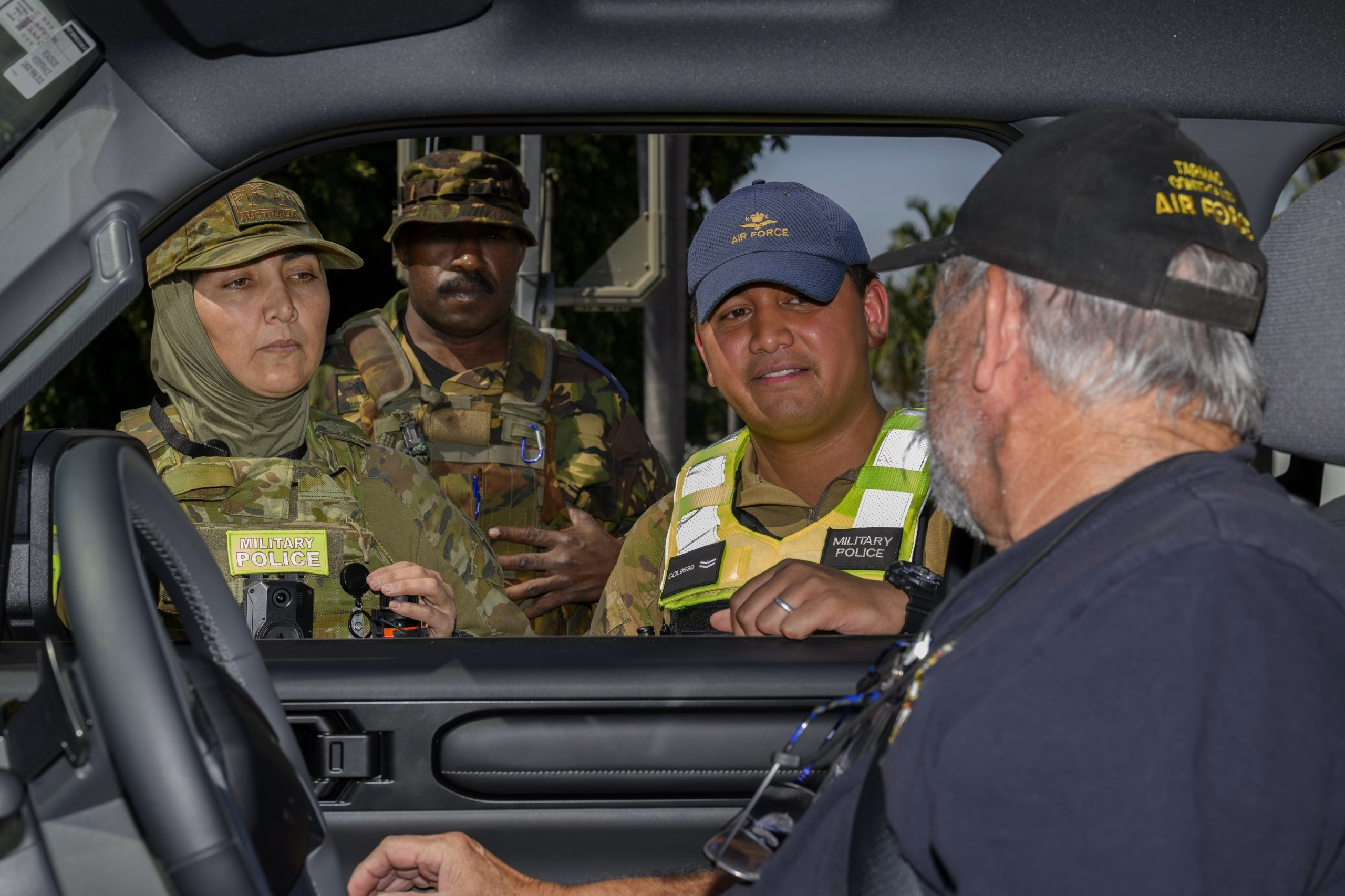
Military Police personnel, Corporal Cullum Collier, Royal New Zealand Air Force, Lance Corporal Hassiba Sahar, Australian Army and Lance Corporal Wilfred Pomun, Papua New Guinea Defence Force, conduct identification checks and speed checks at Royal Australian Air Force Base Darwin during Exercise Pitch Black 2026.
Exercise Pitch Black 2026 (PBK26) is the Royal Australian Air Force’s premier biennial international engagement exercise, focused on large-scale fast jet air operations with regional and international partners.
Held from 20 July to 7 August 2026, PBK26 will take place primarily in Northern Australia, with participants operating from RAAF Bases Darwin, Tindal, and Amberley.
Fifty-six New Zealand Defence Force personnel based in Darwin, representing 10 Combat Air Enabler trades—including Logistics Specialists, Aviation Fuel Specialists, Ground Safety Equipment Technicians, Machine Tool Setter and Operators, Military Police, Security Forces and Patrol Dogs, Medics, Physical Training Instructors, Chefs, and Intelligence Specialists —will make a significant contribution to the exercise. They will train and operate alongside the Australian Defence Force and international partners, strengthening interoperability, enhancing integrated capabilities, and deepening enduring relationships across the region.
Military Working Dog Handlers and Patrol Dogs, Aviator Claudia Williams (RNZAF) with Trigger and Leading Aircraftswoman Cherie Trickey (RAAF) with Ziggy, work together patrolling the flight line protecting Republic of Singapore F16 and G550 aircraft during Exercise Pitch Black 2026 at RAAF Base Darwin.
Exercise Pitch Black 2026 (PBK26) is the Royal Australian Air Force’s premier biennial international engagement exercise, focused on large-scale fast jet air operations with regional and international partners.
Held from 20 July to 7 August 2026, PBK26 will take place primarily in Northern Australia, with participants operating from RAAF Bases Darwin, Tindal, and Amberley.
Fifty-six New Zealand Defence Force personnel based in Darwin, representing 10 Combat Air Enabler trades—including Logistics Specialists, Aviation Fuel Specialists, Ground Safety Equipment Technicians, Machine Tool Setter and Operators, Military Police, Security Forces and Patrol Dogs, Medics, Physical Training Instructors, Chefs, and Intelligence Specialists —will make a significant contribution to the exercise. They will train and operate alongside the Australian Defence Force and international partners, strengthening interoperability, enhancing integrated capabilities, and deepening enduring relationships across the region.
New Zealand Defence Force cook Private Liam Mischefski serves breakfast at the Airmen’s Mess during Exercise Pitch Black at Royal Australian Air Force Base Darwin, Australia. 4 August 2026.
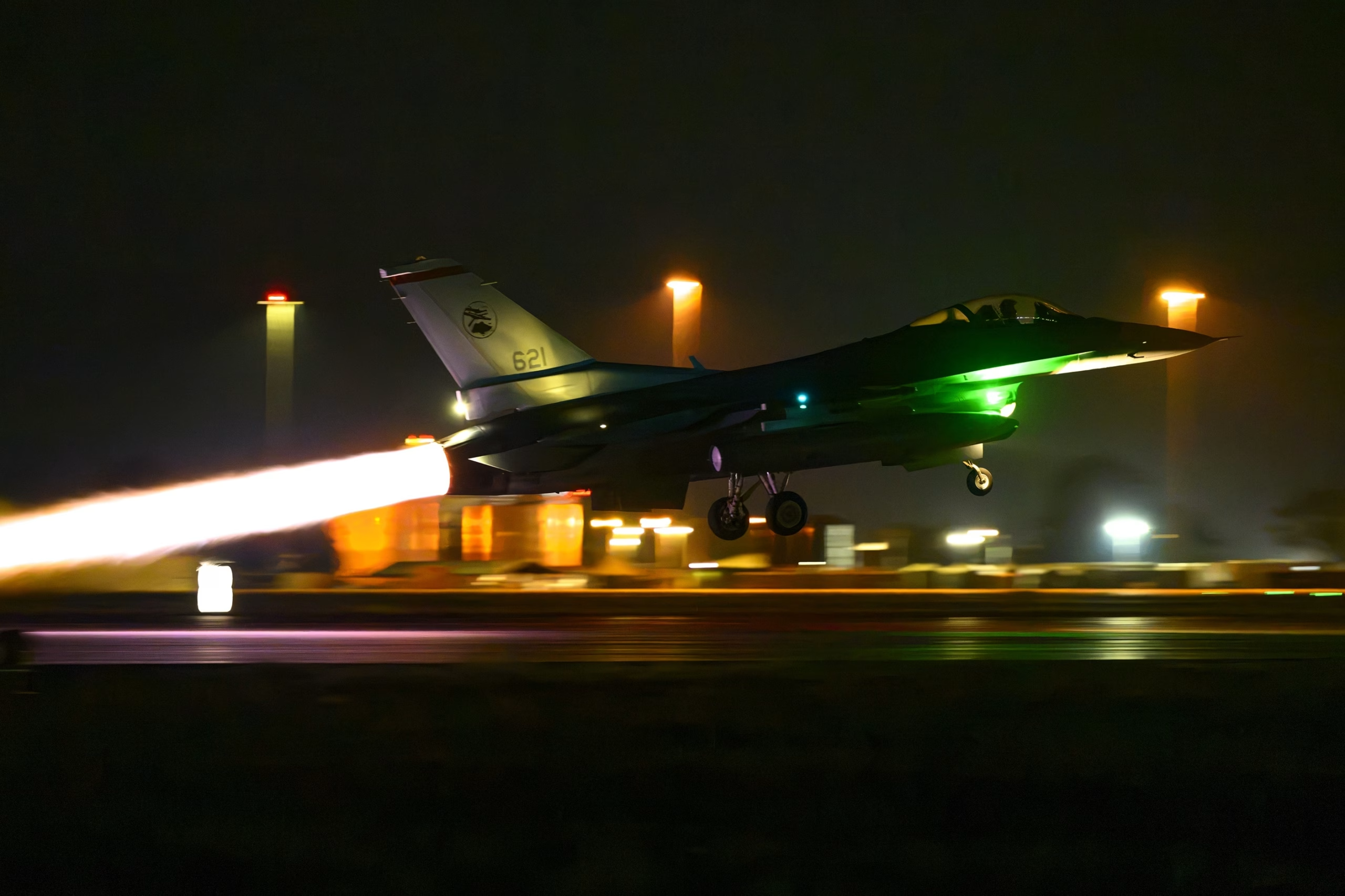
Photo Credit: Corporal Borden Webb-BrownRepublic of Singapore Air Force F-16C takes off at RAAF Base Darwin for night flying during Exercise Pitch Black 2026.
xercise Pitch Black 26 (PB26) is the Royal Australian Air Force’s biennial capstone, international engagement exercise with participating nations from a range of regional and allied partners.
Held between 20 July and 07 August 2026, PB26 will take place primarily in Northern Australia, with participants flying from RAAF Bases Darwin, Tindal and Amberley.
PB26 is the premier air power exercise in the region that strengthens global partnerships and sharpens the readiness of partner nations through integrated training and deeper cultural ties.