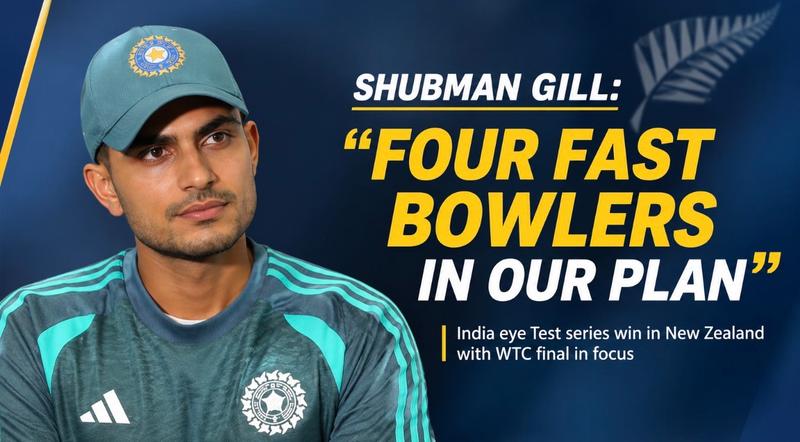
India have already won the T20 and ODI series in New Zealand, but captain Shubman Gill says the Test series is the prize he wanted most. With World Test Championship qualification at stake, India are preparing a four-pronged pace attack for the Basin Reserve, although the final selection remains unresolved.
By Webfit News | 17 November 2026
WELLINGTON: Shubman Gill knows India have a difficult decision to make before Thursday’s first Test against New Zealand.
There is no shortage of fast bowlers. In fact, that is precisely the problem.
After watching India’s younger pacers impress during the ODI series, the captain now has to decide which combination gives his side the best chance of taking 20 wickets at Wellington’s Basin Reserve.
And while the names are still being discussed, one thing is settled: India intend to play four fast bowlers.
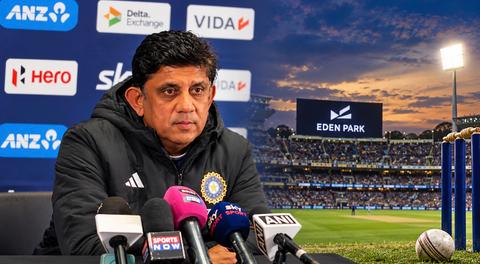
“Honestly, it’s a bit of a headache, but a good kind of headache to have,” Gill told reporters at his pre-match press conference on Tuesday.
It was a revealing discussion about India’s preparations, the challenges of playing Test cricket in Wellington and why the next two matches could have a significant bearing on the team’s World Test Championship ambitions.
Four fast bowlers confirmed, but who makes the XI?
India’s fast-bowling depth has become one of the more interesting selection questions ahead of the series.
Jasprit Bumrah returns to strengthen the attack, while Mohammed Siraj is another experienced option.
But Gill also has decisions to make involving Prasidh Krishna, Gurnoor Brar, Akash Deep and Anshul Kamboj.
Gurnoor and Kamboj impressed during the ODI series, while Arshdeep Singh and Siraj also contributed.
Gill praised the performances of the fast bowlers but made clear that the final combination had not been decided.
“We will be playing with four fast bowlers, that’s for sure,” he said.
The decision will not simply come down to who has bowled best recently.
India want an attack capable of exploiting the new ball, maintaining pressure when conditions become less helpful and finding wickets during the later stages of the match.
That could make the choice between height, pace, consistency and lower-order batting particularly important.
Why the Basin Reserve changes the selection equation
Wellington is not an ordinary Test venue.
Its exposed setting and famous wind can influence the way captains use their bowlers.
A fast bowler operating with the wind may enjoy assistance. Bowling into a strong headwind, however, can be a very different experience.
Gill believes that challenge must be considered before the playing XI is finalised.
He also expects the Kookaburra ball to become less effective as it ages.
The new ball can offer movement and bounce, particularly on a surface with grass. But once the seam wears down, batters may find scoring easier.
Gill said India would need bowlers who could continue creating chances even when the pitch becomes flatter.
That means having someone who can consistently hit a hard length, generate bounce and maintain pace deep into an innings.
A spinner is also expected to have a role in controlling one end, particularly when the wind makes life difficult for the quicks.
For Gill, the ideal attack must be capable of responding to different conditions rather than relying on early movement alone.
Gurnoor Brar or Prasidh Krishna? A difficult call
One of the more intriguing decisions involves Gurnoor Brar and Prasidh Krishna.
Both offer height and the ability to challenge batters with bounce.
Gill indicated that the choice would depend on which bowler the team believes can offer more across five days.
It is a different calculation from selecting a bowler for a limited-overs match.
A Test bowler may need to produce repeated spells, maintain accuracy with an older ball and find a way through when conditions are no longer favourable.
India’s selectors must also consider what each player contributes with the bat.
Gill said the team would ideally have seven specialist batters, with the remaining positions shaped by the bowling combination.
Akash Deep and Anshul Kamboj can contribute lower-order runs, while Nitish Kumar Reddy offers a different balance as a batting all-rounder who can provide seam-bowling support.
That leaves India with several possible combinations but only eleven places.
Rishabh Pant’s lack of recent cricket does not worry Gill
While there is uncertainty surrounding the fast-bowling attack, Gill sounded far more settled when discussing Rishabh Pant.
The wicketkeeper-batter has had limited recent match practice following injury.
But Gill dismissed suggestions that his lack of competitive cricket should be a major concern.
He pointed to Pant’s experience and record of producing important innings in challenging overseas conditions.
Pant has scored Test centuries in Australia, England and South Africa.
New Zealand remains a country where he has yet to reach three figures in Test cricket.
Gill suggested that could provide additional motivation for the wicketkeeper.
Pant’s return also gives India an attacking batting option capable of changing the direction of a match.
Against a New Zealand attack familiar with its home conditions, his ability to counterattack could prove valuable.
Gill admits the Test series is the one he wanted most
India arrive in Wellington having already enjoyed considerable success on this tour.
They have won the T20 series and followed it with a 3-1 victory in the ODIs.
But Gill made an interesting admission when asked how determined India were to complete the tour by winning the Tests.
If he had been offered just one of the three series victories before arriving in New Zealand, he said he would have chosen the Test series.
That says plenty about the importance India have placed on the red-ball contest.
Winning all three formats would make for an outstanding tour, but Gill knows that Test cricket in New Zealand presents a different challenge.
The Basin Reserve can reward disciplined seam bowling, and the hosts understand how to use the conditions.
India’s white-ball success offers confidence, but it does not guarantee anything once the red ball is in play.
World Test Championship final adds extra pressure
There is another reason India are treating the two Tests seriously.
The series forms part of the 2025–27 ICC World Test Championship.
According to the ICC standings ahead of the series, New Zealand are leading the table, while India are fourth.
Gill believes winning both Tests would significantly improve India’s chances of reaching the final in England next year.
He said the importance of the series was understood even before the team arrived in New Zealand.
That was also why several Test players were released from ODI commitments to give them more time to prepare.
India wanted to arrive in Wellington with enough time to adjust to the conditions rather than moving straight from one format into another.
The World Test Championship final is scheduled for June 2027 at The Oval in London.
Two victories in New Zealand would be a major boost for India, although qualification would still depend on the wider competition results.
Lessons from India’s previous Test defeat in New Zealand
Gill also reflected on India’s previous Test tour of New Zealand in 2020, when the hosts won the two-match series 2-0.
He acknowledged that New Zealand had been better prepared to exploit India’s weaknesses.
The Black Caps used their home conditions effectively and challenged the Indian batters in several different ways, including with short-pitched bowling.
Six years later, Gill wants India to be better equipped.
That is part of the thinking behind selecting four fast bowlers with different strengths.
If the ball is moving, India need bowlers who can maintain the right areas.
If the pitch becomes flatter, they need others capable of producing bounce and sustained pressure.
The captain’s message was that India must be ready for more than one type of contest.
Wellington’s wind: The challenge you cannot fully practise
The Basin Reserve’s wind was another recurring subject at the press conference.
Gill believes it is particularly difficult for bowlers.
A batter may need to adjust their balance and shot selection, but a fast bowler can be forced to operate for long spells against strong resistance.
That can affect rhythm, energy and the ability to maintain pace.
Gill explained that although teams can try to prepare for such conditions in practice, the experience cannot be fully replicated in covered nets.
The real adjustment comes during the match.
For India, this makes the choice of bowling combination and the management of spells especially important.
Why extra preparation time matters
Gill also spoke about the value of arriving early and having additional training days before major overseas Test series.
Adjusting to a different time zone is one challenge.
Adapting to unfamiliar weather, pitches and the physical demands of Test cricket is another.
He said having three or four additional days could make a meaningful difference.
The Indian captain wants his side to arrive at major series knowing they have prepared as thoroughly as possible.
Once the match begins, the responsibility shifts to execution.
And against a New Zealand side with a strong home record, those small advantages in preparation could become significant.
New Zealand have their own challenges
India are not the only team dealing with selection and fitness questions.
New Zealand have lost experienced all-rounder Mitchell Santner to a fractured right hand, ruling him out of the two-Test series.
Santner’s absence removes an important spin-bowling option and a senior figure from the Black Caps dressing room.
However, the hosts have received positive news with Rachin Ravindra declaring himself fit following a shoulder injury.
The Wellington-born batter is preparing to return at his home ground, adding another dimension to New Zealand’s batting line-up.
The Black Caps also have the advantage of knowing the Basin Reserve conditions.
For India, that familiarity is precisely why Gill is placing so much emphasis on preparation and a balanced attack.
India vs New Zealand: Test series schedule
Match
Dates
Venue
First Test
19–24 November 2026
Basin Reserve, Wellington
Second Test
27 November – 2 December 2026
Hagley Oval, Christchurch
A perfect tour is within reach, but the hardest challenge remains
India have already given their supporters plenty to celebrate during this tour.
The T20 and ODI series victories have demonstrated the depth and quality of their white-ball cricket.
Now comes the format Gill considers the most important.
The captain has made his intentions clear. India want four fast bowlers, enough batting depth to withstand difficult conditions and an attack capable of taking wickets even when the ball stops moving.
But the final selection remains a difficult call.
And once Thursday arrives, reputations and recent white-ball results will count for little against a New Zealand team determined to defend its home conditions.
For Gill, winning the Test series would mean more than completing a successful tour.
It could also move India a significant step closer to another World Test Championship final.
The selection headache may be a good one. Getting the combination right could determine how far India’s ambitions go.
Webfit News | Cricket
This report is based on Shubman Gill’s pre-match press conference in Wellington on 17 November 2026, with additional tournament and series context from the International Cricket Council.