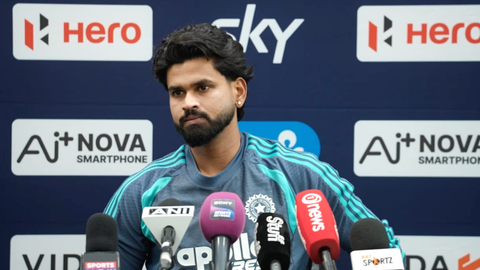
Between 2000 and 2017, he taught at Victoria University of Wellington, carrying out research and teaching while regularly appearing in the media as a political commentator.
He has written three books as sole author and edited or co-edited another three.
In 2009, he was a Fulbright Visiting Scholar at Georgetown University in Washington DC.
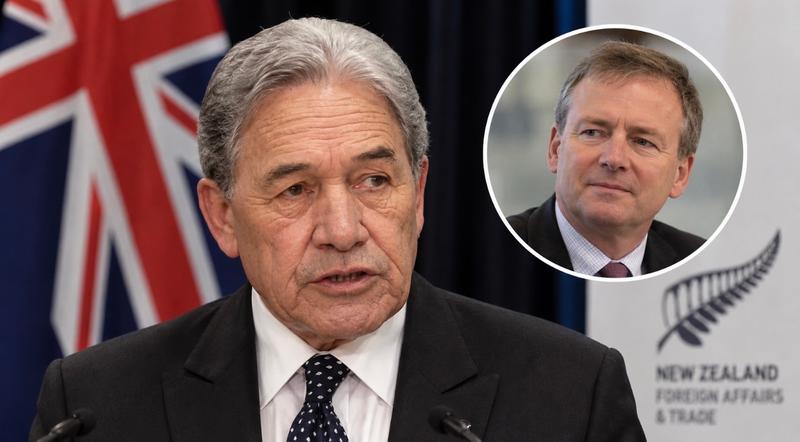
His career changed direction following the 2017 election when he left academia to work directly with Winston Peters.
From political commentator to Peters’ chief of staff
Johansson became Peters’ chief of staff in 2017 as New Zealand First entered government in coalition with Labour.
It placed him at the centre of one of the most politically complicated governments in recent New Zealand history.
Peters was Deputy Prime Minister and Foreign Minister, while NZ First held significant influence over major government decisions.
Johansson remained in the role until 2020, when NZ First failed to return to Parliament.
One example of his influence came during the debate over a capital gains tax. In 2019, Johansson, acting on behalf of the NZ First caucus, formally advised then-Finance Minister Grant Robertson that the party would not support Labour’s proposed capital gains tax. The proposal was subsequently abandoned.
Peters brought him back after the 2023 election
When NZ First returned to government following the 2023 election and Peters again became Foreign Minister, Johansson returned to his inner circle.
This time his position was different.
Rather than serving as chief of staff, Johansson became a Senior Specialist Ministerial Adviser, concentrating heavily on foreign affairs.
The Government’s official biography says Johansson served Peters from 2017 to 2020 and again from 2023 to 2026, initially as chief of staff and later as a specialist ministerial adviser.
In his most recent role, he advised Peters across a broad range of foreign policy issues and participated in meetings with foreign ministers around the world.
That experience means Johansson is moving to Stockholm with considerably more direct exposure to international diplomacy than his academic background alone might suggest.
He has been travelling alongside Peters
Johansson has not simply been working behind a desk in Wellington.
Government documents and international meeting records show him accompanying Peters during significant diplomatic engagements.
He has been part of New Zealand delegations at regional meetings and has travelled as a specialist adviser on Peters’ overseas programmes.
Earlier this year, Johansson was also alongside Peters during discussions with Cook Islands Prime Minister Mark Brown at Peters’ Auckland residence, together with senior foreign affairs adviser Michael Appleton.
That provides important context to the appointment.
While Johansson has not followed the conventional career path through the Ministry of Foreign Affairs and Trade, he has spent years working directly alongside New Zealand’s Foreign Minister on international policy and diplomacy.
A political appointment rather than the usual MFAT pathway
This is where the appointment becomes particularly interesting.
Several of the other diplomatic appointments announced on Monday come from conventional foreign affairs backgrounds.
Tāne Waetford joined MFAT in 2009 and has served in Brazil and Argentina.
Stephen Wong joined MFAT in 1999 and has held diplomatic postings across Asia, including Chengdu, Shanghai, Hong Kong, Singapore, Jakarta and Myanmar.
Johansson’s path is markedly different.
His background combines academia, political analysis, political management and direct ministerial advice.
New Zealand governments can appoint people from outside the professional diplomatic service as ambassadors and high commissioners. The fact that someone is not a career MFAT diplomat therefore does not by itself make an appointment improper.
But when a Foreign Minister appoints a person who has worked closely for him for years, it is reasonable for the appointment to receive additional public scrutiny.
Is Johansson qualified for the job?
His CV contains substantial experience relevant to the position.
Johansson has spent roughly a quarter of a century working around politics, public policy, media and government.
He has academic expertise in political leadership and international politics, experience in Washington through his Fulbright scholarship, several years inside the highest levels of New Zealand government and recent direct exposure to foreign ministers and international negotiations.
He has also been providing Peters with advice separate from the formal advice supplied by MFAT officials.
Previous reporting on Peters’ office has described Johansson as a specialist foreign affairs adviser and noted that he contributed to significant speeches and accompanied the Foreign Minister overseas.
So describing Johansson simply as a political staffer would leave out a substantial part of his background.
Equally, describing him as a conventional career diplomat would be inaccurate.
He sits somewhere between those two worlds.
His Scandinavian connection
There is also a personal connection to the region where Johansson will now represent New Zealand.
The Government says Johansson has strong Scandinavian heritage.
His father emigrated to New Zealand from Denmark in the late 1940s.
Johansson is originally from Canterbury and has spent much of his professional life in Wellington.
While Denmark and Sweden are separate countries, his Scandinavian family background adds another dimension to the appointment.
Why Sweden matters to New Zealand
Sweden is an important European partner for New Zealand.
The two countries share interests across trade, climate policy, international security, innovation and the rules-based international system.
Sweden’s accession to NATO in 2024 also increased its strategic significance as European security was reshaped following Russia’s invasion of Ukraine.
For New Zealand, relationships with Nordic and European countries have become increasingly important as Wellington seeks to strengthen partnerships beyond the Indo-Pacific while maintaining close engagement with the European Union.
Johansson will therefore be taking up the role during a period of significant geopolitical uncertainty.
Four other diplomatic appointments announced
Johansson was one of five appointments announced by Peters.
Tāne Waetford will become New Zealand’s Ambassador to Colombia.
Melanie Roberts has been appointed High Commissioner to Niue.
Stephen Wong will become Ambassador to Timor-Leste.
Brad Burgess has been appointed Ambassador to the United Arab Emirates.
The appointments cover very different parts of New Zealand’s diplomatic network, from Latin America and the Pacific to Southeast Asia, Europe and the Middle East.
A trusted Peters adviser moves from the Beehive to diplomacy
Johansson’s appointment will inevitably generate more political interest than a routine diplomatic posting because of his long association with Peters.
He first joined Peters’ team in 2017, spent three years as chief of staff, left following NZ First’s 2020 election defeat, and returned when the party came back into government in 2023.
He has subsequently spent another three years advising Peters on foreign affairs.
That amounts to approximately six years working directly for Peters across two periods in government, rather than continuously for almost a decade.
That distinction is important because descriptions suggesting he has worked for Peters for nearly 10 uninterrupted years can give the wrong impression.
The appointment nevertheless represents a significant transition.
A man who spent years helping advise New Zealand’s Foreign Minister will now become one of the people responsible for implementing and representing New Zealand foreign policy abroad.
For Johansson, the move takes him from analysing politics, to operating at its centre, and now to representing New Zealand internationally.
For Peters, it places one of his most experienced and trusted advisers in a senior European diplomatic role.
Sources: New Zealand Government and Beehive announcement, Ministry of Foreign Affairs and Trade records, official diplomatic records, Cook Islands Government material and New Zealand political reporting, reviewed by Webfit News on 7 September 2026.