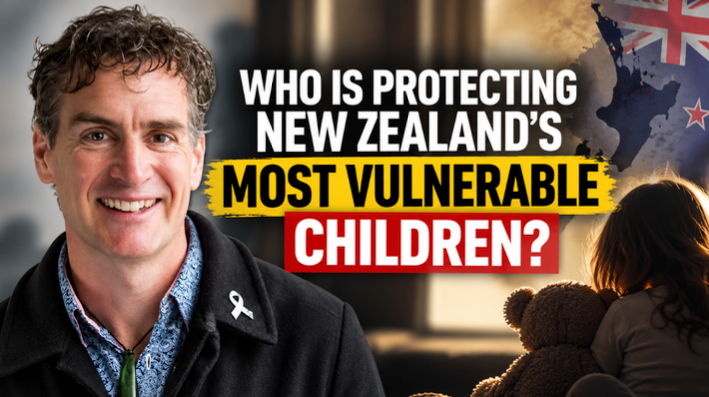
The statement raises a broader election question: what should governments be accountable for when it comes to protecting children, beyond improving their educational outcomes?
A Challenge to National's Education Priorities
According to Family for Every Child, National has reiterated its commitment to giving every child the best possible start in life.
However, the organisation argues that the party's recently released children's policy package does not sufficiently address child maltreatment and poverty.
The distinction is important.
Education policies can influence classroom learning, attendance, literacy and achievement. Child protection policies, meanwhile, address issues such as family violence, neglect, early intervention and support for children living in unsafe environments.
Both areas can affect children's long-term development, but they require different policy responses.
Family for Every Child's criticism is that educational improvements should not be presented as a complete answer to the challenges facing children whose safety and basic needs are not assured.
The media release does not provide National's detailed response to this criticism. Nor does it establish that the party has no relevant child protection or poverty policies outside the particular education package being discussed.
That distinction matters when assessing the competing political claims.
The Lasting Consequences of Child Maltreatment
Family for Every Child warns that maltreatment can have consequences extending well beyond childhood.
Exposure to abuse, neglect and persistent adversity can affect physical health, emotional wellbeing, relationships, education and social development.
The organisation also raises concerns about the possibility of harm extending across generations when families do not receive appropriate support.
Thomson says New Zealand has struggled with child maltreatment for decades and questions whether successive governments have done enough to address the problem.
"Our country has had one of the highest rates of Child Maltreatment in the world for decades and we are making no progress in addressing this," he said.
"How many more children need to die and suffer the effects of maltreatment until we require our government to take meaningful steps to keep our mokopuna safe."
These are serious claims.
The release does not provide the underlying international comparisons, the years covered or a current statistical series establishing whether rates are increasing, declining or unchanged.
Those details are necessary before making a definitive comparison between New Zealand and other countries or assessing progress over time.
Nevertheless, the organisation's central concern is clear: preventing harm to children requires sustained attention, rather than relying only on responses after abuse or neglect has occurred.
What Have Political Parties Actually Committed To?
The organisation points to work undertaken by Tick for Kids, which has asked major political parties about their commitments to children's rights, health and wellbeing.
According to Family for Every Child, the parties have expressed support for several broad child protection priorities.
These include a whole-of-government approach to preventing harm, a national strategy to prevent child maltreatment and implementation of recommendations associated with the Dame Poutasi Review.
However, the organisation says parties differ in how they intend to deliver those commitments.
That distinction between agreement in principle and implementation is significant.
A party can support a national strategy without necessarily committing to the same funding, deadlines, accountability arrangements or services as another party.
For voters seeking to understand the practical differences, the relevant questions include what each party intends to fund, which agencies would be responsible, when changes would take effect and how results would be measured.
The Tick for Kids election scorecards provide a starting point for examining the parties' stated positions.
Why a Whole-of-Government Approach Matters
Child maltreatment cannot be addressed through a single government department or programme.
Children and families may interact with schools, healthcare providers, social workers, housing services, community organisations and the justice system.
Problems can emerge when those services operate separately or when families struggle to access support early.
A whole-of-government approach aims to improve coordination between agencies so that concerns are identified and addressed before situations deteriorate.
But coordination alone is not a measurable outcome.
A credible prevention strategy also needs clear responsibilities, adequate resources and transparent reporting on whether children are becoming safer.
For example, policymakers could be asked to explain how they intend to improve early identification of harm, strengthen support for parents and caregivers, reduce barriers to essential services and ensure that children who need protection receive timely assistance.
The central test is not simply whether a strategy exists, but whether it changes children's experiences.
Poverty and Child Protection: Related, but Not Identical
The media release repeatedly connects child maltreatment with poverty.
Financial hardship can place considerable pressure on families, particularly when combined with housing insecurity, limited access to services or other challenges.
However, poverty and child maltreatment are not the same thing.
Most families experiencing financial hardship do not maltreat their children, and abuse or neglect can occur across different income groups.
Effective policy needs to recognise that distinction.
Reducing material hardship may improve children's living conditions and help relieve pressures on families, while preventing abuse and neglect also requires appropriate safeguarding, intervention and accountability.
Treating the two issues as connected but distinct helps avoid unfairly stigmatising families who are struggling financially.
What Is the Dame Poutasi Review?
Family for Every Child identifies implementation of recommendations from the Dame Poutasi Review as one of the commitments it wants political parties to address.
The review is relevant to discussions about how agencies respond to concerns for children and how opportunities to protect them can be missed.
For election commitments to be meaningful, parties need to explain which recommendations they support, what implementation would involve and how progress would be independently assessed.
Simply referring to a review is not enough to demonstrate that its recommendations have been put into practice.
The Organisation Behind the Call
Family for Every Child is an international alliance working to improve the lives of children and families who need support.
According to the organisation, its network comprises 51 local organisations operating across 40 countries.
It has been active in Aotearoa New Zealand since 2022.
Its stated mission is to help ensure every child can grow up in a safe and loving family.
Dr Rob Thomson, who issued the latest comments, is also the author of The Lifetime Effects of Child Maltreatment, an article published by Brainwave Trust.
His work focuses attention on the long-term consequences of harm experienced during childhood.
The Election Question Beyond the Classroom
Education policy is an important part of any election campaign.
Literacy, numeracy, school attendance, classroom expectations and access to learning opportunities all matter to children and their families.
But Family for Every Child is asking political parties to address another set of questions.
What happens to children who do not feel safe at home?
What support is available before families reach a crisis?
How will government agencies be held accountable when warning signs are missed?
And how will New Zealand know whether its efforts to prevent child maltreatment are working?
These questions do not belong to one political party alone.
They concern the responsibilities of any government entrusted with protecting children.
Family for Every Child is encouraging voters to examine not only the promises parties make, but also the practical steps they intend to take.
"This election please consider which parties are committed to keeping our children safe, and what they intend to do to support whānau and our communities to end child maltreatment," the organisation said.
Beyond Election Promises: What Would Progress Look Like?
The strongest test of a child protection policy is whether it produces measurable improvements in children's safety and wellbeing.
That requires more than broad statements of concern.
It requires clear commitments, consistent data, effective services and public accountability.
It also requires political parties to explain how their approaches would work in practice, including what would happen when families need he