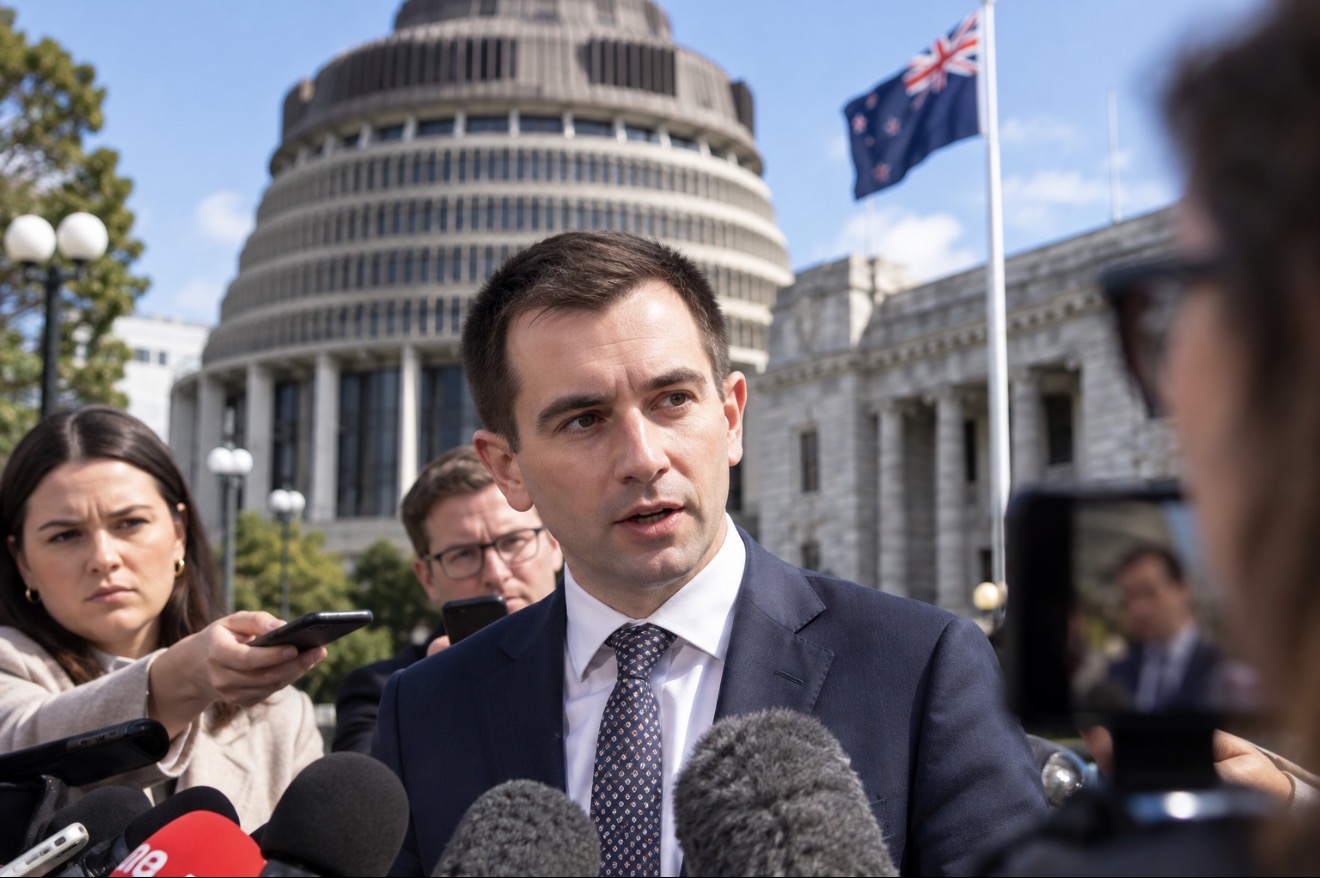
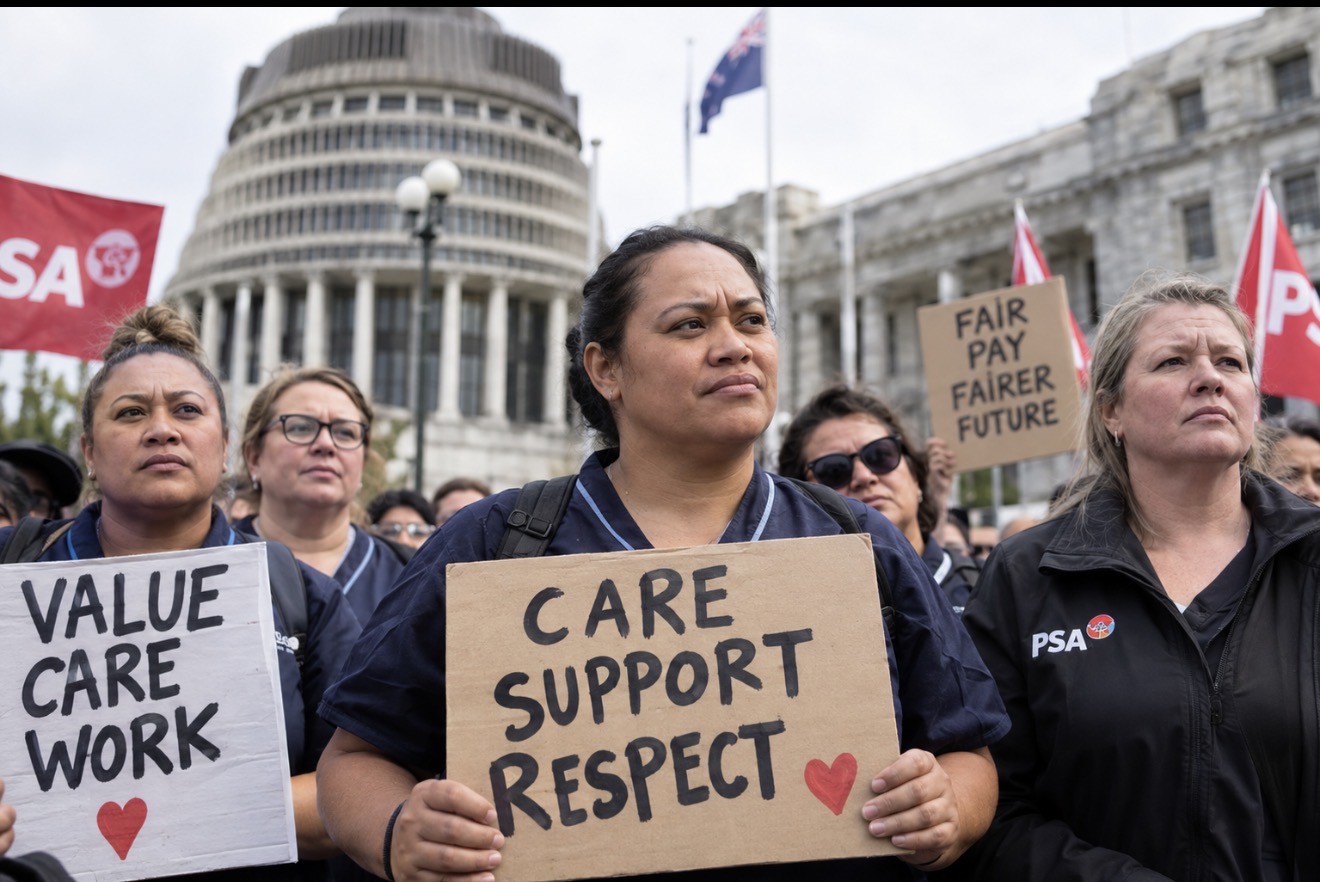
A new report launched at Parliament today is urging whoever forms the next government to make settling care and support workers' pay equity claim an immediate priority, reviving debate over one of the more contested policy decisions of the current government's term.
The report, Voices of Pay Equity Lost, was authored by Professor Katherine Ravenswood and Emma Hitchcock of AUT's Social Transformation Research Institute, and shares the personal stories of eight care and support workers whose pay equity claim was one of 33 cancelled when Parliament passed the Equal Pay Amendment Act 2025.
How the Claims Were Cancelled
To understand what's actually being disputed here, it helps to know what changed. In May 2025, the Government passed amendments to the Equal Pay Act under urgency, bypassing the usual select committee process. According to Workplace Relations and Safety Minister Brooke van Velden, who introduced the changes, the amendments included:
|
Change |
What It Means |
|
Threshold for "female-dominated" work |
Raised from 60% to 70% of a workforce, sustained for at least 10 years |
|
Evidence requirement |
Claims must show reasonable grounds that work is historically and currently undervalued |
|
Comparator guidance |
Clearer rules on comparing different jobs of similar skill and responsibility |
|
Settlement flexibility |
Employers can phase in settlements over time |
As a direct result, 33 existing pay equity claims lodged under the 2020 framework, including the care and support workers' claim, were discontinued. Claimants can lodge new claims, but only if they meet the new, higher threshold.
Two Very Different Framings of the Same Decision
This is where the story splits sharply depending on who you ask.
The PSA, representing the affected workers, has described the change in the strongest possible terms. National Secretary Fleur Fitzsimons called it "constitutional vandalism," arguing the Government "chose landlords over care and support workers."
"Every day their claim sits unsettled costs them real money, for petrol, for heating, for a deposit on a house," Fitzsimons said.
The Government's own explanation, given at the time, framed the changes very differently. Minister van Velden said the previous 2020 framework "was not working as intended" and that the amendments were needed to make the claims process "more robust, workable and sustainable." Treasury had separately raised concerns that the earlier system had allowed pay equity costs to grow without Cabinet oversight until settlements were nearly finalised.
Van Velden has also pushed back publicly on claims that women have been disadvantaged, saying New Zealand "continues to have a robust pay equity system in place" and that new claims are already progressing under the revised rules.
A Personal Cost, According to the Report
The report puts a human face on the financial impact. Christchurch support worker Christie Cox said the cancelled settlement has cost her family close to $30,000 in lost income so far.
"That's a deposit on a house, that's financial security, some stability for me to be able to actually start my family," Cox said.
What the PSA Wants From the Next Government
With the election just weeks away, the PSA has laid out three specific demands for whichever party or coalition forms government after 7 November:
- Fund and settle the care and support workers' pay equity claim within the first 100 days
- Repeal the 2025 changes and restore the cancelled claims and reviews
- Address pay gaps linked to ethnicity, disability, sexuality and gender identity
Notably, Labour and the Greens have already pledged to repeal the Equal Pay Amendment Act 2025 if elected, while the current Government has repeatedly said it will not be reconsidering the law.
The Economic Argument
Beyond the moral and legal debate, the PSA has also pointed to economic modelling to support its case. Citing analysis based on Treasury's own economic model, the union argues that reinstating pay equity claims would grow the economy by $13.5 billion over four years and create around 13,000 jobs.
That claim has not been independently verified in this reporting, and the Government has not responded specifically to this modelling.
A Court Case Still Pending
Adding another layer to the dispute, the PSA and other unions challenged the Government's 2025 decision at the High Court, arguing it breached the Bill of Rights Act. That case concluded last month, with a decision still pending.
"Win or lose that case, we need concrete political steps to overturn this appalling decision," Fitzsimons said.
Why This Story Matters Heading Into the Election
Pay equity has become one of the more polarising political issues of this term, touching on questions of gender pay gaps, fiscal responsibility, and how much scrutiny major legislative changes should face before passing. With the report timed deliberately ahead of the 7 November election, and both sides holding firmly to their respective positions, this issue looks set to remain a live point of contention through to polling day.
This article is based on a media release issued by the Public Service Association (PSA), with additional context on the Government's position drawn from public statements and reporting by RNZ, Newsroom, The Spinoff and the Library of Congress.