‘We Tried to Play All Four Games Exactly the Same’: Glenn Phillips on New Zealand’s Breakthrough Win Over India
After a remarkable century at Eden Park, Glenn Phillips tells Webfit News why the BLACKCAPS finally got the better of India, praises the bowling attack and reflects on a memorable...
After a remarkable century at Eden Park, Glenn Phillips tells Webfit News why the BLACKCAPS finally got the better of India, praises the bowling attack and reflects on a memorable night in Auckland.
By Webfit News Sports Desk | Auckland | 31 October 2026
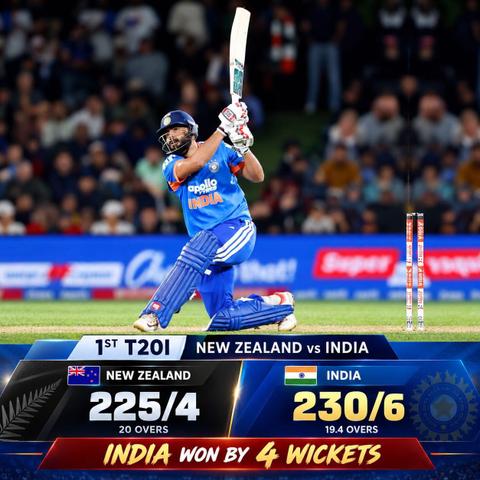
After three consecutive defeats against India, New Zealand finally found a reason to celebrate at Eden Park on Friday night.
The BLACKCAPS produced an impressive all-round performance to secure their first victory of the five-match T20 International series, with Glenn Phillips leading the way in a match that showcased New Zealand’s batting power and renewed confidence with the ball.
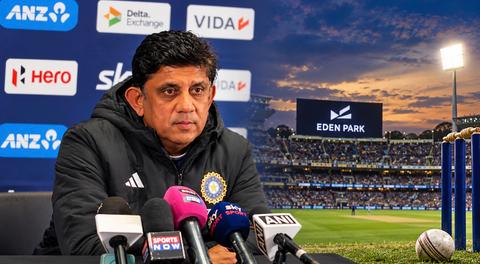
Phillips’ century was central to the victory, but speaking at the post-match press conference attended by Webfit News, the New Zealand batter was quick to recognise the collective effort behind the result.
The performance raised an obvious question. After struggling against India’s aggressive batting in the previous three matches, what had New Zealand done differently this time?
Webfit News put that question directly to Phillips.
His answer was surprisingly simple.
Webfit News Asks: What Changed After Three Defeats?
During the press conference, Webfit News congratulated Phillips on New Zealand’s long-awaited victory and highlighted the team’s improved performance across batting, bowling and fielding.
The question focused on what had not worked in the opening three matches, what had finally clicked at Eden Park and how the team had approached the contest mentally.
Phillips rejected the suggestion that New Zealand had made a dramatic change to its approach.
“I feel like we tried to play four games exactly the same. And today we happened to win.”
He explained that the bowling group had spent considerable time discussing its plans and working to find ways of containing India’s powerful batting line-up.
“I know the bowlers have definitely had a lot of chats and really tried to work hard on what maybe their plans are.”
Phillips described the challenge of bowling to India in particularly vivid terms.
“Obviously, you’re trying to stop a freight train and it’s pretty hard to do that.”
For Phillips, the victory was less about discovering a completely new strategy and more about seeing the team’s preparation finally produce the desired result.
He said the success would give New Zealand’s bowlers confidence after a difficult start to the series.
“I don’t think we necessarily did anything outrageously different.”
It was a revealing answer from a player who had just delivered one of the standout performances of the series.
Rather than suggesting New Zealand had solved every problem overnight, Phillips acknowledged the unpredictable nature of T20 cricket.
A Century to Remember at Eden Park
Phillips described his innings as an enjoyable experience, particularly with his batting partner Michael Bracewell attacking from the other end.
“That felt like a bit of a whirlwind.”
He said the opportunity to watch Bracewell’s aggressive batting had added to the occasion.
Eden Park’s unusual dimensions and lively pitch created opportunities for batters willing to take risks.
Phillips acknowledged that New Zealand needed an exceptional total to challenge an Indian side that had already demonstrated its ability to chase substantial scores.
“You need a ton of runs to even have a sniff of beating India.”
The innings was also personally significant.
Phillips spent part of his early cricketing life playing at Eden Park and admitted that, despite his familiarity with the venue, it had not always been a ground where he had produced his best batting performances.
He described it as a special place to play, with distinctive dimensions and considerable bounce.
For a player who has experienced both success and frustration at the venue, producing a major innings against India was particularly satisfying.
The Small Technical Adjustment That Made a Difference
Phillips also offered insight into his batting preparation.
Asked whether he had felt comfortable from the beginning of his innings, he said T20 batting often involves periods when timing comes naturally and others when the batter must work harder.
He explained that he had concentrated on remaining more still at the crease and reducing unnecessary movement.
That adjustment was particularly useful on a pitch offering additional bounce.
Phillips felt his batting became more comfortable around the 13th or 14th over.
He also acknowledged that successful innings require some luck.
The explanation offered a reminder that even a spectacular century can involve small technical corrections and moments of uncertainty.
Jacob Duffy’s Response Earns Praise
New Zealand’s bowling performance was another major subject during the press conference.
Jacob Duffy had endured a difficult previous outing but responded strongly at Eden Park, giving the hosts early momentum and putting India’s chase under pressure.
Phillips was pleased to see Duffy rewarded for his efforts.
He explained that bowlers can execute similar deliveries in different matches and experience completely different outcomes.
On one night, a mistimed shot may travel over the boundary.
On another, the ball may go high in the air and provide a catching opportunity.
Phillips said Duffy’s success was a reflection of both persistence and the unpredictable nature of the game.
He also praised the wider bowling unit for its execution.
“I feel like we nailed our yorkers today really well, but also our change-ups, our slow balls, and using the width of the crease.”
Those variations were particularly important against a batting line-up capable of punishing predictable bowling.
Phillips believed the performance would help restore confidence among New Zealand’s bowlers as the series moved to Hamilton.
‘You Never Have Enough Against India’
Despite New Zealand posting an imposing total, Phillips admitted he was never entirely comfortable with the idea that the game was already won.
India’s batting performances earlier in the series had demonstrated how quickly a match could change.
He reflected on the previous contests, explaining that New Zealand had believed its batting totals were competitive.
However, India’s batters had repeatedly taken the game away through aggressive stroke play.
Even after New Zealand’s outstanding batting performance in Auckland, Phillips understood that a strong bowling effort was still required.
That made the early wickets and disciplined execution especially important.
The victory was not simply about posting a large total.
It was about preventing India from building the momentum that had proved so damaging in the earlier matches.
A Packed Eden Park Adds to the Occasion
Phillips also spoke warmly about the atmosphere at Eden Park.
Asked whether New Zealand had drawn inspiration from the All Blacks’ formidable record at the stadium, he said that had not been a specific focus for him.
Instead, he appreciated the opportunity to play in front of a large and enthusiastic crowd.
He recalled noticing a Mexican wave during the later stages of the innings and being struck by the noise inside the stadium.
Phillips said such an atmosphere was something players did not experience at every cricket venue.
The occasion was made more memorable by the strong support for both teams.
For New Zealand cricket, the sight of a packed Eden Park provided an encouraging reminder of the sport’s ability to attract major crowds when international teams visit.
Fielding Under Pressure: ‘No Such Thing as an Easy Catch’
Although New Zealand’s fielding contributed to the victory, the match was not without missed opportunities.
Phillips was asked about dropped catches and the difficulty of judging high balls in challenging conditions.
He pointed to the unusually strong and swirling wind at Eden Park.
According to Phillips, balls travelling high into the air were particularly difficult to judge.
He explained that the wind could change direction at different heights, creating uncertainty even for experienced fielders.
“Every catch is a hard catch, I believe.”
He added that there was no substitute for dealing with those situations during an international match, under floodlights and in front of a large crowd.
Phillips also defended players who had missed chances, stressing that everyone was working hard to improve.
His response reflected the team’s broader approach of supporting players through both successful and difficult moments.
From IPL Frustrations to International Success
Phillips was also questioned about his preparation after a challenging period in franchise cricket.
He acknowledged the competitive nature of the Indian Premier League, where overseas players face considerable pressure to perform.
With limited places available in each playing XI, opportunities can disappear quickly when results do not go a player’s way.
Phillips said he had used time away from matches to work with coaches, improve his skills and build experience through cricket in different conditions.
He also reflected on the importance of maintaining perspective during periods of poor form.
For Phillips, the support provided by New Zealand’s team environment has been particularly valuable.
He said players are encouraged to focus on what they can control rather than becoming consumed by results.
That approach, he suggested, helps create the confidence needed to perform on the international stage.
The Importance of Team Culture
One of the strongest themes throughout Phillips’ press conference was his appreciation for New Zealand’s team culture.
He repeatedly returned to the idea that individual success matters most when it contributes to the team’s performance.
He acknowledged that even the best players experience periods of inconsistent form.
The challenge is to reduce those difficult periods while continuing to learn and improve.
Phillips also spoke about the satisfaction of seeing teammates succeed.
His comments about Duffy, Bracewell and the wider bowling unit reflected that outlook.
After three defeats, New Zealand could have approached the fourth match with uncertainty.
Instead, Phillips suggested the players had continued trusting their preparation and backing one another.
That confidence was rewarded at Eden Park.
Webfit News Analysis: New Zealand’s Biggest Change Was Execution
The most revealing part of Phillips’ press conference came when Webfit News asked what had changed.
His answer challenged the idea that every defeat requires a complete tactical rethink.
New Zealand had been competitive with the bat during earlier matches, but India’s aggressive batting had repeatedly overwhelmed its bowling attack.
At Eden Park, the BLACKCAPS combined a substantial total with better execution from their bowlers.
They delivered yorkers, used slower balls effectively and made better use of their bowling angles.
They also took early wickets, preventing India from settling into the chase.
Phillips’ comments suggest that New Zealand’s preparation had not been fundamentally flawed throughout the series.
The challenge had been turning that preparation into a complete performance.
Friday night provided exactly that.
There were still areas to improve, particularly in the field, but the result demonstrated what New Zealand could achieve when its batting and bowling units performed together.
Importantly, Phillips did not present the victory as evidence that India’s threat had disappeared.
His description of India’s batting as a “freight train” showed how much respect the BLACKCAPS continued to have for their opponents.
Hamilton Offers a Chance to Build on the Victory
With the final T20 International scheduled for Hamilton, New Zealand now has an opportunity to carry its momentum into the last match of the series.
India has already secured the series, but the BLACKCAPS will be determined to finish strongly.
For Phillips, the Eden Park performance was personally rewarding, yet his comments made clear that the team’s success mattered more than individual recognition.
After three difficult matches, New Zealand’s bowlers finally received the rewards for their preparation.
The batters produced the runs required to challenge India.
And a packed Auckland crowd witnessed a performance that gave the home side something to celebrate.
When Webfit News asked what had changed, Phillips did not offer a complicated explanation.
The team had continued working, continued believing and finally delivered the performance it had been seeking.
Sometimes the difference between defeat and victory is not a new plan, but executing the existing one when it matters most.
Webfit News attended Glenn Phillips’ post-match press conference at Eden Park, Auckland, on 30 October 2026. The report includes a question raised directly by Webfit News. Quotations have been lightly edited for readability while preserving their meaning.