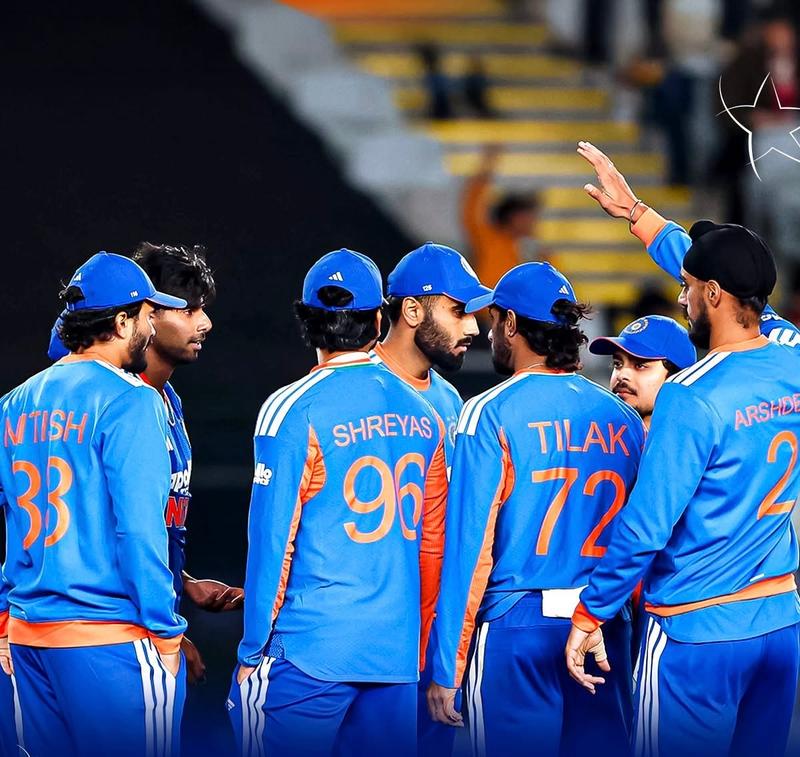
But how long can India continue relying on its batters to compensate for expensive bowling?
And more importantly, is the current bowling combination giving India its best chance of winning consistently?
The Numbers Behind India’s Bowling Concerns
India’s recent results reveal an unusual pattern. The team has continued winning matches despite allowing opponents to post substantial totals.
India’s Last Five Completed T20Is
|
Date
|
Opposition
|
Runs conceded
|
Result
|
|
14 Oct
|
West Indies, Hyderabad
|
247/3
|
Lost by 24 runs
|
|
22 Oct
|
New Zealand, Christchurch
|
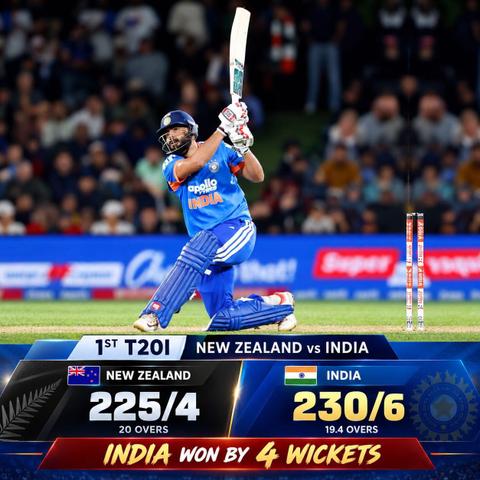
225/4
|
Won by 4 wickets
|
|
24 Oct
|
New Zealand, Christchurch
|
180/5
|
Won by 4 wickets
|
|
27 Oct
|
New Zealand, Wellington
|
198/3
|
Won by 6 wickets
|
|
30 Oct
|
New Zealand, Auckland
|
259/7
|
Lost by 87 runs
|
|
Total
|
Five matches
|
1,109 runs
|
3 wins, 2 losses
|
Average runs conceded: 221.8 per match.
India won three of these five matches, demonstrating the extraordinary strength of its batting.
But the same figures expose a potential weakness.
Three opponents crossed 200, while another reached 198. Only once did India restrict the opposition below 190.
A team can survive occasional expensive bowling performances. When high totals become frequent, however, it becomes a question of strategy rather than an isolated bad day.
The Five Highest T20I Totals Against India Have Come in 2026
The wider historical record makes the concern more significant.
|
Rank
|
Opposition
|
Total
|
Venue
|
Year
|
|
1
|
New Zealand
|
259/7
|
Auckland
|
2026
|
|
2
|
England
|
257/3
|
Southampton
|
2026
|
|
3
|
West Indies
|
252/4
|
Ranchi
|
2026
|
|
4
|
West Indies
|
247/3
|
Hyderabad
|
2026
|
|
5
|
England
|
246/7
|
Mumbai
|
2026
|
These are not simply five high-scoring matches. They are the five highest innings totals India have conceded in T20I history.
Modern T20 cricket has become increasingly aggressive, and high totals are more common across the international game.
That context matters.
But it does not eliminate the concern that India’s bowlers have repeatedly struggled to contain opposition batting line-ups.
The issue is not whether India can chase 200.
It is whether India should be allowing opponents to reach 220, 240 or 250 so regularly.
Eden Park Exposes the Problem
Friday’s fourth T20I provided a particularly clear example.
Glenn Phillips struck 107 from 49 deliveries, while Michael Bracewell contributed 65 from just 25 balls.
Together, they transformed New Zealand’s innings and pushed the hosts to 259 for 7.
India’s chase never recovered after losing early wickets, eventually finishing on 172 for 9.
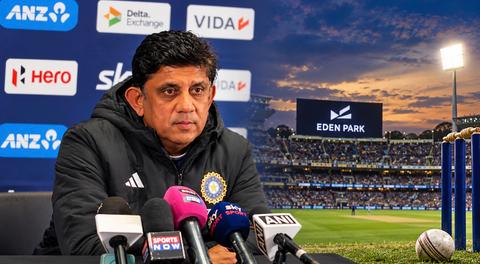
Speaking at the post-match press conference attended by Webfit News, India’s spin-bowling coach Sairaj Bahutule acknowledged that the bowling unit could have performed better.
He suggested India might have conceded 20 to 30 fewer runs with improved execution.
That admission was important.
Even reducing New Zealand’s total by 25 runs would still have left India facing a substantial chase, but it would have changed the pressure and the required scoring rate.
The problem was not simply that India lost.
It was that the bowlers had allowed another opposition batting unit to take control of the match.
The Selection Dilemma: Batting Depth or Bowling Variety?
India’s preference for batting depth is understandable.
In modern T20 cricket, a capable batter at number eight can make a significant difference.
It allows the top order to attack with greater freedom and gives the team protection against an early collapse.
But that balance comes at a cost.
If India wants to strengthen its bowling attack by introducing a specialist wrist-spinner such as Kuldeep Yadav or Varun Chakravarthy, someone must make way.
And that is where the selection problem becomes complicated.
Option 1: Replace Axar Patel
Axar offers left-arm spin, control and valuable lower-order batting.
Replacing him with Kuldeep or Varun could introduce a different wicket-taking threat, particularly through the middle overs.
But India would lose batting depth and Axar’s ability to contribute in several phases of an innings.
The replacement would not necessarily improve the overall balance, even if it strengthened one aspect of the bowling.
Option 2: Replace a Fast Bowler
Another possibility is to include a specialist spinner at the expense of a frontline seamer.
That would give India greater spin variation.
However, depending on the XI, it could leave the side with only two specialist fast bowlers and Nitish Kumar Reddy as the additional seam option.
Such a combination could work on a slower surface.
But in New Zealand, where bounce, seam movement and changing weather conditions can influence matches, reducing specialist pace resources carries risks.
Option 3: Sacrifice Some Batting Depth
The third option is to accept a slightly longer tail in exchange for a stronger specialist bowling attack.
That could mean adjusting the balance of all-rounders and frontline bowlers.
It would require India’s top seven to accept greater batting responsibility.
This may be the most uncomfortable option for a team that has built much of its success around aggressive batting and deep line-ups.
But it deserves consideration if the bowling continues conceding unusually high totals.
What Kuldeep and Varun Could Offer
Kuldeep Yadav and Varun Chakravarthy provide different types of spin-bowling threats.
Kuldeep’s left-arm wrist-spin gives India variation in angle, flight and turn.
Varun’s mystery-spin variations can make scoring difficult when batters are unable to read the ball consistently.
Both offer potential wicket-taking options during the middle overs, where a breakthrough can disrupt a developing partnership.
That does not mean either would automatically solve India’s bowling problems.
A specialist spinner can also be expensive on small grounds, particularly against batters who attack spin effectively.
The question is whether India would benefit from greater variety rather than relying too heavily on similar bowling plans.
At Eden Park, Phillips and Bracewell showed what can happen when established batters are allowed to maintain momentum.
A wicket-taking option during that phase might have changed the innings.
It is a tactical possibility worth examining, not a guarantee of a different result.
What Sairaj Bahutule Told Webfit News
The question of spin-bowling options was raised during India’s post-match press conference in Auckland.
Bahutule confirmed that Kuldeep and Varun remained prepared despite limited opportunities.
“They might get an opportunity, but let’s see how it turns out at Hamilton,” he said.
He also offered an interesting explanation of how India’s coaching staff views spin bowling.
“Sometimes being defensive can also be an attacking role.”
His point was that restricting runs can create pressure even when a bowler is not taking wickets.
Bahutule highlighted Axar Patel’s ability to bowl during the powerplay and adapt to different situations.
He said Kuldeep and Varun were also ready to perform different roles whenever selected.
Those comments suggest India recognises the importance of flexibility.
The unresolved question is whether that flexibility is being reflected sufficiently in the playing XI.
India’s Batting Strength May Be Hiding the Problem
India’s batting has been extraordinary throughout much of the year.
The team has repeatedly chased challenging totals, sometimes with remarkable ease.
Against New Zealand in Wellington, India reached 199 for 4 in just 13.2 overs.
Such performances demonstrate the confidence and power available throughout the batting order.
But they can also make it easier to overlook expensive bowling.
When a team chases 225 successfully, the victory naturally dominates the discussion.
The fact that the opposition was allowed to score 225 can quickly become a secondary concern.
That approach becomes dangerous when the batting fails.
At Eden Park, India’s early wickets meant the team could not rely on another exceptional chase.
Suddenly, the runs conceded by the bowlers became impossible to ignore.
This is why judging a bowling attack solely by match results can be misleading.
India’s victories show that its overall strategy has worked frequently.
They do not necessarily prove that the bowling combination is optimal.
Hamilton Presents an Opportunity to Experiment
With India already holding an unassailable 3-1 series lead, Sunday’s final T20 International at Seddon Park offers an opportunity to examine alternative combinations.
India could consider giving Kuldeep or Varun a chance, depending on the surface and conditions.
The coaching staff will need to decide whether to retain its existing batting depth or introduce additional specialist bowling variety.
Hamilton should not be treated as a simple selection experiment, however.
New Zealand will be looking to build on its Eden Park victory, and the conditions may differ considerably.
The most useful test would be whether India’s bowlers can control scoring during the middle and final overs, regardless of which combination is selected.
An improved bowling performance would provide greater reassurance than another successful chase of a substantial total.
The ODI and Test Series Bring Different Challenges
India’s tour continues beyond the T20 series.
The five-match ODI series begins at Eden Park on 4 November, followed by matches in Wellington, Hamilton and Mount Maunganui.
Two Tests are then scheduled in Wellington and Christchurch.
These formats require different bowling strategies.
In ODIs, controlling the middle overs and taking wickets before the final ten overs becomes particularly important.
A specialist wrist-spinner can provide attacking options during that period, although the balance between pace, spin and batting depth remains crucial.
Test cricket presents a different challenge altogether.
The ability to take 20 wickets, sustain pressure over long spells and exploit seam-friendly conditions becomes more important than T20 batting depth.
India cannot simply carry the same selection formula from one format to another.
The upcoming matches offer an opportunity to assess bowling resources under different conditions, particularly with the 2027 ODI World Cup in southern Africa approaching.
Webfit News Analysis: India Must Stop Asking Its Batters to Solve Every Problem
India’s bowling figures should not be viewed in isolation.
The opposition, pitch conditions, ground dimensions and increasingly aggressive nature of T20 cricket all influence totals.
Nor should the team’s success be dismissed. India have already won the series in New Zealand, and their batting has repeatedly delivered under pressure.
But the statistical trend is too significant to ignore.
Conceding 1,109 runs across five completed matches is substantial.
Allowing the five highest T20I totals in the team’s history within a single calendar year is an even stronger reason to review the bowling strategy.
The answer is not necessarily to drop Axar Patel, remove a fast bowler or abandon the preference for batting depth.
It is to examine whether the current combination offers enough wicket-taking variety and control across all phases of an innings.
India may ultimately decide that its existing balance remains the most effective.
But that decision should be supported by performance, not simply by the assumption that the batters will continue chasing whatever target is placed before them.
The Eden Park defeat demonstrated the limits of that approach.
Against disciplined bowling, even India’s strongest batting line-up can struggle.
And when that happens, every extra run conceded matters.
India’s batting may be powerful enough to chase 220 on its day. The bigger question is why its bowlers are allowing opponents to reach those totals so frequently.
Hamilton is an opportunity to begin answering that question.
Data and reporting: Webfit News analysis of completed T20I scorecards through 30 October 2026, ICC match reporting, historical T20I records, and Webfit News’ coverage of Sairaj Bahutule’s post-match press conference at Eden Park.
Upcoming fixtures: Final T20I, Hamilton, 1 November; five ODIs, 4–15 November; two Tests, 19 November–1 December 2026.