The answers reveal that a second election would carry uncertainty for every political party, not just Opportunity.
From outside Parliament to holding the balance of power
Opportunity’s breakthrough in 2026 represents a significant change from its previous electoral performances.
Founded in 2016 by economist and businessman Gareth Morgan, the party contested three general elections without securing parliamentary representation.
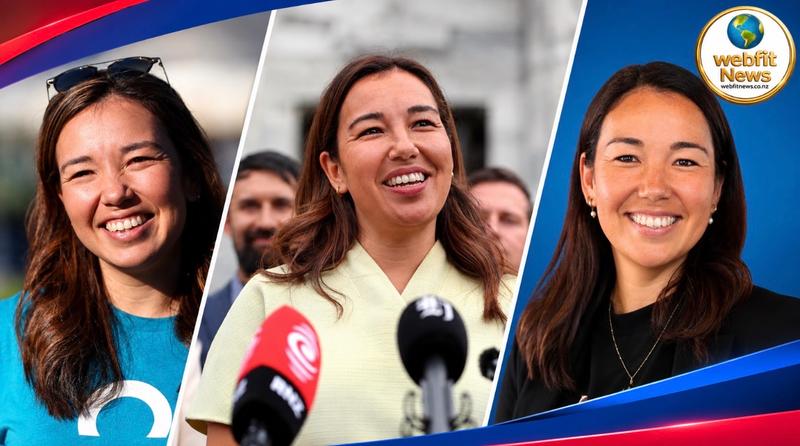
Under Wong’s leadership, it has now entered Parliament with seven MPs.
|
General election
|
Party vote share
|
Parliamentary seats
|
|
2017
|
2.4%
|
0
|
|
2020
|
1.5%
|
0
|
|
2023
|
2.22%
|
0
|
|
2026
|
Approximately 6%
|
7
|
Source: Electoral Commission official election results.
The 2026 result marks the party’s first successful entry into Parliament.
However, unlike political parties that hold electorate seats, Opportunity’s entire parliamentary representation comes from the party vote.
That distinction becomes particularly important when discussing another election.
Why the five percent threshold matters so much
Under New Zealand’s Mixed Member Proportional electoral system, a political party generally qualifies for parliamentary representation by meeting either of two conditions:
- Receiving at least five percent of the nationwide party vote.
- Winning at least one electorate seat.
Opportunity currently holds seven list seats and no electorate seats.
This means that if another general election were held and the party failed to reach five percent of the party vote, while also failing to win an electorate, it would lose its parliamentary representation.
The existing seven seats would not be protected simply because the party secured them in November.
How different election results could affect Opportunity
|
Hypothetical party vote
|
Electorate seats won
|
Parliamentary eligibility
|
|
8%
|
0
|
Qualifies
|
|
6%
|
0
|
Qualifies
|
|
5.1%
|
0
|
Qualifies
|
|
5%
|
0
|
Qualifies
|
|
4.9%
|
0
|
Does not qualify
|
|
4%
|
0
|
Does not qualify
|
|
Below 5%
|
At least 1
|
Qualifies through electorate victory
|
These examples explain the electoral rules and are not polling forecasts.
The difference between receiving five percent and 4.9 percent could therefore be the difference between parliamentary representation and having no MPs at all.
This is not merely a theoretical feature of MMP. Opportunity experienced the consequences of falling below the threshold in three consecutive elections before its 2026 breakthrough.
How much electoral support would Opportunity need to lose?
Using a simplified example of 2.9 million valid party votes, five percent would represent 145,000 votes.
|
Illustrative party vote share
|
Votes based on 2.9 million valid party votes
|
|
7%
|
203,000
|
|
6%
|
174,000
|
|
5.5%
|
159,500
|
|
5%
|
145,000
|
|
4.9%
|
142,100
|
|
4.5%
|
130,500
|
Under this illustration, a movement from six percent to just below five percent would represent approximately 32,000 fewer party votes.
That does not mean those voters are expected to abandon Opportunity.
Actual thresholds would depend on the total number of valid party votes cast in another election, and voting behaviour could change in either direction.
Nevertheless, the calculation demonstrates why smaller parties without electorate representation can face particularly significant consequences from relatively modest changes in nationwide support.
Seymour warns of the consequences of another election
In its Saturday political analysis, 1News reported that ACT leader David Seymour had questioned the political consequences Wong could face if the country returned to the polls.
Seymour described the possibility as potentially being Wong’s:
“First rodeo and her last rodeo very close together.”
The comment reflects a broader disagreement between the parties over how far Opportunity should be prepared to go in defending its negotiating conditions.
Opportunity has identified several policy priorities and has maintained its opposition to Winston Peters retaining the Foreign Affairs portfolio under a coalition or confidence and supply arrangement.
However, Wong has also indicated that alternative parliamentary arrangements remain available and that her party wants a stable government.
Her refusal to rule out another election should therefore not be confused with a formal demand for one.
Seymour’s warning is a political assessment, not evidence that Opportunity would necessarily lose support in another election.
Could another election actually strengthen Opportunity?
The electoral consequences of another nationwide vote are not predetermined.
Opportunity could face different reactions from voters depending on how negotiations unfold and how the parties explain their respective positions.
Some voters might support Wong more strongly if they believe she has remained consistent with her campaign commitments.
Others might reconsider their support if they believe the party has contributed to prolonged political uncertainty.
The same considerations apply to National, ACT, New Zealand First, Labour and the other parliamentary parties.
A second election would allow voters to reassess the behaviour of all political leaders during government formation negotiations.
It would also take place in a different political environment.
Before November 7, voters were assessing Opportunity as a party seeking entry into Parliament. In another election, they would be assessing it as a parliamentary party that had participated in negotiations to determine New Zealand’s next government.
That is a materially different political proposition.
Can Opportunity actually force another election?
This is one of the most important distinctions in the current political discussion.
Qiulae Wong does not possess the constitutional authority to independently call another general election.
Opportunity can refuse to enter a coalition, reject a confidence and supply agreement or decline to support a particular administration.
Such decisions could make government formation more difficult, but they would not automatically trigger another nationwide vote.
New Zealand’s constitutional arrangements require political parties to establish whether a government can command the confidence of Parliament.
If one proposed arrangement fails, alternative combinations and parliamentary support agreements can still be explored.
Only if the political process ultimately fails to produce a viable administration could another general election become necessary.
Why the current deadlock does not mean another election is inevitable
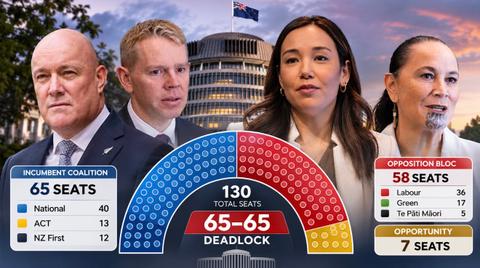
The official election results have produced a 130-seat Parliament.
|
Political party
|
Leader
|
Seats
|
|
National
|
Christopher Luxon
|
40
|
|
Labour
|
Chris Hipkins
|
36
|
|
Green Party
|
Chlöe Swarbrick and Marama Davidson
|
17
|
|
ACT
|
David Seymour
|
13
|
|
New Zealand First
|
Winston Peters
|
12
|
|
Opportunity
|
Qiulae Wong
|
7
|
|
Te Pāti Māori
|
|
5
|
|
Total
|
|
130
|
|
Outright majority required
|
|
66
|
While neither of the two established political blocs independently holds an outright majority, the election results still allow several mathematical combinations.
Possible governing arrangements
|
Political combination
|
Seats
|
Outright majority
|
|
National + ACT + NZ First
|
65
|
No
|
|
National + ACT + NZ First + Opportunity
|
72
|
Yes
|
|
Labour + Greens + Te Pāti Māori
|
58
|
No
|
|
Labour + Greens + Te Pāti Māori + Opportunity
|
65
|
No
|
|
Labour + Greens + NZ First + Te Pāti Māori
|
70
|
Yes
|
|
National + Labour
|
76
|
Yes
|
The last two examples illustrate mathematical possibilities rather than arrangements currently confirmed to be under negotiation.
Political compatibility, previous commitments and the willingness of party leaders to cooperate would determine whether any such arrangement could become viable.
There is also the possibility of a minority government operating through negotiated abstentions.
Therefore, the failure of negotiations between National and Opportunity would not, by itself, establish that another election must take place.
The January deadline that could become crucial
An important constitutional milestone has received relatively little attention amid the ongoing coalition discussions.
In a speech delivered to Electoral Commission electorate managers earlier this year, Governor-General Dame Cindy Kiro explained that, because of the timing of the 2026 election, Parliament would be required to meet no later than January 14, 2027, even if a new government had not been appointed.
She also explained that since MMP was introduced, New Zealand governments have consistently been formed before Parliament meets and holds a formal confidence vote.
The current political situation raises the possibility of a departure from that established practice.
If government formation negotiations remain unresolved when Parliament is required to meet, the caretaker administration could still be in place.
The January date is not an automatic deadline for calling another election. It is a constitutional milestone concerning when Parliament must assemble, based on the current election timetable.
Nevertheless, it provides important context for understanding how prolonged negotiations could affect the operation of New Zealand’s democratic institutions.
How much would another election cost taxpayers?
The financial implications of another nationwide election could also be substantial.
RNZ has reported that the 2026 general election cost $180 million, covering expenditure associated with staffing, communications, property, printing and postal services.
For comparison, the Electoral Commission’s official report on the 2023 general election recorded actual expenditure of approximately $134 million.
Where the money went in the 2023 election
|
Expenditure category
|
Cost
|
|
Temporary election workforce
|
$50.76 million
|
|
Permanent staff
|
$12.90 million
|
|
Temporary offices and voting places
|
$19.54 million
|
|
Permanent offices
|
$2.02 million
|
|
Paper, printing and postage
|
$16.82 million
|
|
Advertising campaigns
|
$11.90 million
|
|
Computers and telecommunications
|
$8.07 million
|
|
Travel
|
$2.68 million
|
|
Storage
|
$2.48 million
|
|
Other expenditure
|
$6.84 million
|
|
Total
|
Approximately $134 million
|
Source: Electoral Commission, Report on the 2023 General Election. Figures are rounded.
Temporary election workers alone accounted for nearly 38 percent of the total expenditure.
Another general election would require voting locations, trained personnel, ballot papers, security arrangements, communication campaigns and counting infrastructure.
However, Chief Electoral Officer Karl Le Quesne has told RNZ that the cost of another election is difficult to determine because it would depend on the timeframe and the level of services provided.
Existing infrastructure and resources could potentially be reused, while other arrangements would need to be established again.
Consequently, it would be premature to claim that another election would automatically cost taxpayers a further $180 million.
No confirmed budget for a second election has been announced.
Could Parliament need to approve additional election funding?
University of Otago law professor Andrew Geddis has raised the possibility that emergency parliamentary funding legislation could be required if another election became necessary.
One consideration is the public funding allocated to political parties for election broadcasting.
Additional administrative funding would also need to be arranged for the Electoral Commission.
This creates an unusual possibility: a Parliament unable to establish a permanent governing arrangement could still need to consider legislation enabling another election to take place.
The precise funding mechanism would depend on existing appropriations, available resources and the circumstances under which another election was called.
How quickly could another election be organised?
A new general election would require more than an announcement from the prime minister or another political leader.
The Electoral Act 1993 establishes a formal process.
|
Stage
|
What happens
|
|
Government formation fails
|
Political and constitutional options are considered
|
|
Parliament is dissolved
|
The formal process for a new election begins
|
|
Election writ is issued
|
The Governor-General directs the Electoral Commission to conduct an election
|
|
Candidate nominations
|
Political parties and candidates complete nomination requirements
|
|
Election campaign and voting
|
Eligible voters participate in a new general election
|
|
Preliminary results
|
Initial results are released following the close of voting
|
|
Official count
|
Votes are verified, including eligible special votes
|
|
Government formation
|
Parties negotiate using the new parliamentary allocation
|
Under the Electoral Act, the election writ must generally be issued within seven days of Parliament being dissolved or expiring.
Polling day cannot be earlier than the 20th day after nomination day, and the ordinary deadline for returning the writ is the 60th day after it is issued.
These requirements mean a second election could involve another substantial period of political uncertainty.
No official timetable for a fresh election currently exists.
What happens to New Zealand while politicians negotiate?
The country does not stop functioning simply because a new government has not been appointed.
The incumbent administration remains in office under the caretaker convention.
|
Government function
|
Position during caretaker government
|
|
Public hospitals and healthcare
|
Continue operating
|
|
Schools and public education
|
Continue operating
|
|
Immigration services
|
Existing laws and policies continue to apply
|
|
Benefits and pensions
|
Continue under existing arrangements
|
|
Police and emergency services
|
Continue operating
|
|
Major new policy decisions
|
Subject to caretaker convention requirements
|
|
Significant appointments and commitments
|
May require deferral or consultation
|
Routine government activity continues.
However, major or politically sensitive decisions that cannot reasonably be postponed may require consultation with other political parties.
For businesses considering investment decisions, organisations dependent on government funding and households awaiting policy changes, an extended government formation period could delay clarity about future priorities.
The precise economic consequences would depend on how long the uncertainty lasts and what decisions need to be made during that period.
What if voters are less willing to participate again?
A second general election would also come against a backdrop of declining electoral participation.
The Electoral Commission’s official figures show that both turnout among enrolled voters and overall enrolment rates have fallen.
|
Election year
|
Enrolled voter turnout
|
Final enrolment rate
|
|
2020
|
82.2%
|
94.1%
|
|
2023
|
78.2%
|
94.7%
|
|
2026
|
77.2%
|
92.9%
|
A total of 2,931,604 votes were cast in the November 7 election.
Asking voters to participate again would create another test of public engagement with the electoral process.
Some voters might become more motivated because of the political deadlock. Others could become frustrated by the inability of political parties to establish a government.
There is no reliable basis at present for determining which reaction would dominate.
Another election would not necessarily produce higher turnout, lower turnout or a clearer parliamentary majority.
Other countries have faced the same problem
Although another general election immediately following unsuccessful government formation would be unusual in New Zealand’s MMP history, other parliamentary democracies have experienced similar circumstances.
|
Country
|
Period
|
What happened
|
|
Spain
|
2015–2016
|
Another election followed unsuccessful government formation
|
|
Israel
|
2019–2020
|
Three elections were held within approximately one year
|
|
Belgium
|
2010–2011
|
Government formation took 541 days
|
|
New Zealand
|
1996
|
Government formation took approximately nine weeks following the first MMP election
|
|
New Zealand
|
2023
|
Coalition agreements were signed 40 days after election day
|
These examples demonstrate that parliamentary deadlocks can be resolved through different mechanisms, including extended negotiations or fresh elections.
They also demonstrate that another election does not necessarily guarantee an immediate resolution.
New Zealand’s constitutional system and political circumstances differ from those of other countries, so these examples should be treated as historical comparisons rather than predictions.
What New Zealanders should watch next
The coming days contain several developments that could influence whether another election remains part of the political discussion.
|
Development
|
Why it matters
|
|
National and Opportunity negotiations
|
Could establish additional parliamentary support
|
|
Winston Peters’ ministerial position
|
Remains a potential obstacle to a formal agreement
|
|
Opportunity’s policy conditions
|
Determine the scope for compromise
|
|
Judicial recount applications by December 2
|
Could potentially change parliamentary representation
|
|
Scheduled return of the election writ on December 3
|
Marks another stage in formally completing the election
|
|
Parliament meeting by January 14, subject to the applicable timetable
|
Important if government formation remains unresolved
|
National regaining a closely contested electorate through a judicial recount could also change the parliamentary calculations, although no such reversal has been established.
Until the official results are amended or an alternative parliamentary arrangement is agreed, the current seat allocation remains the basis for negotiations.
Seven seats today, but no guarantees tomorrow
Opportunity’s emergence as a parliamentary party has been one of the defining developments of the 2026 election.
Its seven MPs give Wong a significant role in government formation, but that influence exists within the current parliamentary allocation.
A fresh general election would reset the calculations for every political party.
National could regain or lose seats. Labour could strengthen or weaken its position. ACT and New Zealand First could experience changes in their representation. Opportunity could expand its parliamentary presence or, if it fell below the electoral threshold without winning an electorate, disappear from Parliament altogether.
None of those outcomes can currently be predicted with certainty.
For taxpayers, another election would involve additional public expenditure. For businesses and households, it could extend uncertainty about future government policy. For political parties, it would mean returning to voters to seek a new mandate.
Qiulae Wong has not called for another election. She has declined to rule one out.
That distinction matters.
New Zealanders have already delivered their verdict through nearly three million votes. The immediate responsibility of political leaders is to determine whether the Parliament voters elected can produce a government capable of governing.
Webfit News | New Zealand Election 2026 | Political Analysis
Sources: Electoral Commission official election results for 2017, 2020, 2023 and 2026; Report on the 2023 General Election; Electoral Act 1993; Cabinet Manual 2023; Governor-General Dame Cindy Kiro’s 2026 address to electorate managers; 1News political analysis published on 28 November 2026; RNZ reporting on the financial implications of another election; Reuters and Associated Press.
This article reflects information available as of 6:21 PM on 28 November 2026. Electoral calculations are illustrative scenarios, not predictions. No second general election has been announced.