
Watercare’s latest figures reveal the scale of Auckland’s wastewater problems, with ageing infrastructure, heavy rainfall and everyday household waste placing pressure on the network.
By Webfit News | 27 November 2026
Friday 25 December
Countdown to Christmas IndiaINDYet to bat
 New ZealandNZ246/5 (85)
Day 1: Stumps
2 more live matches · Updated 7:50 am
Watercare’s latest figures reveal the scale of Auckland’s wastewater problems, with ageing infrastructure, heavy rainfall and everyday household waste placing pressure on the...
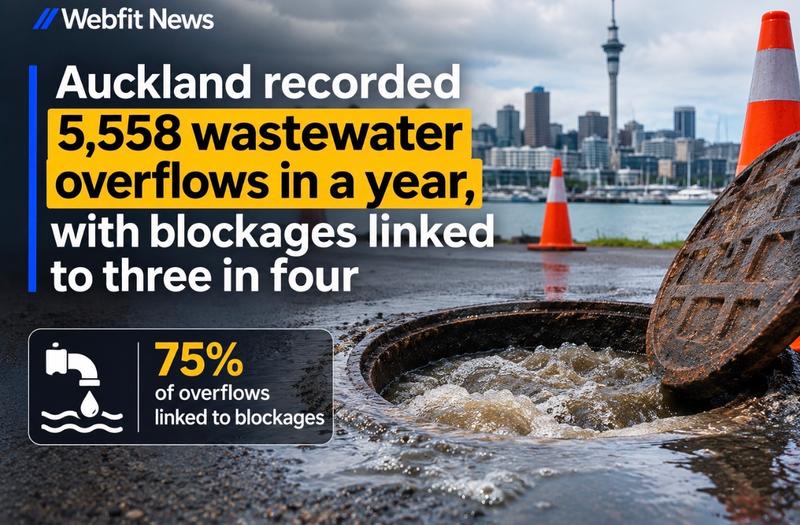
Watercare’s latest figures reveal the scale of Auckland’s wastewater problems, with ageing infrastructure, heavy rainfall and everyday household waste placing pressure on the network.
By Webfit News | 27 November 2026
Auckland recorded 5,558 wastewater overflows in the year to June 2026, equivalent to an average of more than 15 incidents a day, with blockages associated with three-quarters of all recorded overflows.
The figures, released by Watercare this week in its latest wastewater performance report, show that overall overflows declined by just two percent compared with the previous year.
Wet wipes, cooking fats, oils and other materials entering the wastewater system remain a concern. However, the report also highlights significant infrastructure challenges, including ageing pipes, incorrectly connected plumbing and limited network capacity during heavy rainfall.
Watercare chief operations officer Mark Bourne said reducing overflows required action from both the utility and Auckland households.
“Reducing overflows requires both investment in the network and everyday actions that help keep it operating effectively.”
Mark Bourne, Watercare chief operations officer
The numbers behind Auckland’s wastewater problem
Analysis of Watercare’s published figures puts the scale of the problem into perspective.
|
Wastewater performance indicator |
2025/26 |
|
Total recorded overflows |
5,558 |
|
Average overflows per day |
15.2 |
|
Overflows associated with blockages |
75% |
|
Estimated blockages-related overflows |
4,169 |
|
Annual reduction in total overflows |
2% |
|
Planned water and wastewater investment over 10 years |
$15.2 billion |
Approximately 4,169 overflows were associated with blockages during the reporting period, equivalent to more than 11 incidents a day.
However, Watercare has not established that all these blockages were caused by household behaviour. The condition and capacity of the public network also remain important factors.
Just 2 percent of the network accounts for 37 percent of controlled overflows
One of the more revealing findings concerns Auckland’s older combined wastewater and stormwater systems.
These systems represent approximately two percent of the wastewater network but accounted for 37 percent of controlled overflows during the reporting year.
Combined systems carry both wastewater and rainwater through the same pipes. During heavy rainfall, the volume entering those pipes can exceed their capacity, resulting in overflows.
The disproportionate share of controlled overflows associated with this relatively small part of the network illustrates why improvements in household disposal habits alone cannot resolve Auckland’s wastewater challenges.
Watercare is expanding investigations into where stormwater and groundwater enter wastewater pipes and is undertaking targeted upgrades in areas experiencing the greatest pressure.
Smart sensors preventing overflows
Watercare has installed smart sensors across parts of its wastewater network to detect blockages before wastewater escapes.
According to the utility, the technology is now preventing more than one overflow a day on average.
The sensors also provide information about recurring problems, allowing maintenance teams to identify locations requiring investigation or investment.
“The sensors are a practical example of how we’re using innovation to reduce overflows. Being able to see patterns in the network from the sensor data also helps us make more effective decisions about maintenance, investigations and investment.”
Mark Bourne, Watercare chief operations officer
Watercare plans to invest $15.2 billion in more than 1,000 water and wastewater infrastructure projects over the next decade.
Major wastewater projects include the Herne Bay Collector, Northern Interceptor and targeted upgrades across Auckland.
What Auckland households can do
Watercare is encouraging households and businesses to take several practical steps to reduce avoidable blockages:
Wet wipes are particularly problematic because they do not break down in the same way as toilet paper. When combined with accumulated fats and grease, they can contribute to substantial pipe and pump blockages.
Photographs released by Watercare show accumulated fat at a wastewater pump station and a pump severely obstructed by wet wipes.
A shared responsibility, but not an equal one
Watercare collects more than 400 million litres of wastewater every day, serving a population of approximately 1.8 million across Auckland.
While residents can help prevent avoidable blockages, responsibility for maintaining and upgrading the public wastewater network remains with Watercare.
Bourne acknowledged that distinction.
“We’re responsible for operating, maintaining and upgrading the public network, while Aucklanders can help by using the system correctly, checking their private plumbing and reporting problems quickly.”
Mark Bourne, Watercare chief operations officer
With summer approaching and more Aucklanders expected to visit beaches and recreational waterways, the performance of the wastewater network has implications beyond household plumbing.
Residents are encouraged to check Safeswim for current water-quality information before swimming and to report suspected wastewater overflows directly to Watercare.
The modest two percent reduction in annual overflows indicates some progress, but with more than 5,500 incidents recorded in a single year, Auckland continues to face a substantial wastewater infrastructure challenge.
Was this article useful?