The Commission has not disclosed the precise language breakdown of the film, how the two assessments differed or whether a formal review of the decision is being sought.
Why Mārama did not qualify
Despite its name, the Best International Feature Film category is not open to every film produced outside the United States.
Under the Academy’s eligibility rules, more than 50 percent of a qualifying film’s original dialogue must be in a language or languages other than English.
A film can therefore be produced outside the United States, represent its country’s cultural identity and tell a distinctly indigenous story, yet still fall outside the category’s eligibility requirements because of the proportion of English dialogue.
Mārama contains both te reo Māori and English. Its Victorian-era setting in England brings the two languages together within a narrative exploring Māori identity, colonial violence and ancestral connections.
The decision concerns the film’s eligibility rather than its artistic quality. It was ruled out before reaching the Oscar voting stage.
Film Commission expresses disappointment
In its initial response to Webfit News on Thursday, the Commission expressed disappointment while reaffirming its support for the filmmakers.
“We’re disappointed that Mārama will not progress in the Best International Feature Film category. The film is a powerful and distinctive piece of Aotearoa filmmaking, and we remain incredibly proud of the filmmakers and what they have achieved. We’ll continue to support Mārama and its team as the film reaches audiences internationally.”
New Zealand Film Commission spokesperson, speaking to Webfit News
Webfit News subsequently sought clarification about the non-English dialogue requirement, how eligibility had originally been assessed and whether any review was being pursued.
While the Commission confirmed that different assessment methodologies had produced different results, it did not directly address whether further action was being considered.
Three New Zealand Screen Awards, then an Oscars setback
The eligibility decision follows a particularly successful week for the filmmakers at home.
At the New Zealand Screen Awards on 19 November, Mārama won three feature film awards.
|
Award
|
Recipient
|
|
Best Cinematography
|
Gin Loane
|
|
Best Production Design
|
Nick Williams
|
|
Best Costume Design
|
Sarah Voon
|
The awards recognised the film’s visual achievements, including its recreation of the Victorian period and its combination of Māori cultural elements with gothic horror.
Within days of receiving that recognition, however, the production’s international Oscar campaign suffered a significant setback.
For writer-director Taratoa Stappard, the contrasting developments underline the distinction between artistic achievement and the technical requirements governing international awards.
A Māori story set in Victorian England
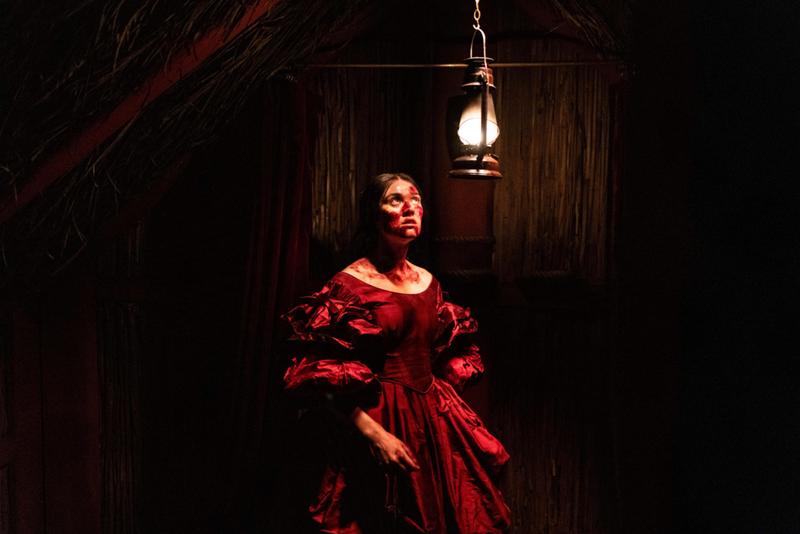
Set in 1859, Mārama follows a young Māori woman who travels from New Zealand to North Yorkshire under mysterious circumstances, where she discovers disturbing truths about her family’s history and the consequences of colonialism.
Starring Ariāna Osborne, Toby Stephens and Umi Myers, the 89-minute film uses gothic horror to explore cultural displacement, identity, inherited trauma and the relationship between Māori and British colonial history.
Written and directed by Stappard, who has connections to Ngāti Toa, Ngāti Raukawa and Ngāti Tūwharetoa, the production brings a Māori perspective to a genre traditionally associated with European storytelling.
The film premiered at the Toronto International Film Festival in 2025 before appearing at several international festivals, including Sitges, Fantastic Fest, Zurich, Hawai‘i and Pune.
It was released in New Zealand cinemas in February 2026.
When language becomes a barrier to international recognition
The decision highlights an important distinction within the Academy’s international film category: the nationality and cultural identity of a production do not, by themselves, determine its eligibility.
The language in which its story is told also matters.
New Zealand filmmakers frequently work across English and te reo Māori, reflecting both the country’s history and its contemporary cultural landscape.
In a production such as Mārama, which examines the relationship between Māori and colonial Britain, the presence of both languages forms part of the narrative.
The Academy, however, applies a numerical language threshold.
The unresolved question is how New Zealand’s assessment of the film produced a different result from the Academy’s.
Without access to the underlying assessments, it is not possible to establish whether the difference involved dialogue duration, the number of spoken words or another measurement method.
The Commission’s response to Webfit News confirms that a discrepancy existed, but its technical basis remains unexplained.
That distinction could have implications for future New Zealand films combining English with te reo Māori or other languages.
The international Oscar race continues
The Academy has announced a record 104 films eligible for consideration in this year’s Best International Feature Film category.
Mārama is not among them.
The 99th Academy Awards also introduce an expanded qualification pathway through designated awards at six major international film festivals. However, the predominantly non-English dialogue requirement remains in place.
|
Academy Awards milestone
|
Date
|
|
Preliminary voting
|
7–11 December 2026
|
|
International feature shortlist of 15 films
|
15 December 2026
|
|
Oscar nominations announced
|
21 January 2027
|
|
99th Academy Awards ceremony
|
14 March 2027
|
Exclusion from the Best International Feature Film category does not automatically make Mārama ineligible for every other Oscar category, which has separate qualification requirements.
However, no alternative Oscar campaign for the film has been confirmed.
Questions remain over New Zealand’s selection process
Webfit News asked the New Zealand Film Commission to clarify four matters:
- How the film’s language eligibility was assessed before its selection as New Zealand’s official submission.
- The Academy’s stated reason for determining the film was ineligible.
- Whether further clarification or a formal review had been requested.
- What the decision means for the film and New Zealand’s representation in the category.
The Commission has confirmed that the two assessments produced different results and that it will continue supporting the film internationally.
Questions about the original assessment methodology and any possible review remain unanswered.
For the filmmakers, the decision does not diminish their three national screen awards, international festival recognition or the achievement of bringing Māori gothic horror to audiences around the world.
For New Zealand’s screen industry, however, understanding how two organisations reached different conclusions under the same eligibility requirement could be important before the country selects its next Academy Awards submission.
Mārama has already taken a distinctly New Zealand story to international audiences. Its exclusion from the Oscars now raises a separate question about how such stories qualify for recognition on one of cinema’s biggest stages.