- Advanced joint torque control
- Real-time balance correction
- Lightweight structural design
- Tight integration between hardware and motion software
During a live demonstration earlier this year, EngineAI’s founder, Zhao Tongyang, a former robotics engineer, personally tested the robot’s movements, underscoring confidence in its safety and stability.
Online Reaction and Global Attention
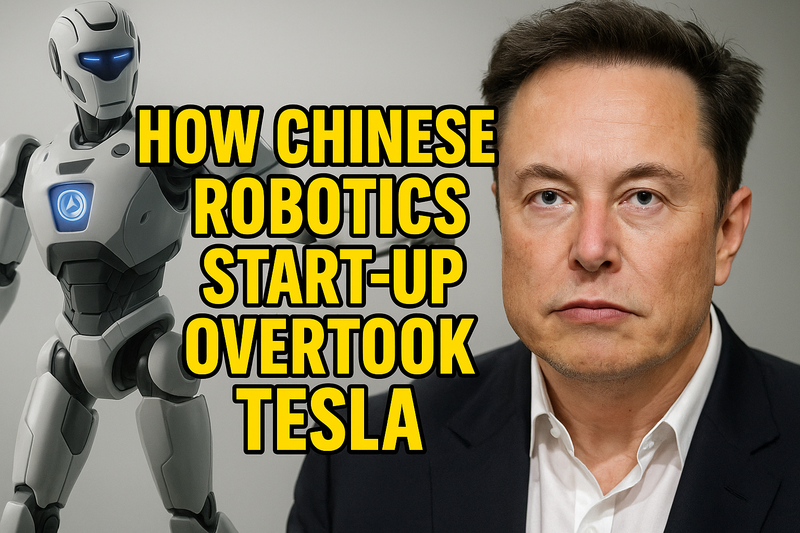
The robot’s demonstrations quickly went viral on Chinese social media platforms and later spread internationally. Many viewers contrasted the performance with footage of Tesla’s Optimus robot, which has previously appeared cautious and slow in public demonstrations.
While Tesla has positioned Optimus as a long-term project still under development, the comparison triggered widespread debate among robotics experts about execution versus ambition.
Several analysts noted that while Tesla focuses heavily on artificial intelligence and future scaling, Chinese start-ups often prioritise functional prototypes that work immediately, even with limited funding.
China’s Growing Robotics Ecosystem
EngineAI’s success reflects a broader trend in China’s technology sector. The country has invested heavily in robotics education, manufacturing supply chains, and applied engineering. As a result, small teams can now build advanced machines at a fraction of the cost seen in Western markets.
China is already the world’s largest buyer and producer of industrial robots. Government support, combined with access to affordable components and skilled engineers, has created an environment where start-ups can move from idea to prototype in months rather than years.
What This Means for Tesla and the Industry
The comparison does not necessarily mean Tesla has failed. Optimus remains a long-term project aimed at mass production and integration into Tesla’s broader AI ecosystem.
However, the rapid rise of EngineAI highlights a growing challenge for Western tech giants. Speed, cost efficiency, and practical deployment are becoming just as important as scale and branding.
Experts say the humanoid robotics race is no longer dominated by Silicon Valley alone. Instead, it is becoming a global contest where small, focused teams can rival the biggest names in technology.
The Bigger Picture
The story of EngineAI is less about beating Elon Musk and more about how innovation is changing. In today’s robotics industry, progress can come from unexpected places, driven by engineers willing to focus on fundamentals rather than hype.
As humanoid robots move closer to real-world use in factories, healthcare, and logistics, competition is likely to intensify. What is clear is that China’s robotics sector is no longer playing catch-up. In some areas, it is setting the pace.