Mr Cameron stated that:
- Global climate agreements like the Paris Accord are “disconnected from science and blind to New Zealand’s realities.”
- Farmers are being “forced off the land,” leading to rising food prices and economic strain in rural regions.
- If consumers genuinely demand low-emission products, market demand should drive innovation rather than government regulation.
ACT also reiterated its opposition to the Labour-Green Zero Carbon Act, calling instead for a policy reset focused on cost-effective and science-based solutions.
Broader Context
Nestlé’s exit follows several international shifts in sustainability coalitions:
- The Net-Zero Banking Alliance recently saw major financial institutions withdraw, citing high compliance costs.
- Similar tensions are emerging globally, with corporations reassessing the balance between environmental goals and financial sustainability.
Environmental groups, however, warn that stepping back from such commitments risks slowing progress toward global climate targets.
They argue that collective action, not retreat, is the key to protecting both the planet and the economy in the long term.
Community Perspective
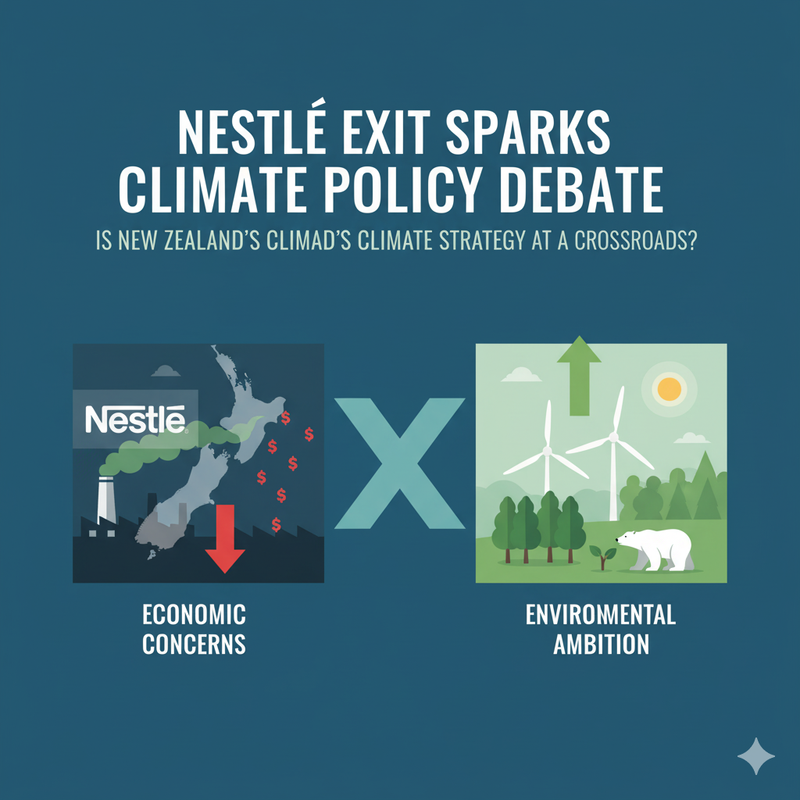
Many New Zealanders now find themselves torn between supporting environmental responsibility and protecting local livelihoods.
Small dairy farmers in Waikato and Canterbury told Webfit News they want to be part of climate solutions but feel that policies should “match science with practicality.”
Economists note that innovation in methane-reducing feed, waste management, and carbon capture technology could allow the dairy industry to lead the world in sustainable farming — if policies remain flexible and collaborative.
The Way Forward
As the debate continues, one thing is clear:
New Zealand’s climate journey is entering a crucial phase where economic stability, environmental science, and community wellbeing must align.
Finding that balance will determine not only the country’s reputation abroad but also the future of its farming heartland.