New Zealand’s road freight industry is calling on political parties to commit to stronger investment in roads, fuel security, driver training and safer transport as the country heads toward the 2026 General Election.
Wellington, 8 September 2026: Ia Ara Aotearoa Transporting New Zealand has launched its Election Platform 2026, setting out a series of policy priorities it says are needed to strengthen New Zealand’s supply chains, improve productivity and make freight transport safer and more resilient.
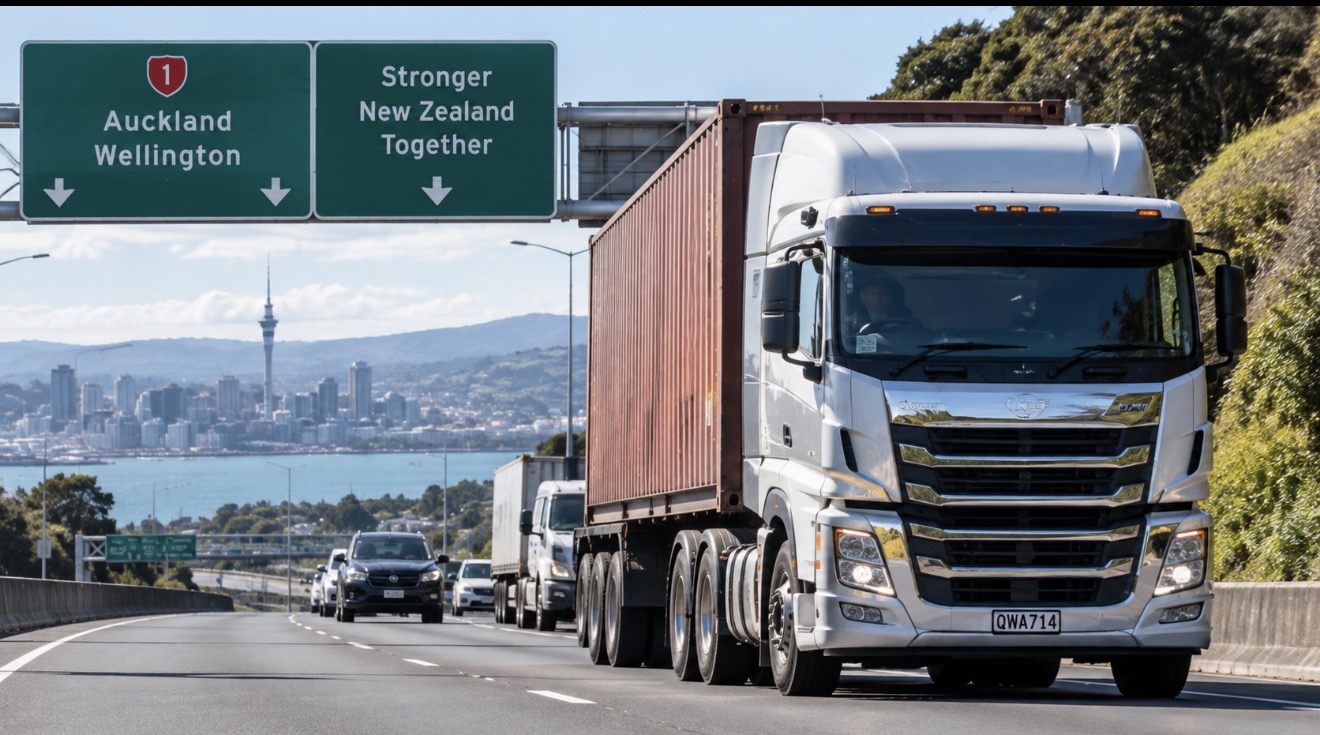
The organisation, which represents the road freight transport industry, says road transport carries approximately 93 percent of New Zealand’s freight by tonnage, making the performance of the road network directly relevant to the wider economy.
Its election platform focuses on five areas: fuel and supply chain resilience, infrastructure, road safety, workforce development and lower-emission freight.
Freight sector wants transport treated as an economic priority
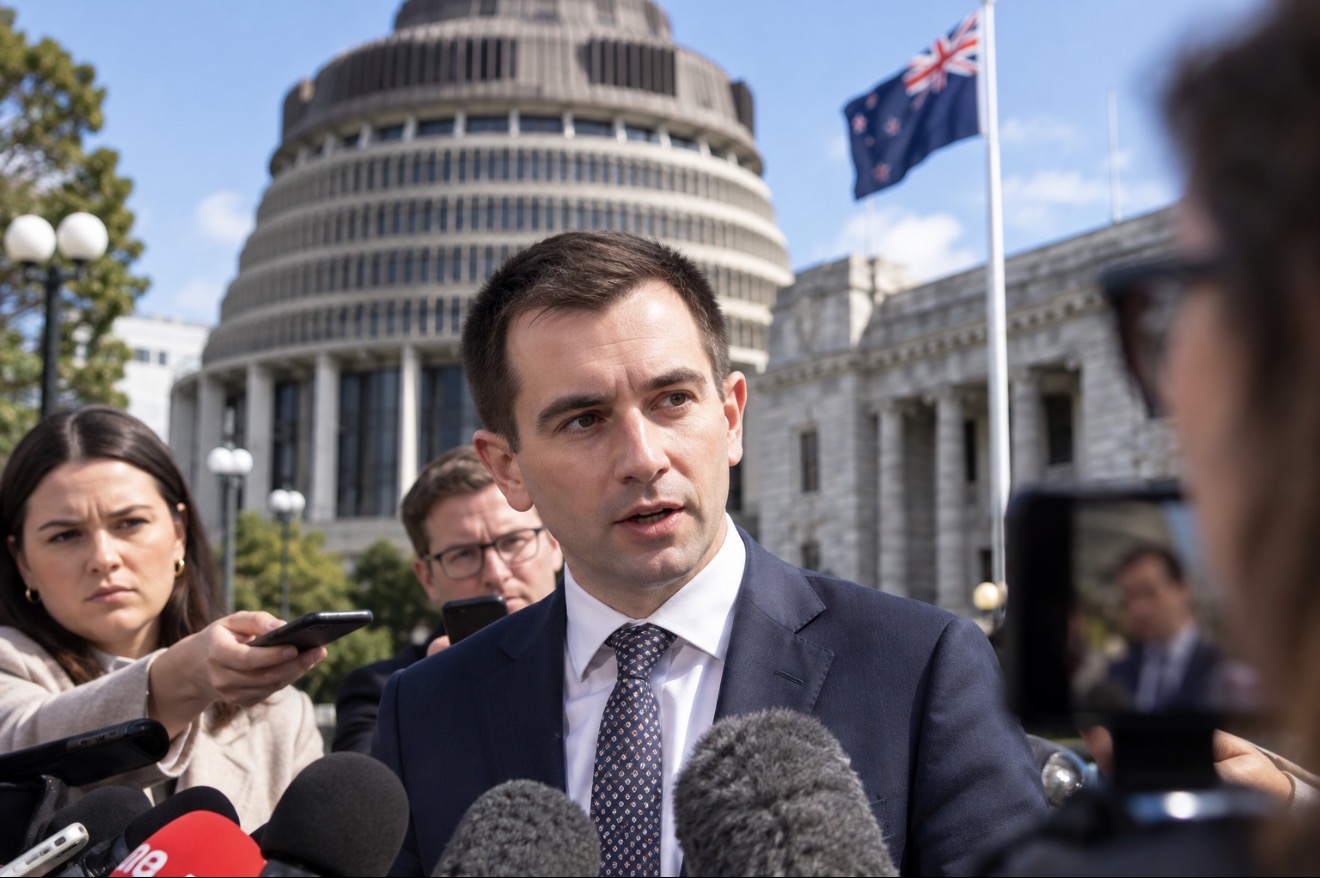
Transporting New Zealand Chief Executive Dom Kalasih said freight infrastructure should be treated as a core part of New Zealand’s economic strategy.
“If we want a more productive and competitive economy, we need a transport system that is reliable and efficient,” Kalasih said.
The industry group says investment decisions should be based on evidence and should deliver value for taxpayers, rather than favouring one transport mode over another.
“Our platform is not about favouring one transport mode over another. It is about ensuring investment decisions are evidence-based, deliver value for taxpayers and support a resilient freight network that keeps New Zealand moving,” Kalasih said.
Road maintenance among key priorities
One of the major recommendations is increased investment in road maintenance.
For freight operators, road condition has a direct impact on travel times, vehicle maintenance, fuel use and the reliability of deliveries.
Transporting New Zealand is asking political parties to prioritise road maintenance more strongly and make freight efficiency a bigger consideration in infrastructure investment.
The organisation argues that a reliable road network is particularly important because goods moved by road ultimately connect businesses, farms, ports, retailers and consumers across the country.
Fuel security also under the spotlight
Another major priority is fuel and supply chain resilience.
The freight sector remains heavily dependent on fuel, meaning disruptions to supply can have consequences far beyond trucking companies themselves.
Transporting New Zealand wants policies that strengthen New Zealand’s fuel security and reduce the risk that major disruptions interfere with the movement of essential goods.
The issue has become increasingly important as businesses consider how exposed supply chains are to international disruption and other unexpected events.
Call for faster driver licensing pathways
The industry group is also calling for accelerated driver licensing pathways.
Workforce shortages have been a longstanding issue for parts of the freight sector, and Transporting New Zealand wants the licensing system to make it easier for suitable drivers to progress into heavy vehicle roles.
Workforce development is one of the five major pillars of its election platform.
The organisation says the road freight sector supports tens of thousands of jobs across thousands of businesses nationwide.
Its background information puts employment in the industry at more than 34,000 people across over 4,700 businesses, with annual turnover of approximately $6 billion.
Stronger action wanted on drug driving and mobile phones
Road safety forms another significant part of the platform.
Transporting New Zealand is calling for stronger enforcement against drug driving and mobile phone use behind the wheel, as well as greater action against transport operators that repeatedly break safety rules.
The organisation wants roadside drug testing to be significantly expanded.
It says New Zealand would need to triple roadside drug testing to reach enforcement levels comparable with Australia.
The group is also calling for greater use of camera-based enforcement to detect motorists using mobile phones or failing to wear seatbelts.
“Our members see dangerous driving every day, and too often there are few real consequences,” Kalasih said.
“If we’re serious about reducing deaths and serious injuries, enforcement and penalties need to send a much stronger message.”
Lower-emission trucks part of election platform
Transporting New Zealand is also asking political parties to support the transition toward lower-emission freight.
Its recommendations include policies supporting fleet renewal, freight productivity and greater uptake of lower-emission vehicles.
For freight businesses, replacing heavy vehicles can involve substantial capital costs, meaning the speed of the transition can depend heavily on commercial viability and government policy.
The industry group is therefore seeking policies that allow businesses to modernise their fleets while maintaining efficient freight operations.
Why road freight matters to everyday New Zealanders
Although the election platform is primarily aimed at the transport industry and policymakers, freight performance has a much wider impact.
Food, building materials, fuel, consumer goods and products destined for export all rely on transport networks at different stages of their journey.
Transporting New Zealand says roads carry around 93 percent of the country’s freight task by tonnage and approximately 75 percent when measured by tonne-kilometres.
That means disruptions, congestion, deteriorating roads or higher operating costs in the freight sector can eventually affect businesses and consumers.
Improving freight efficiency, the organisation argues, could therefore contribute to broader productivity improvements across the economy.
An industry wish list, not government policy
The Election Platform 2026 represents the road freight industry’s recommendations to political parties.
The proposals are not government policy, and there is no guarantee individual parties will adopt them.
Transporting New Zealand is releasing the document ahead of the general election in an effort to influence party transport policies and encourage greater focus on freight, supply chains and infrastructure.
The platform will now be put in front of political parties, policymakers and voters as election campaigning develops.
Five areas Transporting New Zealand wants parties to focus on
The organisation’s five central priorities are:
- Fuel and supply chain resilience, including stronger fuel security.
- Infrastructure, particularly road maintenance and investment that improves freight productivity.
- Safer roads, with more enforcement of drug driving, mobile phone use and other unsafe behaviour.
- Workforce development, including faster heavy vehicle driver licensing pathways.
- Lower-emission freight, with policies supporting fleet renewal and cleaner vehicles.
Freight likely to become part of wider election debate
Transport policy is likely to remain a major election issue because infrastructure spending requires governments to balance competing priorities and significant costs.
Road freight operators want greater certainty that maintenance, resilience and productivity will receive sufficient attention alongside major new transport projects.
Transporting New Zealand’s message to political parties is that freight should not be viewed simply as an industry issue.
With most goods in New Zealand moving by road at some stage, it argues that a more reliable freight system ultimately affects the cost and availability of products throughout the country.
Whether political parties adopt the organisation’s recommendations will become clearer as they release their transport and infrastructure policies ahead of the 2026 election.
Source: Ia Ara Aotearoa Transporting New Zealand Election Platform 2026 announcement, reviewed by Webfit News on 8 September 2026.