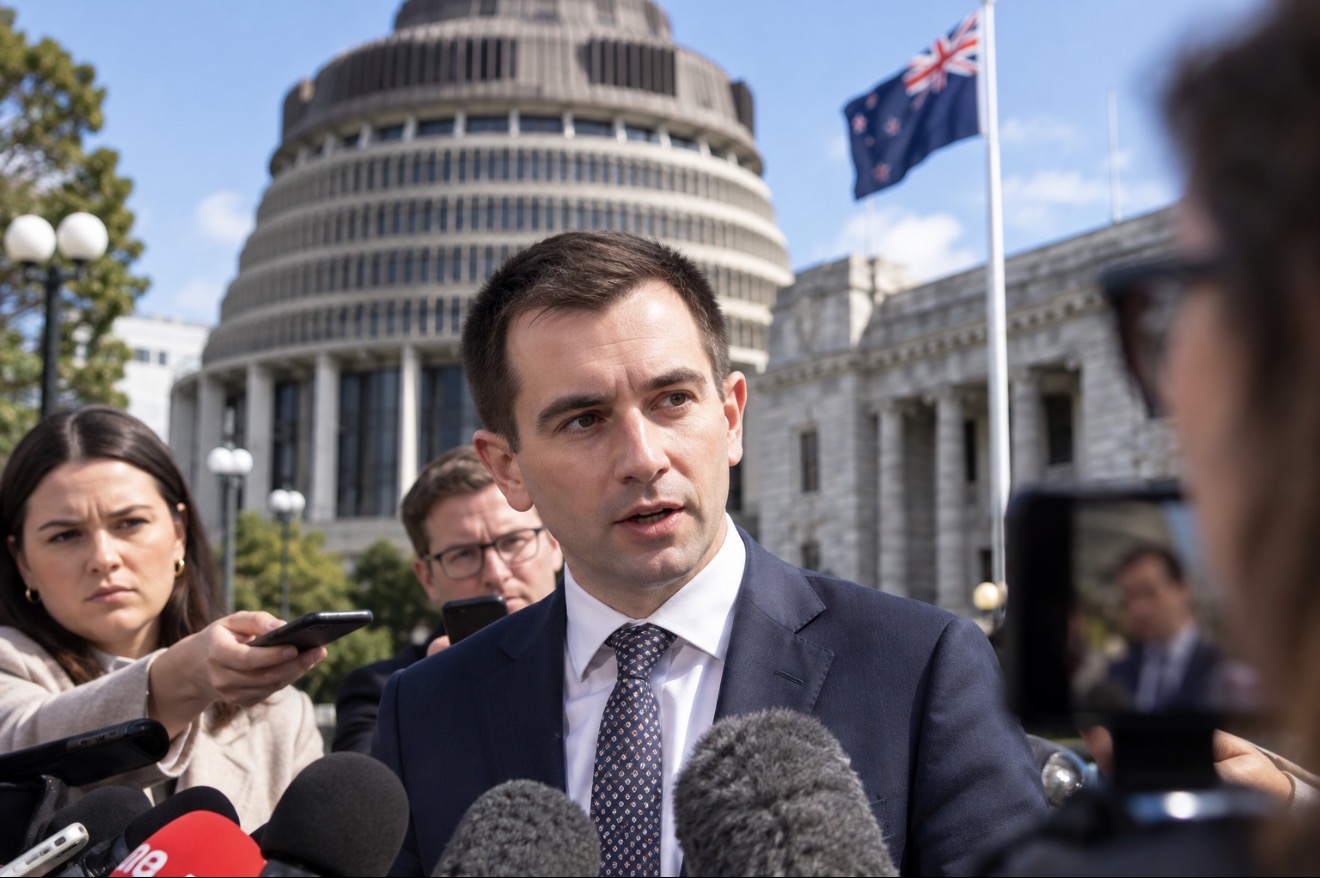
Thames-Coromandel District Council Mayor Peter Revell has welcomed the Government’s move to direct tourism levy funding to councils, but says the proposed allocation model does not fully reflect the pressure that international visitors place on destinations such as the Coromandel.
Thames-Coromandel, 9 September 2026: Thames-Coromandel District Council says proposed tourism levy funding is a positive step for local government, but argues the way visitor numbers are measured could leave some of New Zealand’s most popular destinations underfunded.
Mayor Peter Revell said direct funding to councils is something the local government sector has sought for years.
But he warned that the current proposal could disadvantage districts with relatively few medium-to-large accommodation providers.
Under the proposed approach, only data from accommodation providers with six units or more would be used to assess visitor bed-nights.
Revell says that would not capture a significant share of the Coromandel’s international visitors.
Airbnbs and small accommodation providers could be missed
The council’s concern is that many visitors to Thames-Coromandel stay in smaller commercial accommodation, including holiday homes, Bookabach properties and Airbnb-style accommodation.
If those stays are not included in the data used to allocate funding, the district’s share of the tourism levy pool could be lower than the actual visitor pressure suggests.
Revell said the model may work better for destinations with a large hotel sector.
“The funding is great news for places like Rotorua with lots of hotels, but Thames-Coromandel is a different type of destination,” he said.
“It’s ironic because one of the reasons people like coming here is that we offer a laid-back lifestyle, not glitzy hotels.”
Cruise visitors create another funding challenge
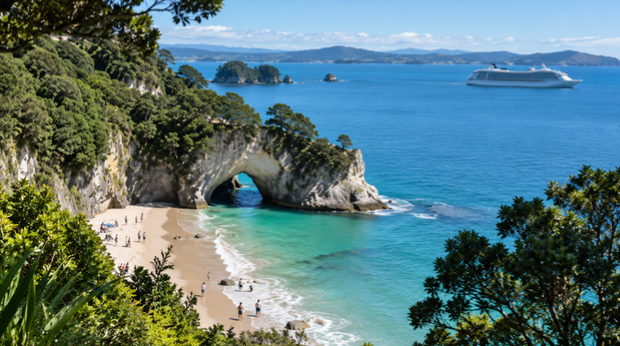
The council says Thames-Coromandel faces another disadvantage because of its proximity to major cruise ship ports in Auckland and Tauranga.
Large numbers of cruise passengers travel by road to popular attractions such as Cathedral Cove during the day, but return to their ships to sleep.
Those visitors still use roads, toilets, public facilities and local infrastructure, but their visit may not be reflected in accommodation-based funding calculations.
For the council, that creates a gap between the number of visitors using local infrastructure and the number counted through overnight accommodation data.
Council estimates only $1.17 million in first year
Thames-Coromandel’s potential share of the tourism levy funding is not specifically listed in the policy document cited by the council.
However, Deputy Mayor John Grant has carried out his own analysis.
According to that estimate, the district could receive a 1.36 percent share of the national funding pool.
That would amount to approximately $1.17 million in 2027/28, with a total of around $5.22 million over four years.
The council says that level of funding would not fully reflect the scale of visitor pressure experienced across the district.
The figures are based on the council’s own analysis and are not presented as a confirmed Government allocation.
Mayor wants broader funding formula
Revell is asking National to consider changes that would make the system more equitable for smaller tourism destinations.
One proposal is to include stays with smaller commercial accommodation providers, such as Airbnb and Bookabach properties, in the data used to allocate funding.
He also wants the Government to consider increasing the overall funding pool by extending the tourism levy to Australian visitors.
At present, the council’s statement argues that the model does not sufficiently account for visitor destinations where large numbers of tourists arrive without staying in traditional hotels.
Smaller councils face disproportionate infrastructure costs
Revell also wants the funding model to recognise the impact that visitor numbers can have on smaller communities.
A district with a relatively small resident population can still receive very large numbers of tourists during peak periods.
That means a smaller ratepayer base is left funding infrastructure used by a much larger temporary population.
“Per head of population, visitor infrastructure costs Thames-Coromandel ratepayers far more than it costs ratepayers in Auckland or Queenstown,” Revell said.
The council’s argument is that tourism funding should reflect not only where visitors sleep, but also where they actually travel, use facilities and place pressure on local infrastructure.
Why this matters in the Coromandel
Thames-Coromandel is one of New Zealand’s best-known domestic and international tourism destinations.
Its beaches, coastal communities, walking tracks and attractions draw large visitor numbers, particularly during summer and holiday periods.
That tourism activity supports local businesses and jobs, but it also creates costs.
Councils must maintain roads, public toilets, parking, waste services and other infrastructure that can experience pressure far beyond what the permanent population alone would generate.
The challenge is especially significant for councils with smaller rating bases.
Funding welcomed, but debate over fairness remains
The Thames-Coromandel District Council is not rejecting the tourism levy funding proposal.
Revell has described the introduction of direct funding to councils as a positive development.
The dispute is over how the money should be divided.
The council wants a broader measure of visitor activity so destinations with high numbers of Airbnb guests, holiday-home users, day visitors and cruise passengers are not disadvantaged compared with places dominated by larger hotels.
That debate is likely to become important as councils and the Government work through the final details of tourism infrastructure funding.
For Thames-Coromandel, the key question is whether the eventual formula will measure where tourists stay, or where they actually create demand on local infrastructure.
Source: Thames-Coromandel District Council statement, including comments from Mayor Peter Revell and Deputy Mayor John Grant, reviewed by Webfit News on 9 September 2026.